
Water first, always
If water gets in through your walls or at the wall-floor joint, you solve that before any coating. A floor coating is not waterproofing and it will not hold water back.
A bare basement slab powders, and that dust gets into everything you keep down there. We seal it so the room becomes storage you actually want to use. We test your slab for moisture first, free, because that is what decides whether a coating will hold at all.
Free, no obligation, and nothing to sign. We answer the same day, weekends included.
Usually yes, and your answer turns on one thing that has nothing to do with the coating.

A slab sitting on damp ground passes water vapour upward. A coating on top of that can lift, blister or lose its bond, and it is the most common reason a basement floor fails. We test yours before we quote it.
Tape a square of plastic sheet to the slab, seal the edges, leave it a day and look underneath. Condensation means moisture is moving. It costs nothing and it tells you more than any brochure.
That is not the end of it. We put a moisture mitigation layer down first, and your job costs more than a dry slab. Better that you know now.
Mostly we stop your floor being a nuisance.
Bare concrete sheds fine dust constantly. It settles on everything you store down there, and it is why boxes in a basement always feel gritty.
A sealed floor mops. Bare concrete drinks whatever you spill on it and keeps it.
Once the floor is finished the space stops looking like a foundation and starts looking like somewhere you could put something.
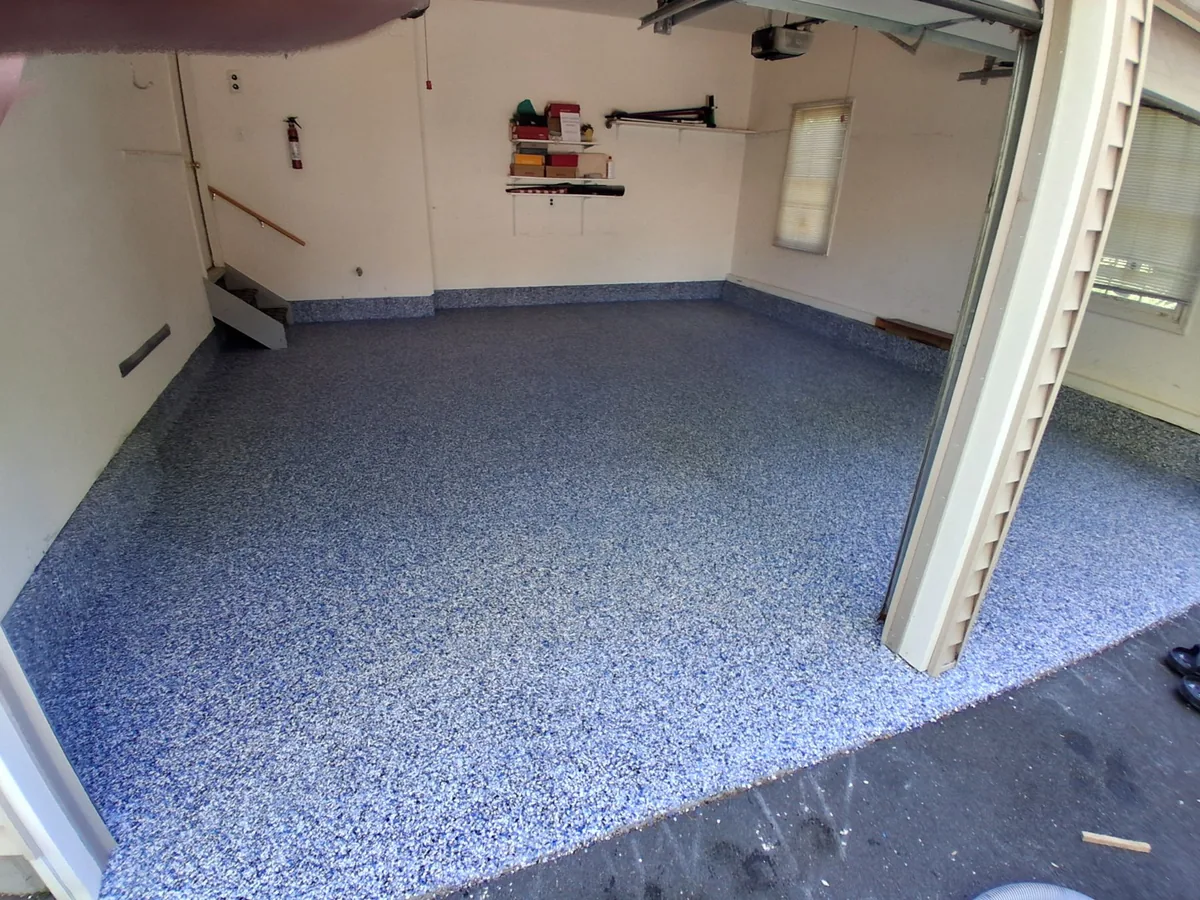
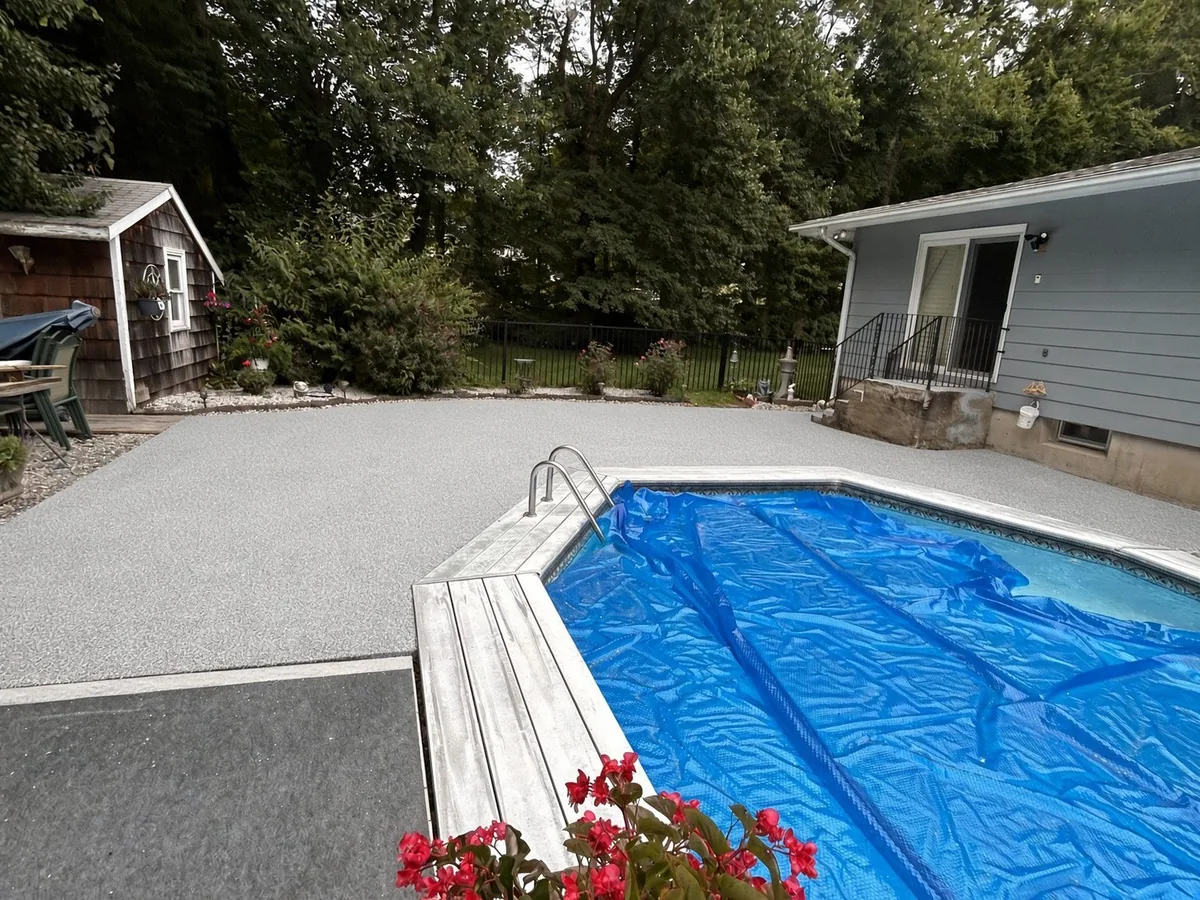
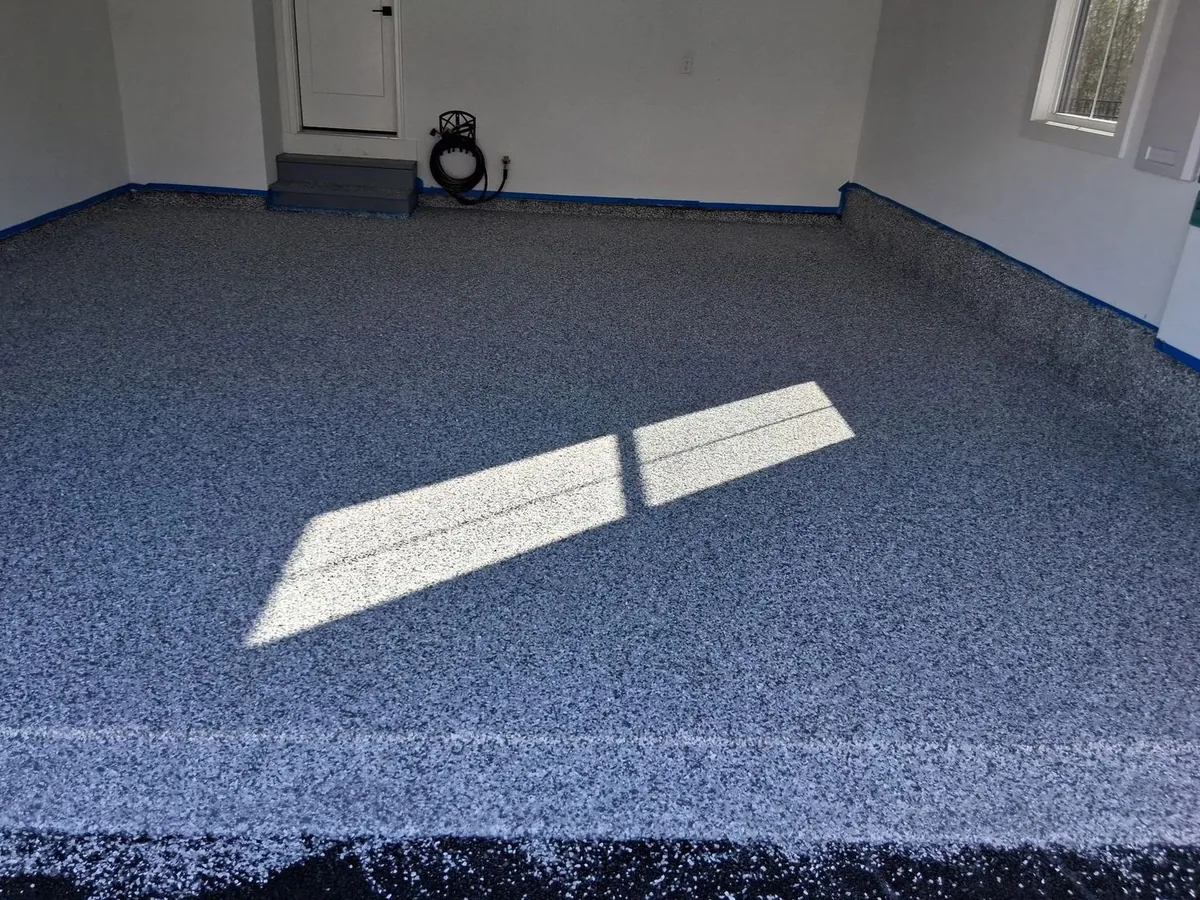
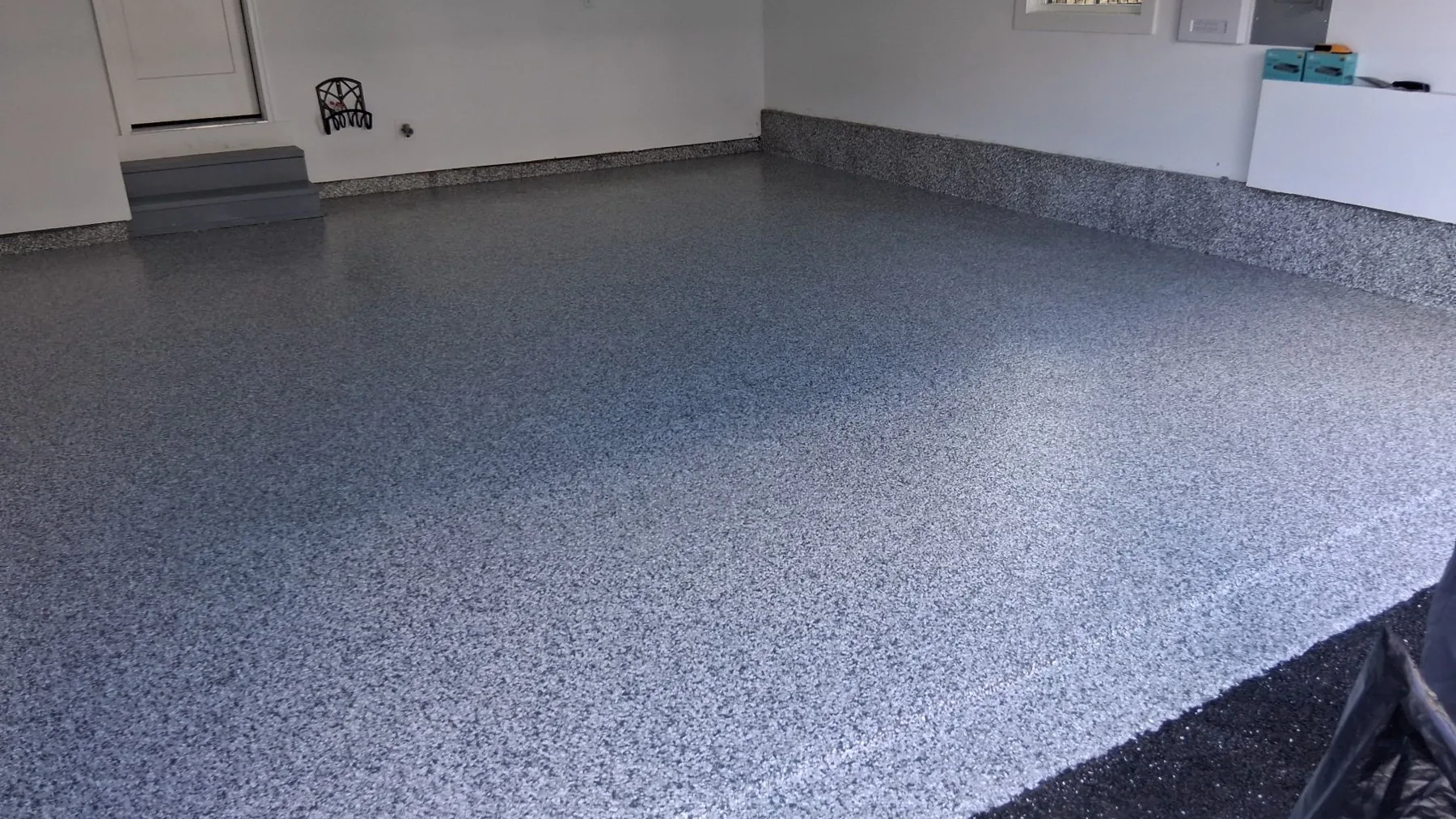
Every floor on this page is one we poured
Our sequence is the same as any floor with one addition at the front, and that addition is the whole reason your basement is its own job.
Before anything is quoted, the slab is tested. You can run the plastic sheet test yourself in a day for nothing, and it is worth doing before you take a single quote from anybody.
A slab passing vapour gets a moisture-tolerant primer or a mitigation layer before the system goes on. This is not optional and it is not an upsell. A coating applied over a wet slab lifts, and it lifts after you have paid for it.
Back to bare concrete with our dust extraction running. Your basement is enclosed, so extraction matters more here than anywhere else in the house.
We cut and fill the cracks, and we decide with you what happens where your slab meets the wall. In a basement that edge is often where water has shown up before, and it is worth talking about rather than coating over.
As any floor. We usually put flake down, because it hides a slab that has had fifty years of storage on it.
An enclosed space needs air moving through it during cure. Brad will tell you what he needs open and for how long.
More variable than a garage, because more of your slab is unknown until we grind it.
Your largest single variable. A dry basement slab is an ordinary floor. A wet one needs mitigation first and costs accordingly.
Old paint, adhesive from tiles or carpet, and sealer all have to come off. Basement slabs have often had two or three lives before we get to them.
Our grinding equipment has to get down there. A narrow bulkhead or a tight turn on your stairs adds time, so mention it when we quote.
Basement slabs are often thinner and less well finished than a garage slab, with more pitting and more variation in level than you would expect.
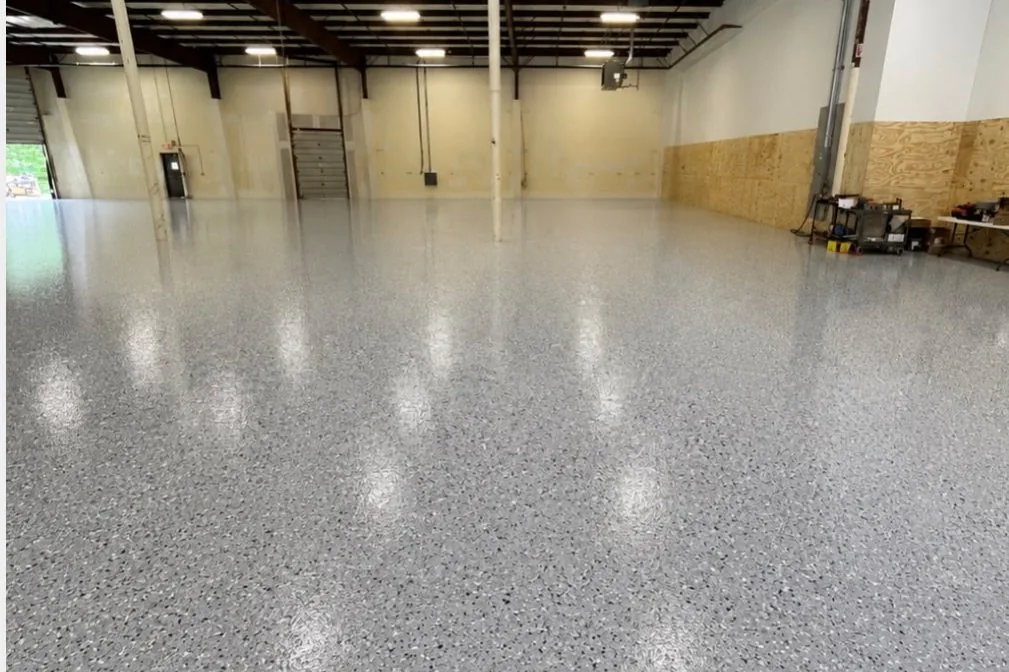
Some of these a resin floor solves outright. Others it does not, and it is better to know which is which before you spend anything.
Solved. A sealed slab stops shedding, which is why everything you store in an uncoated basement feels gritty.
Solved. Bare concrete drinks whatever lands on it. Your coated floor does not, and it mops.
Not solved. A coating is a thin surface, not insulation. If warmth matters to you, that is an insulated subfloor question, and a subfloor goes on top of a coated slab perfectly well.
Not solved. A floor coating does nothing about water coming through your walls, and if water is getting in, that is a different trade and it comes before us.
That white powder on your slab is salt left behind by evaporating water. It is a symptom rather than the problem, and it is a strong reason to let us run the moisture test before you go further.
4.7 from 15 Google reviews. We publish every one of them on the reviews page, including the one star and what came of it.
amazing job on my basement thanks again Brad the epoxy flooring was better then even i expected
great job on my shop Floor thanks again Brad
Floors came out great and the countertops too!
Order of operations, because getting it wrong costs you money.
If water gets in through your walls or at the wall-floor joint, you solve that before any coating. A floor coating is not waterproofing and it will not hold water back.
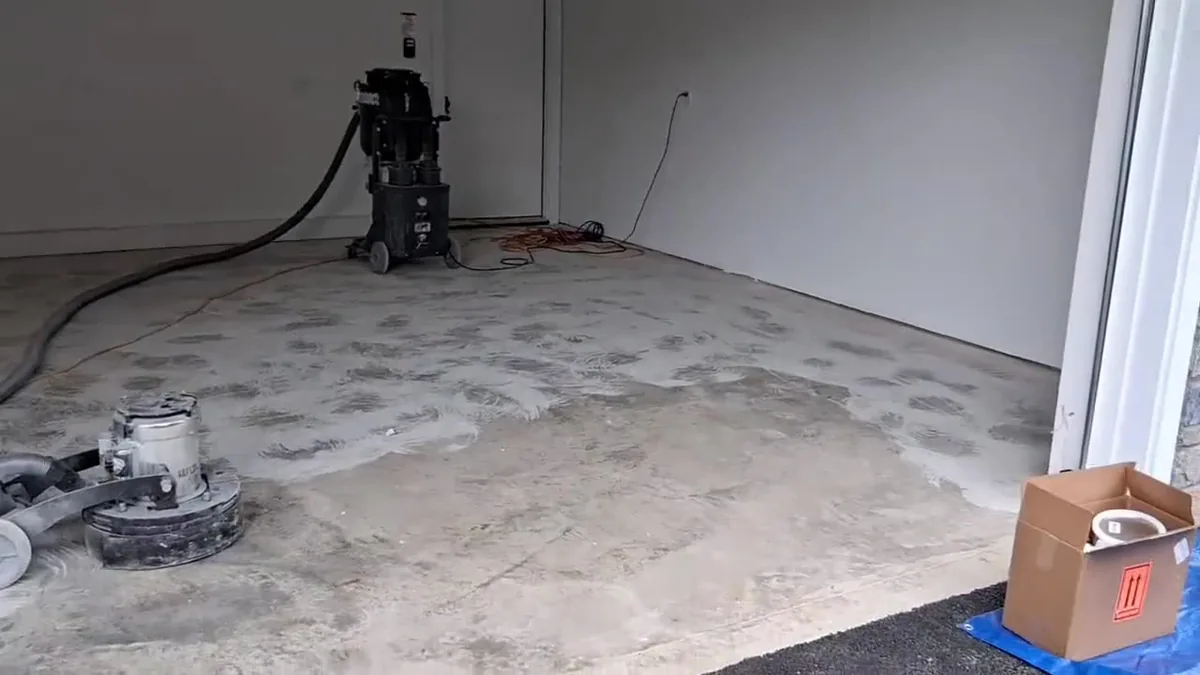
Let us coat it while the space is empty and accessible. Grinding a slab between finished walls is slower, dustier and costs you more.
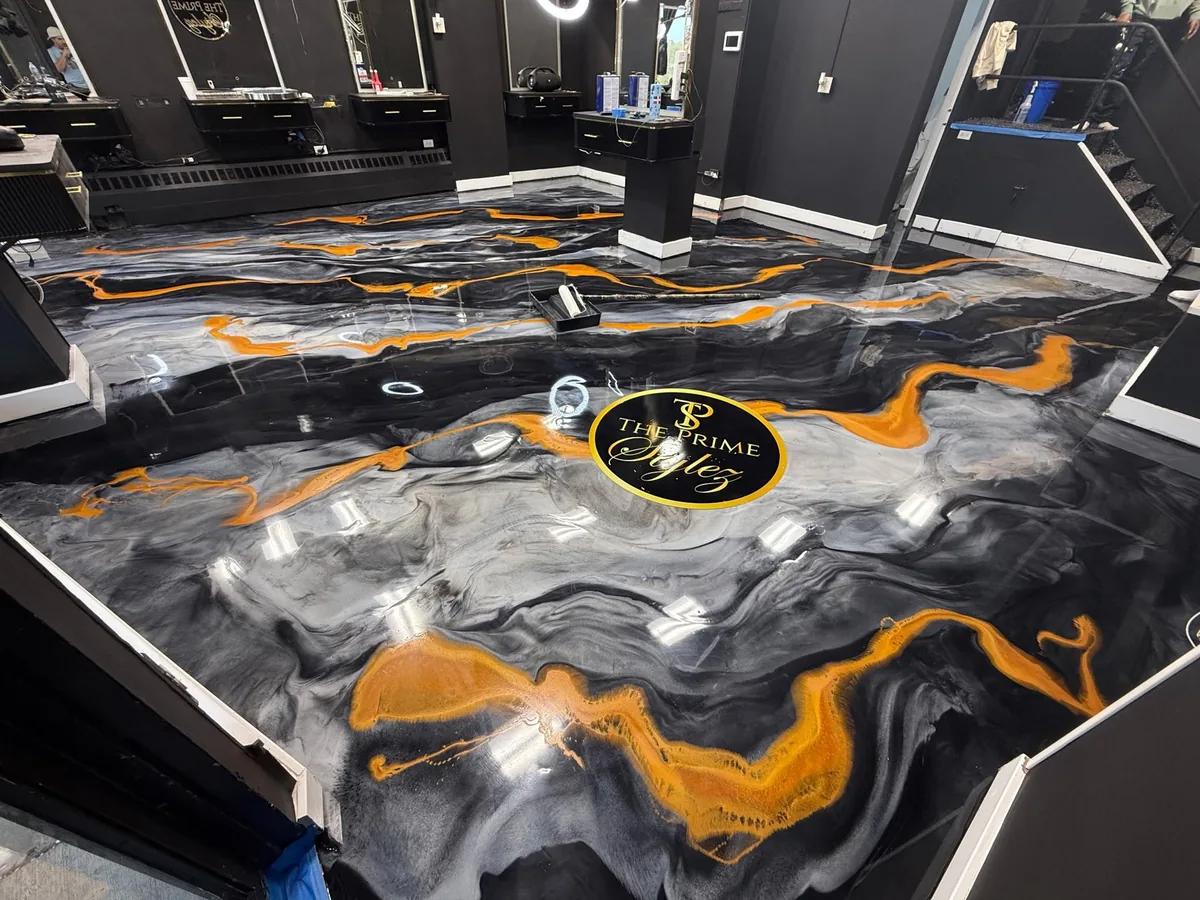
Your framing, subfloor and finishes go on top of a sealed slab. A coated slab under a subfloor still earns its cost by stopping vapour and dust.
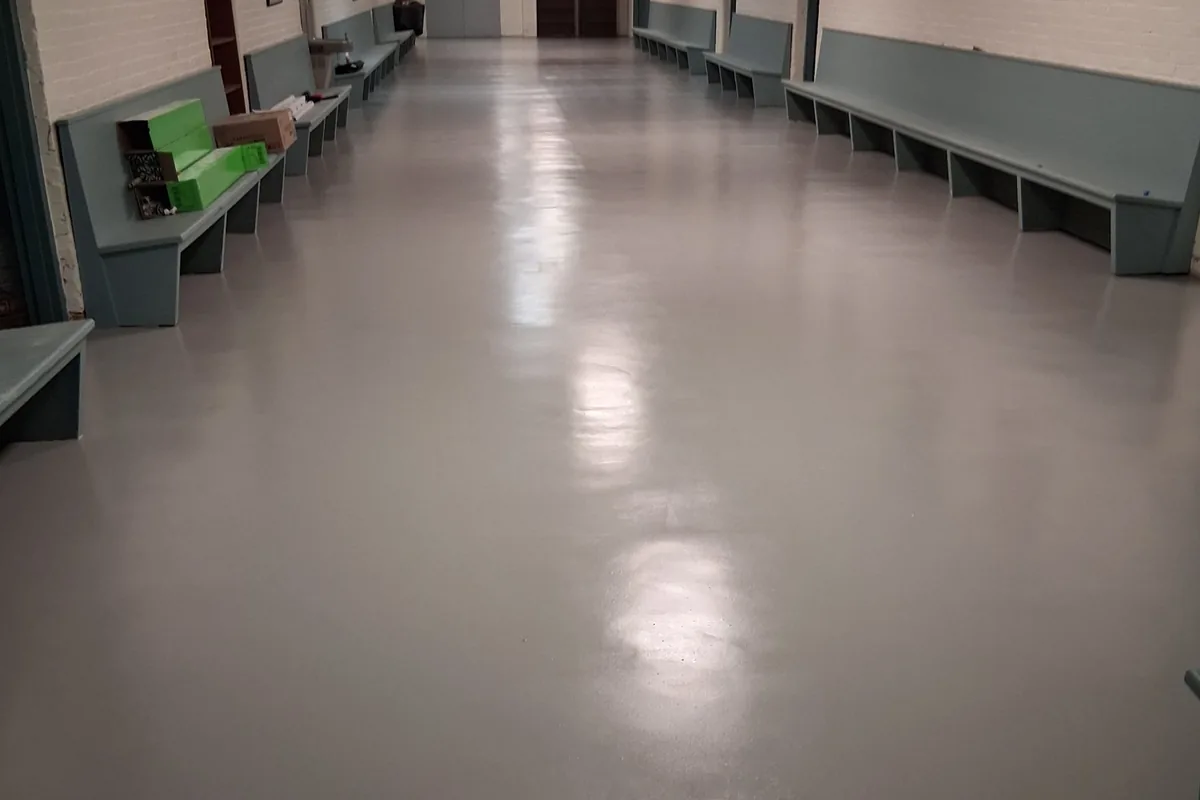
A coated slab is a perfectly good finished floor if your basement is a workshop, a gym or storage. Not every basement needs to become a living room.
A short note, because basements get treated as an afterthought and your choice matters more here than in a garage.
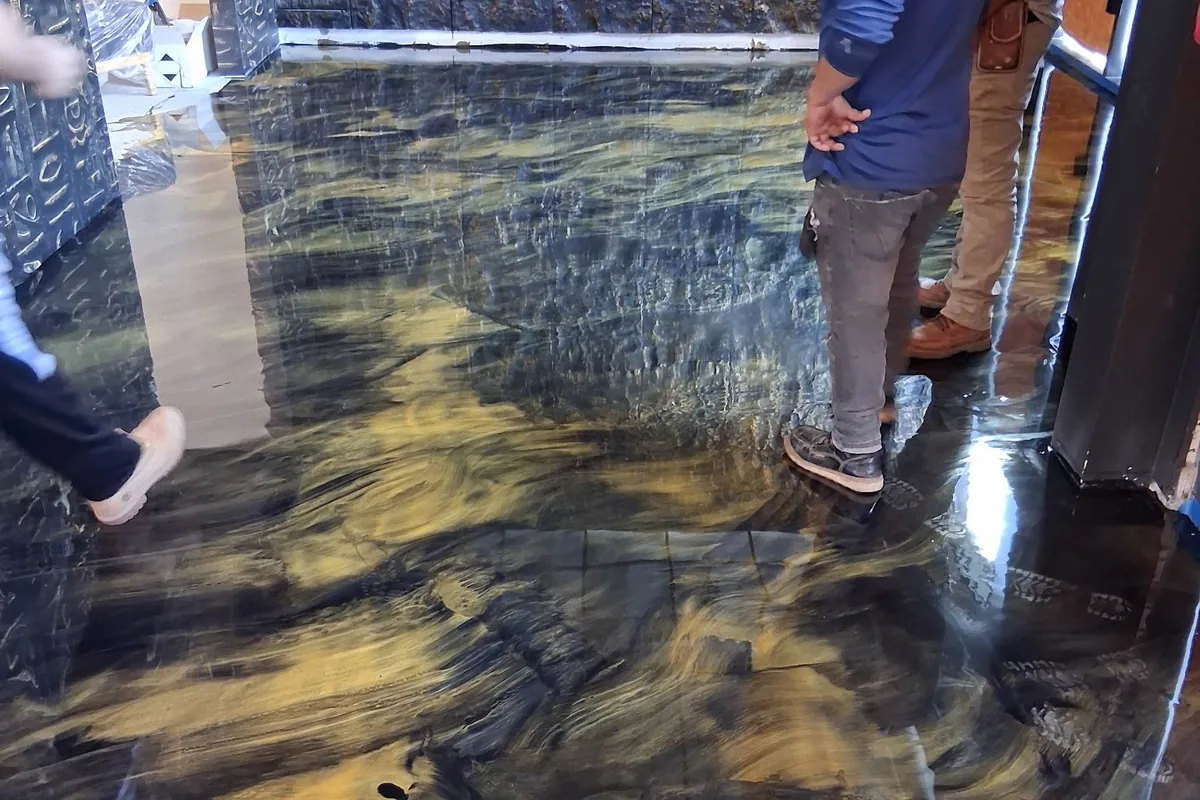
Your basement probably has no natural light. A light floor measurably improves how the space feels under a bulb.
Most basement slabs are marked. A busier blend absorbs that history so you stop seeing it.
We often steer you to satin in a basement, where dust settles and nobody is polishing the floor weekly.
We install six systems, and most floors we put down combine two of them.
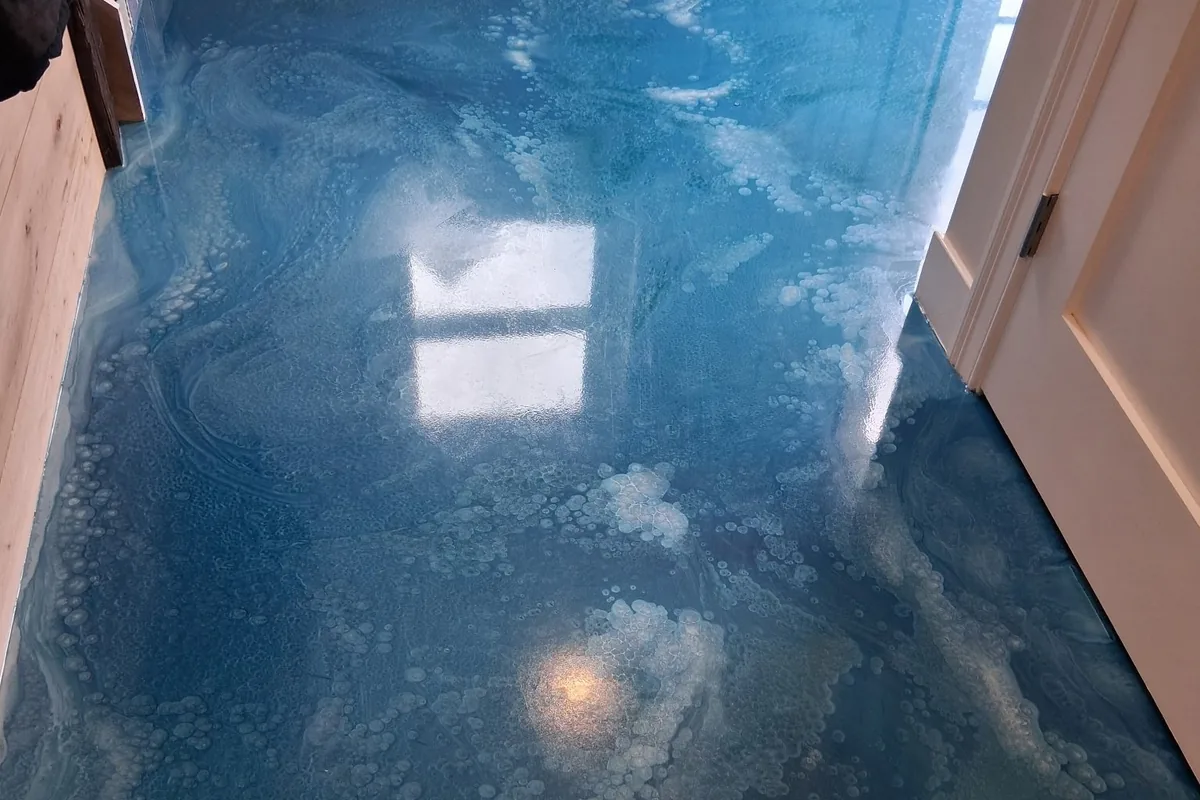
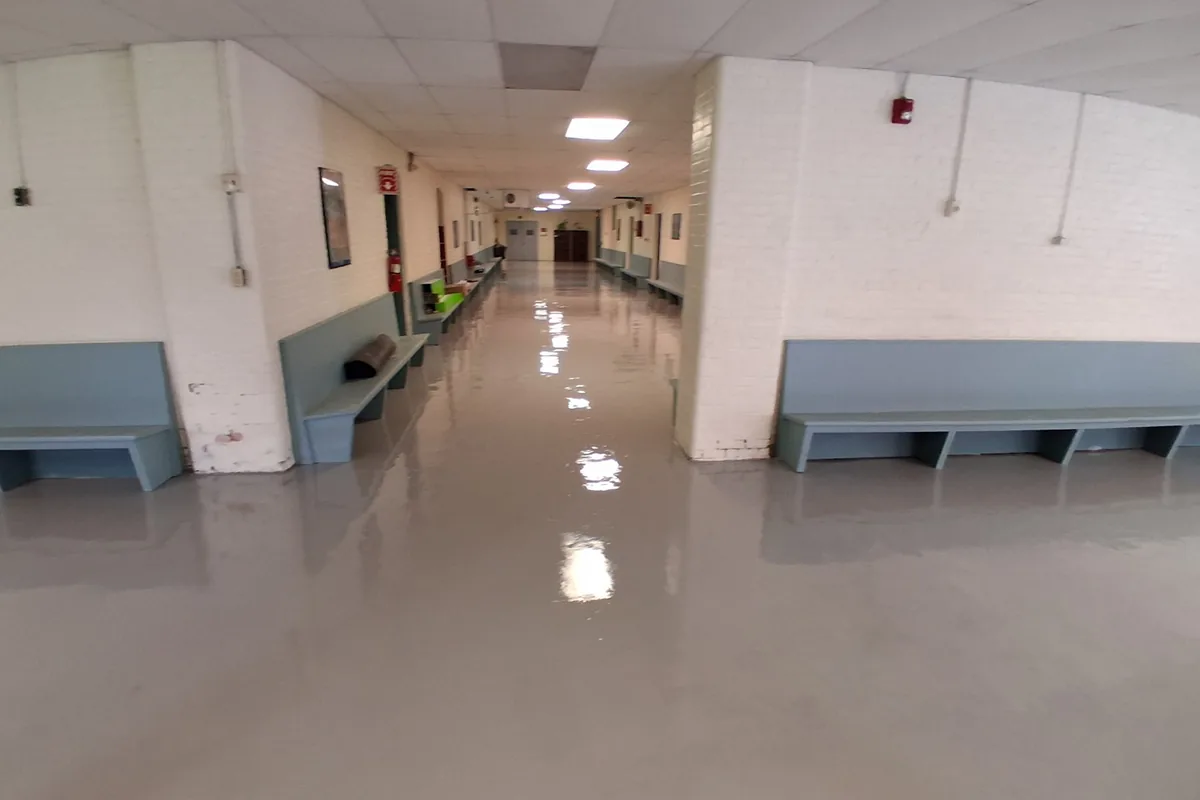
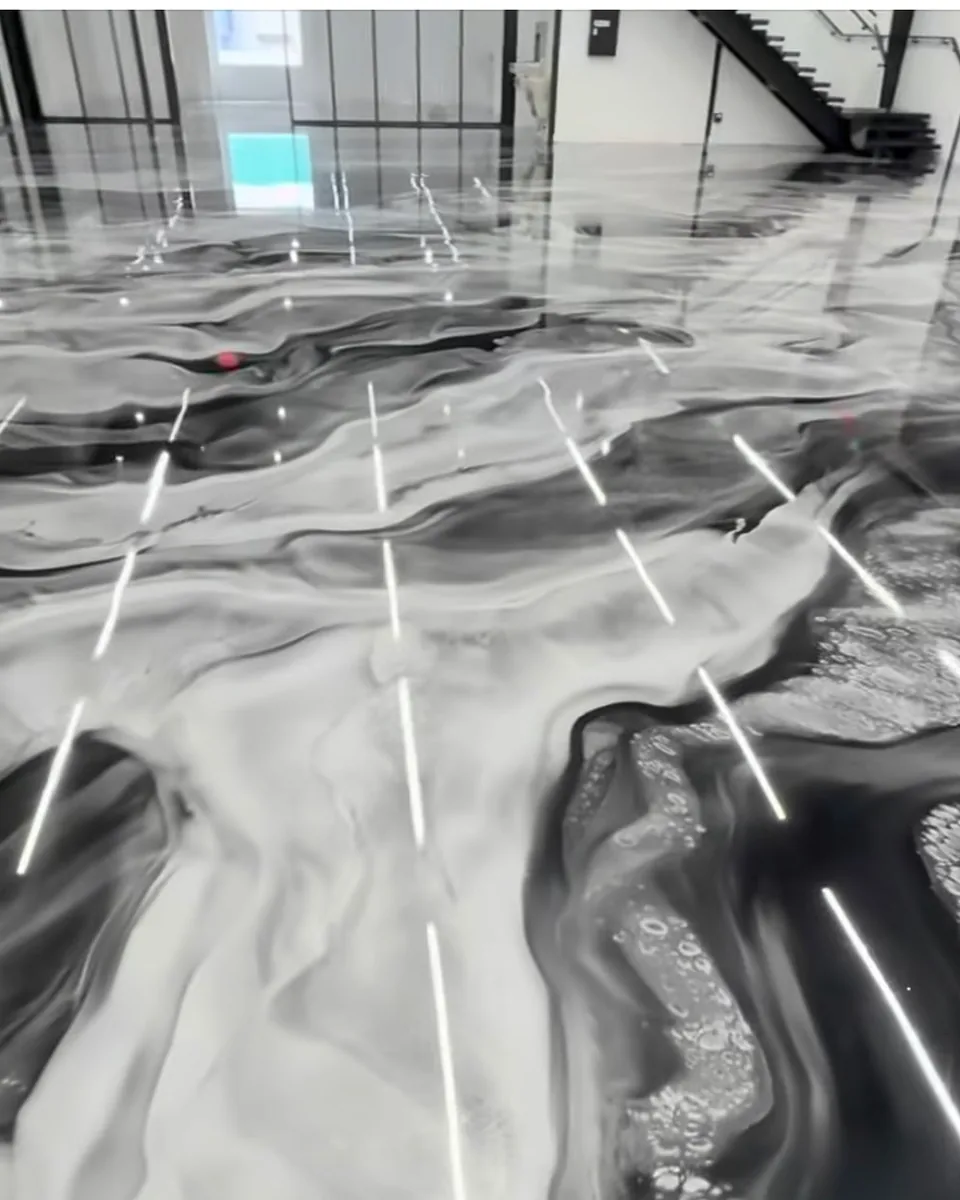
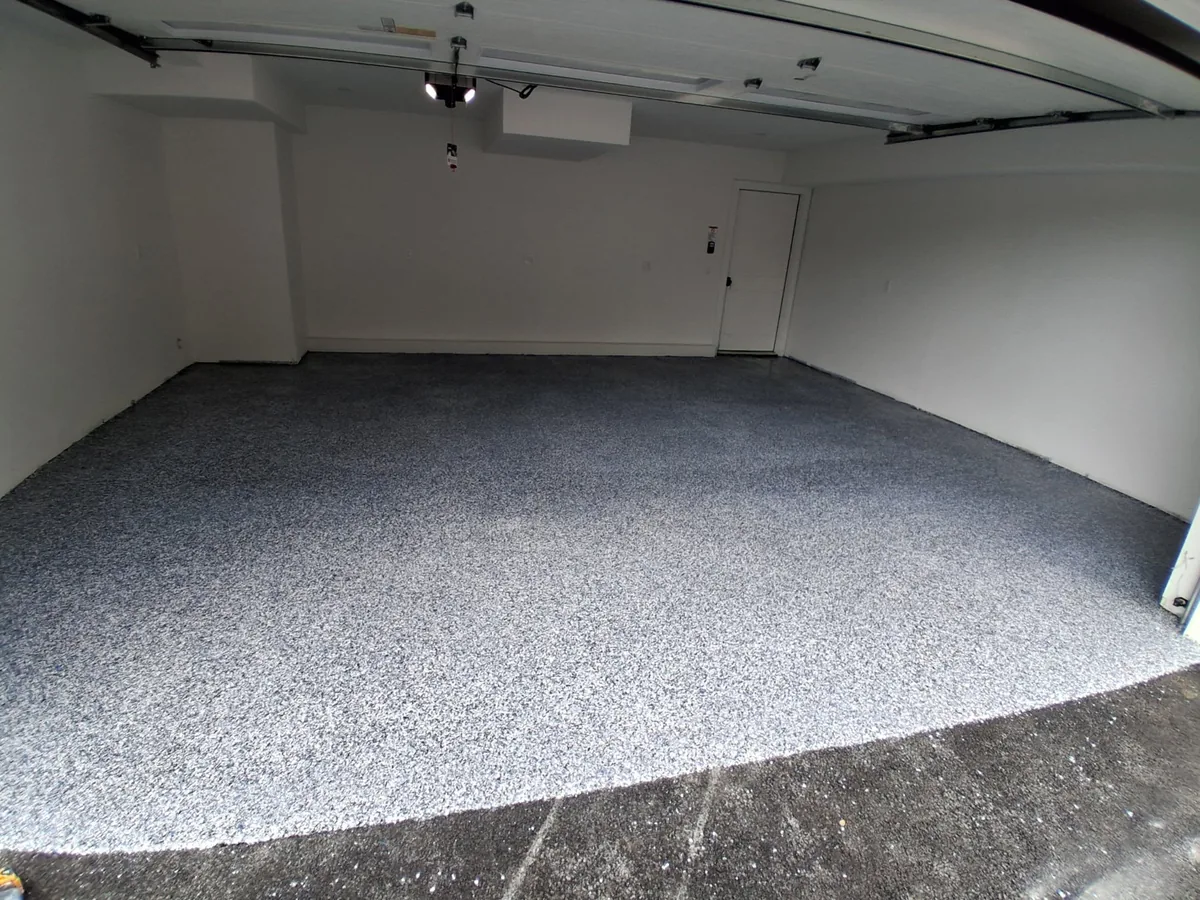
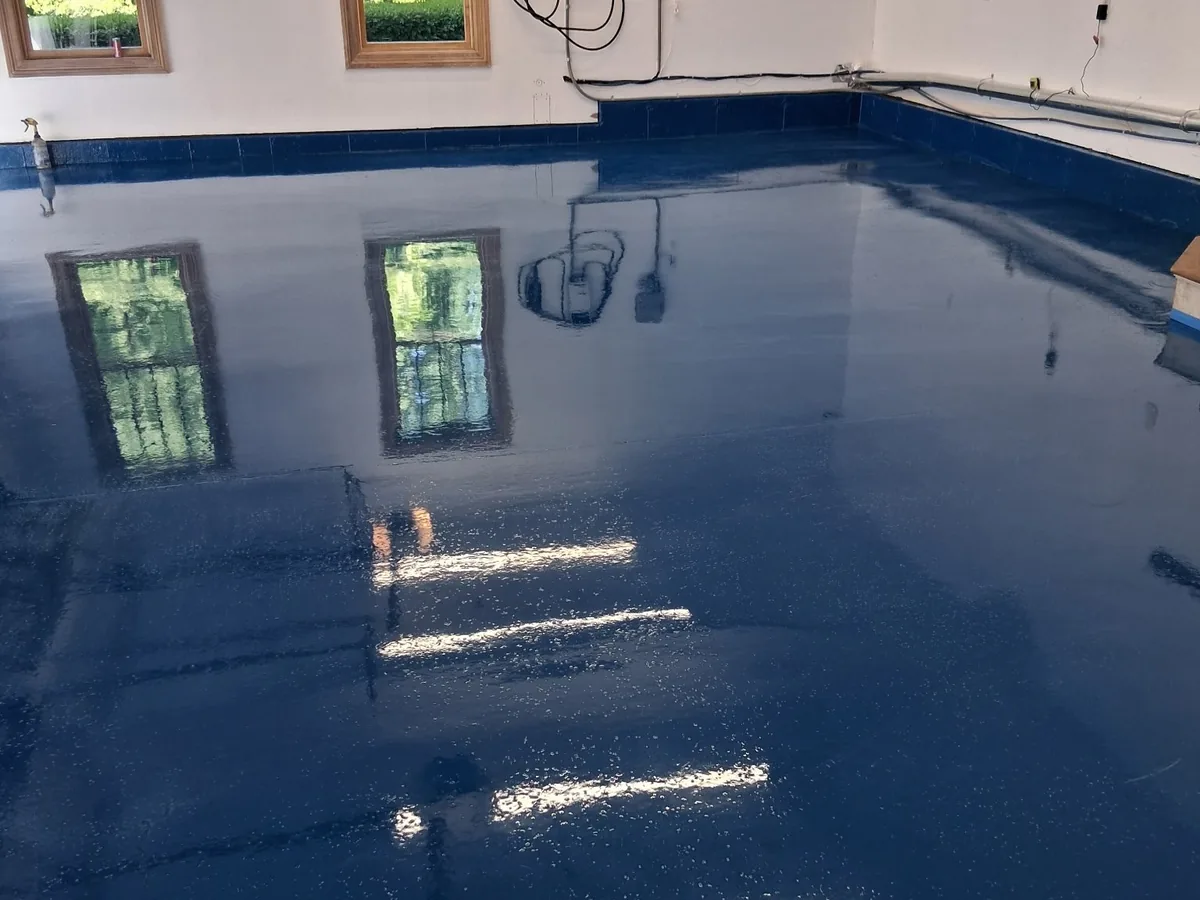
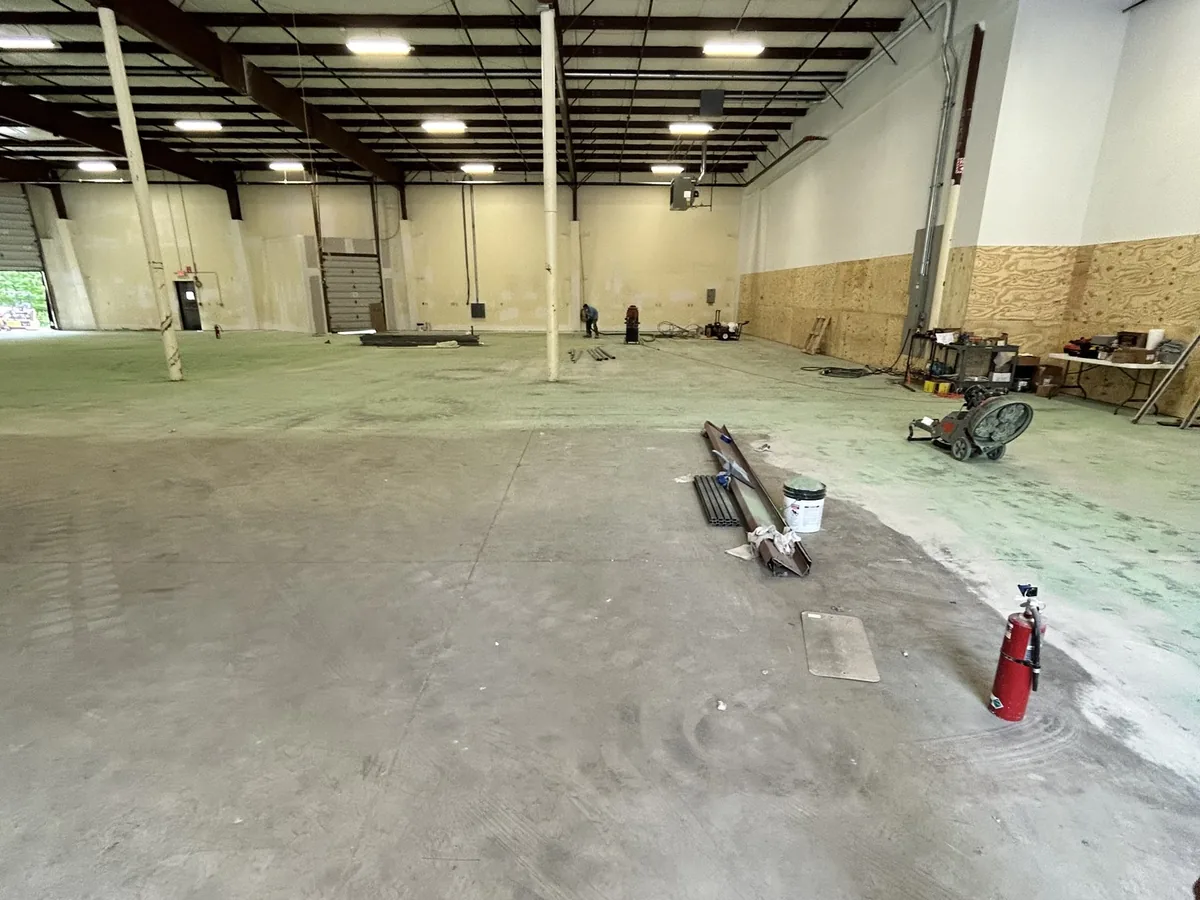
We put down four layers, and each one has its own job. Scroll and we'll take your floor apart so you can see them.
They look alike on day one. Drag the timeline and watch what changes.
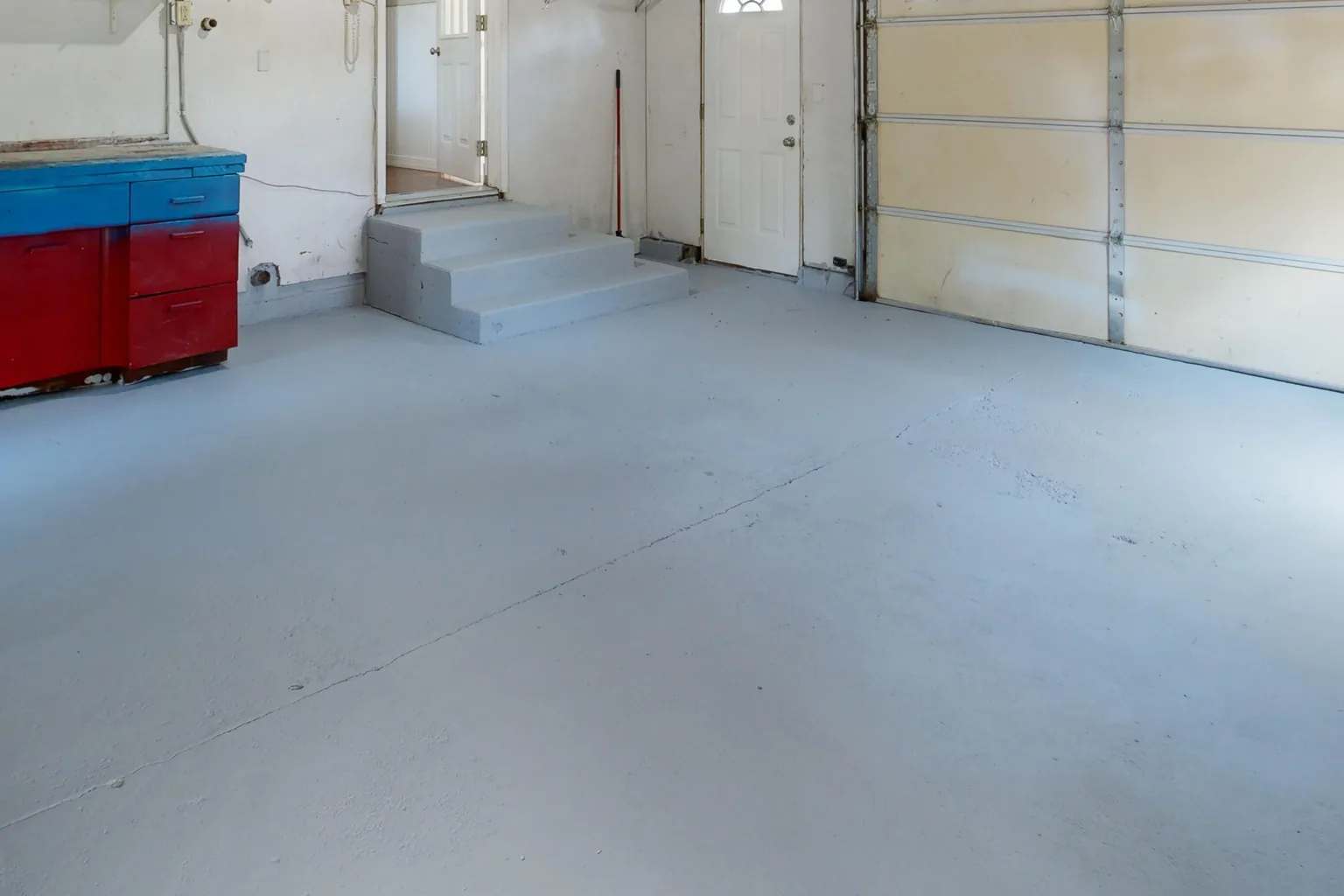
Slide to your size and see what fits it. Brad gives you the exact number when he's seen the slab.
Three steps, and Brad does every one of them himself. Most residential floors are finished in a day.
Tell us the room and roughly how big it is. We'll talk you through the range and book a time to come and look, often the same day. Weekends count, and there's nothing to sign.
He checks for cracks, old coating and moisture, then measures up. You choose your flake blend or metallic against your own floor, not a brochure. Your written quote comes back the same day.
Your slab goes back to bare concrete under a diamond grinder with dust extraction. Then the primer, the body coat with your flake or metallic, and the top coat. You get your walk-on and park-on times with the quote.
A slab passing moisture upward lifts a coating off it. The test costs nothing and takes a day, and it is worth running before you take any quote.
Get my free quoteNo. A floor coating is not a waterproofing system for your walls. If water is getting in, that is a different job and it comes before us.
That is the sensible order. Let us coat the slab, then build on it.
It comes off in our grinding. A previously painted slab takes us longer to prepare than a bare one, and that shows in the quote.
Usually yes, and it turns on moisture rather than on the coating. We test your slab first, and the test is free.
Tape a two-foot square of clear plastic to your bare concrete, seal all four edges, leave it a full day and look underneath. Condensation means moisture is moving through your slab. We will do it for you at the visit.
Efflorescence, which is salt left behind as water evaporates out of your slab. It means water has been moving through the concrete, and it is a reason to test before you coat.
No. It is a surface, not insulation. It will make your basement cleaner, sealed and far easier to live with.
Before. We coat the slab and you build on it afterwards, which is cheaper than us working around finished walls.
Yes, and tell us about both before the day so we get your falls and your edges right.
Tell us at the quote. A coating survives water on top of it far better than your bare concrete does, but a floor that floods is a different specification.
Yes. Coating your empty, accessible slab is faster and cheaper than us grinding between finished walls, and it stops vapour and dust under a subfloor.
No. Water entering through walls or at the wall-floor joint is a different trade and it comes first.
Tell us roughly what you have and we'll come and look at it. The quote is free, there's nothing to sign, and you'll know what your floor costs before you commit to anything.
Get Your Free Quote Call or Text (203) 496-6386