
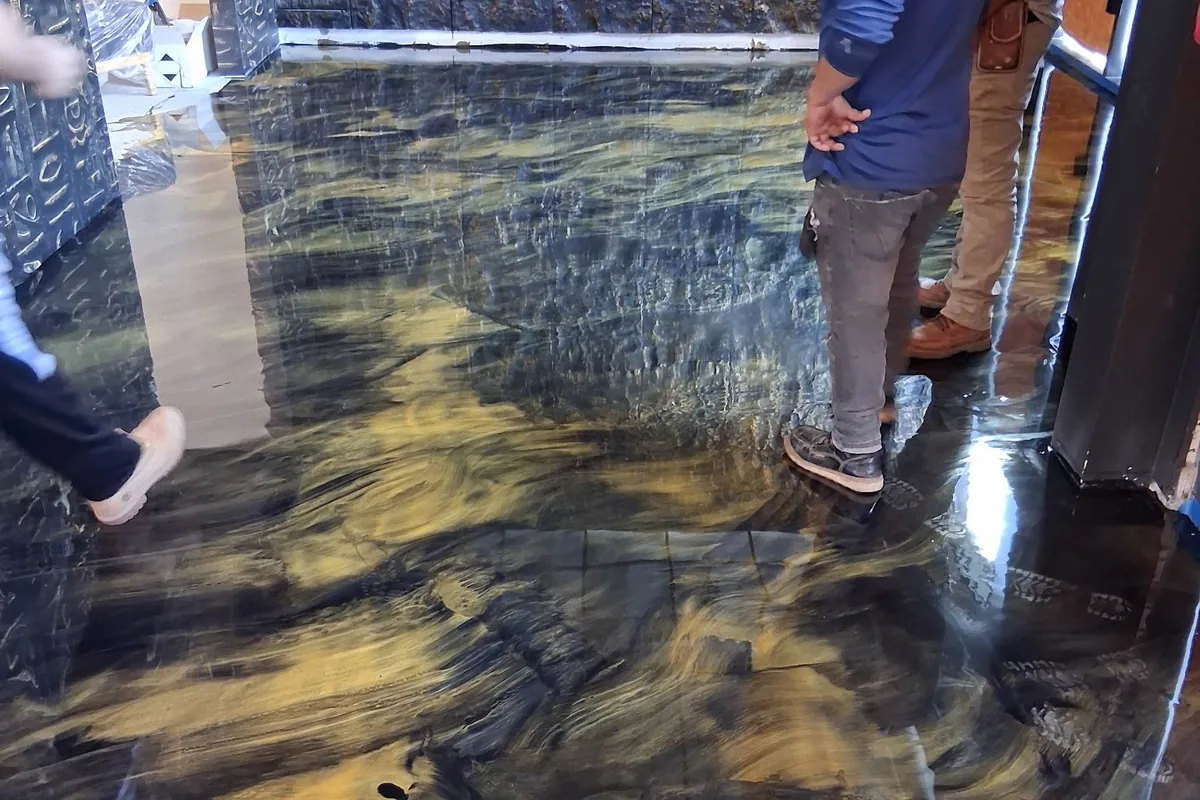
Against granite and quartz stone
Poured resin has no seams and can be repaired in place, which stone cannot. Stone takes more heat and resists scratching better. If you put hot pans down without thinking, stone is the better buy.
We pour your countertop as a liquid and it cures as one surface, including around the sink. There is no seam to trap anything, you wipe it down instead of scrubbing it, and it shrugs off the solvents that mark a laminate top.
Free, no obligation, and nothing to sign. We answer the same day, weekends included.
Hard, seamless and warmer to the touch than stone. We pour it over a prepared substrate rather than cutting and fitting it.

It goes down as a liquid and finishes as one surface, so you get no joint at a corner or behind a sink for anything to get into.
The pattern that can look busy across a whole floor is exactly right on a countertop, where you see all of it at once.
Your countertop takes heat, knives and standing water in a way a floor does not, so we do not simply pour a floor system higher up.
Two things, and they are the honest limits of what we can give you.
Your hot pans go on a trivet, not straight onto the surface. That is true of more countertop materials than people expect, and you should know it before rather than after.
We can repair a poured surface in place, which stone generally does not allow. That is a genuine advantage and it is worth asking us how.
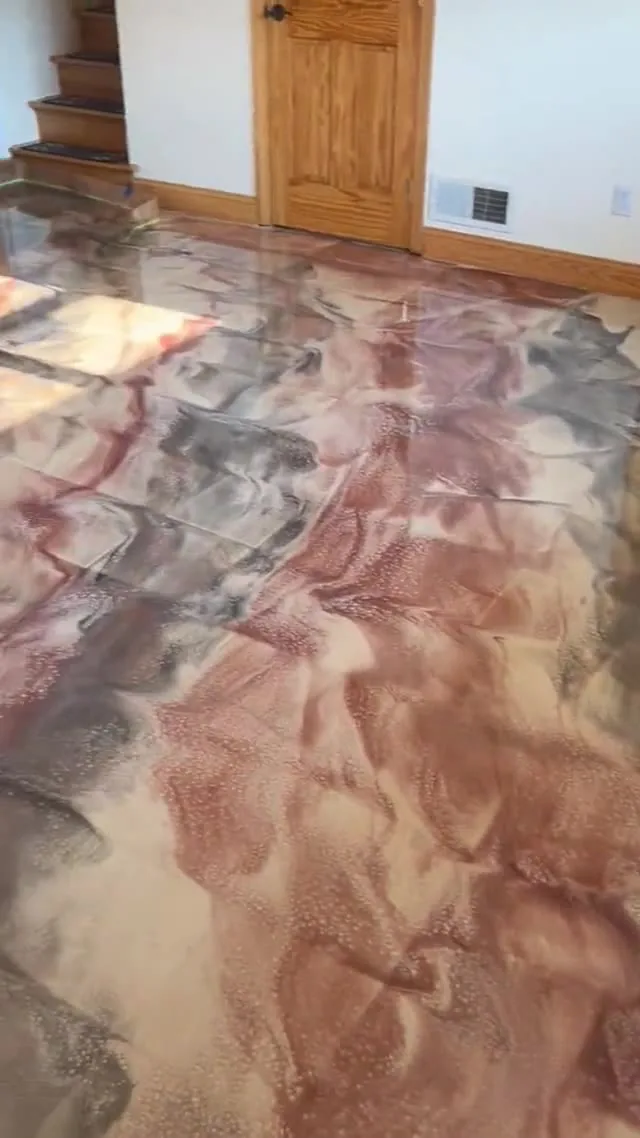
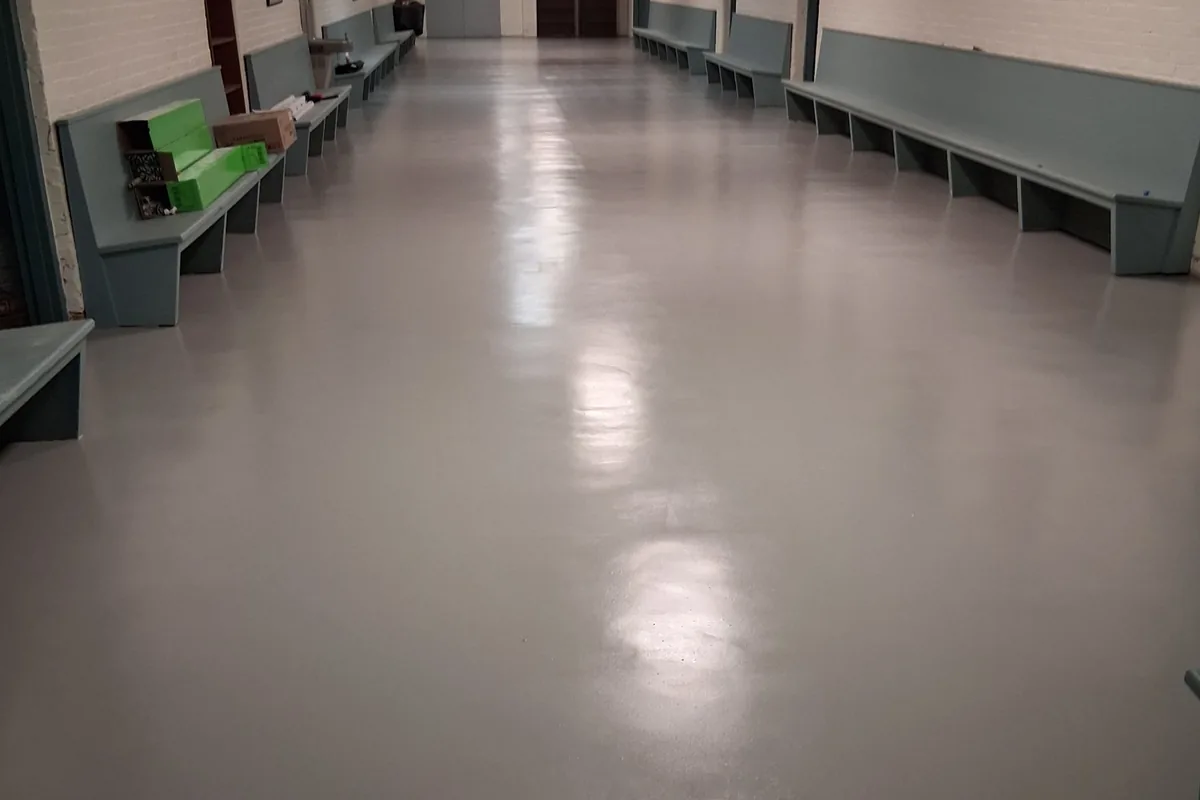
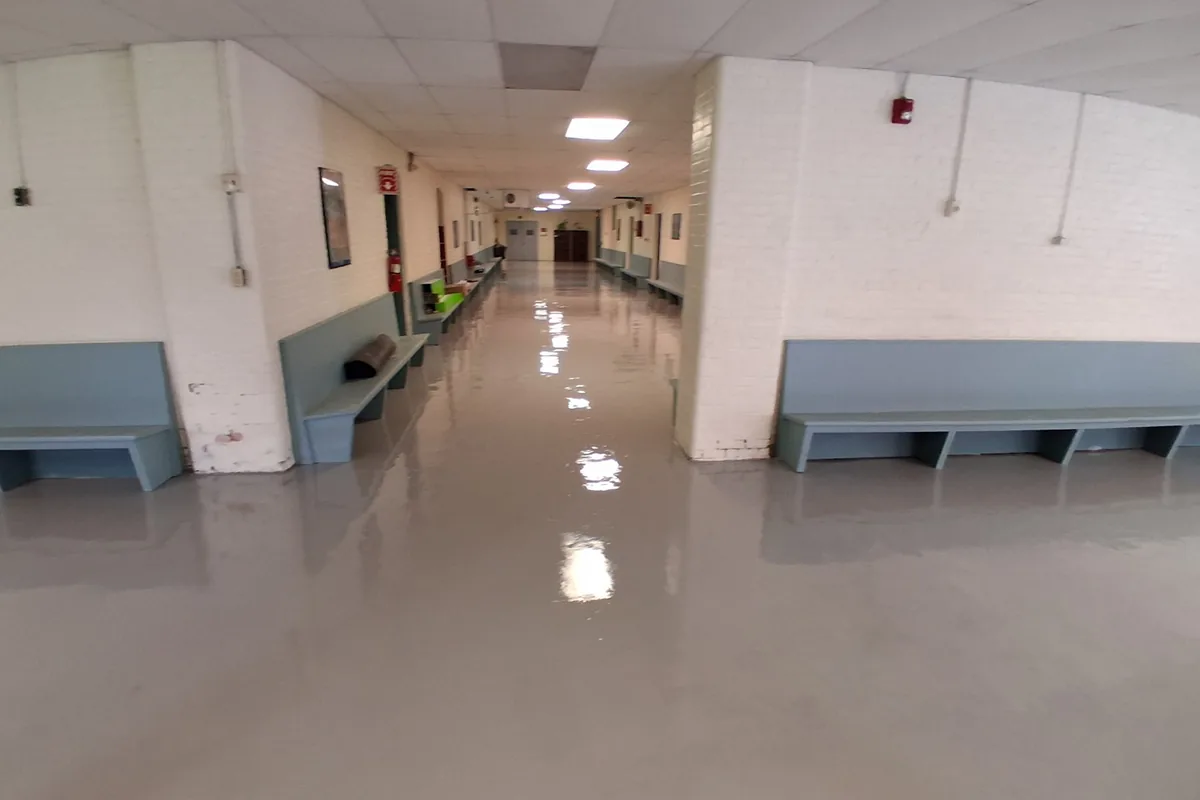
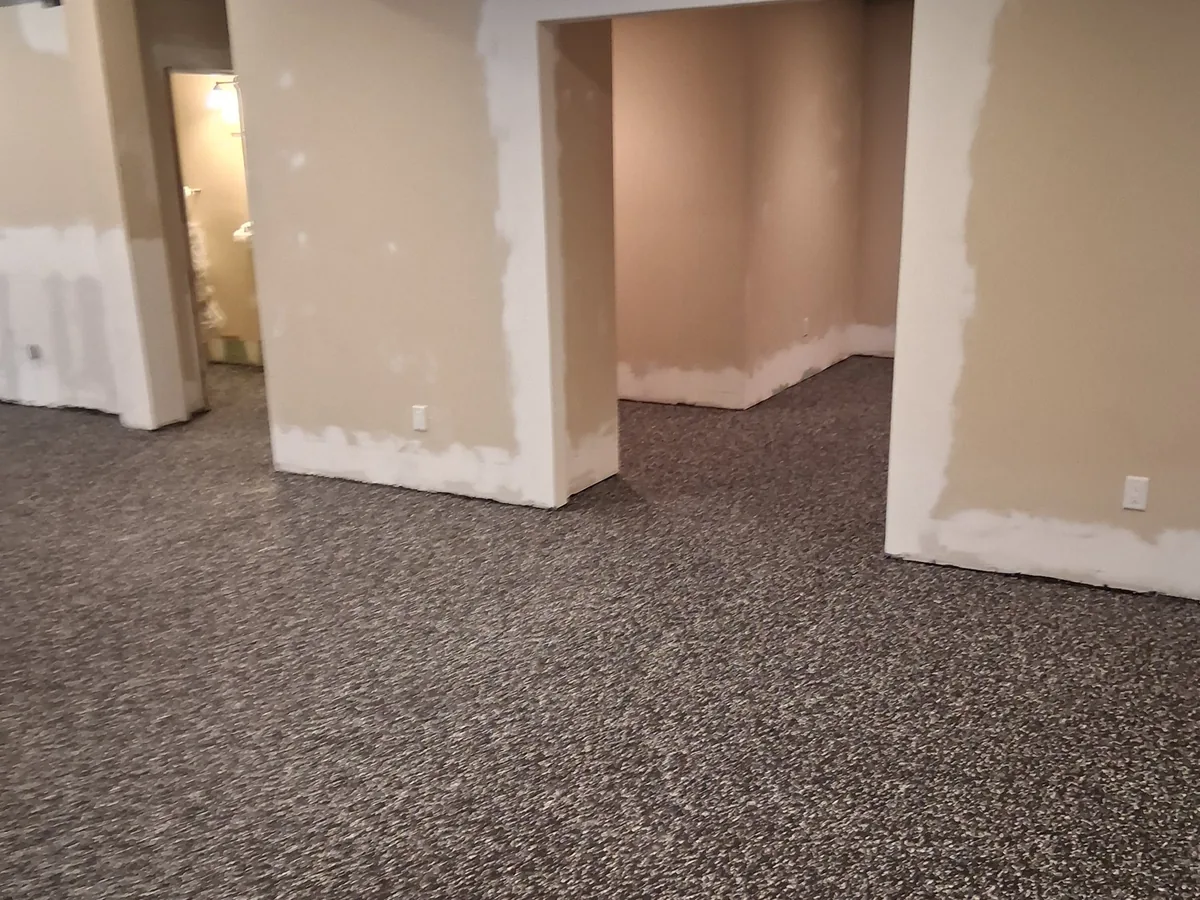
Every floor on this page is one we poured
We build it in place rather than cutting and fitting it, which is what gives you no seams and also what makes our preparation matter.
We pour resin onto something: your existing laminate, plywood, MDF or concrete. Whatever it is has to be rigid, level and properly fixed, because any flex underneath telegraphs through.
We abrade the surface so the resin keys to it, then build and tape your edge profile so the pour stops where it should.
We flood resin across the surface and work it out. On a metallic top we move the pigment while it is wet, which is where your pattern comes from.
We draw the bubbles out of the surface as it settles. That is why your poured top comes out glass-flat rather than showing tool marks.
A clear coat over the top carries your wear. Countertops take knives, heat and standing water in a way floors do not, so we specify this layer for that.
Both matter. This is a surface with genuine advantages and two honest constraints, and knowing them beforehand is the difference between you being delighted and being disappointed.
No joint at a corner or behind your sink for water and grime to get into. On a run with an inside corner that is a real hygiene and cleaning advantage over stone.
We can cut back a scratch or a dull patch and recoat it in your kitchen. Stone generally cannot be, and this is the advantage people underestimate.
A small thing, and you will notice it every day.
Your hot pans go on a trivet. That is true of more countertop materials than people expect, and we would rather tell you than have you find out.
The clear coat is hard and it is not a cutting surface. Neither is most stone, so use a board.
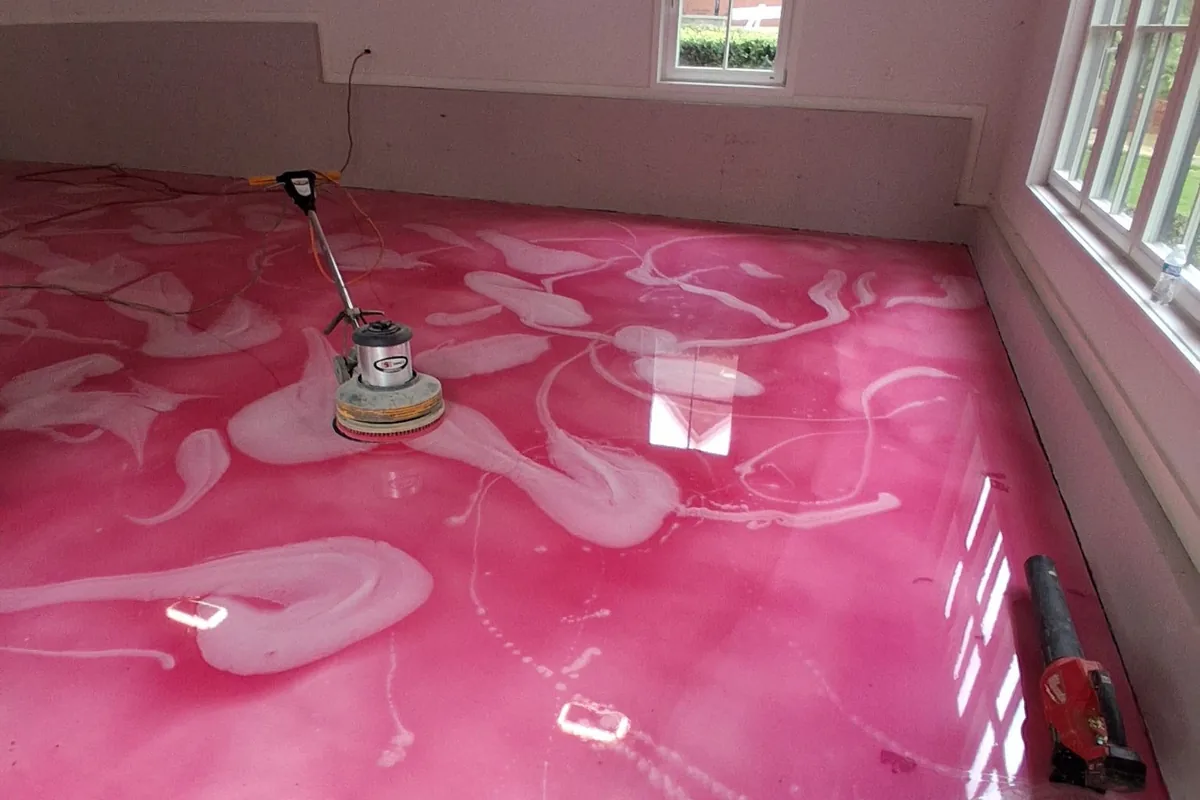
The part you will most enjoy, and the part we get asked about most.
Bring us a door front, a paint chip or a photograph and we will work the base to it.
On a metallic top your veining forms while the resin is moving. Two tops poured on the same day from the same tins do not match, which is the point of choosing it.
A sample board in the light of your own kitchen tells you more than any photograph, and it is worth asking for.
4.7 from 15 Google reviews. We publish every one of them on the reviews page, including the one star and what came of it.
excellent job on my Garage thanks again
best in the area when it comes to epoxy thanks gain Brad
Great experience thanks again Brad
An honest comparison, including where the others beat us.
Poured resin has no seams and can be repaired in place, which stone cannot. Stone takes more heat and resists scratching better. If you put hot pans down without thinking, stone is the better buy.
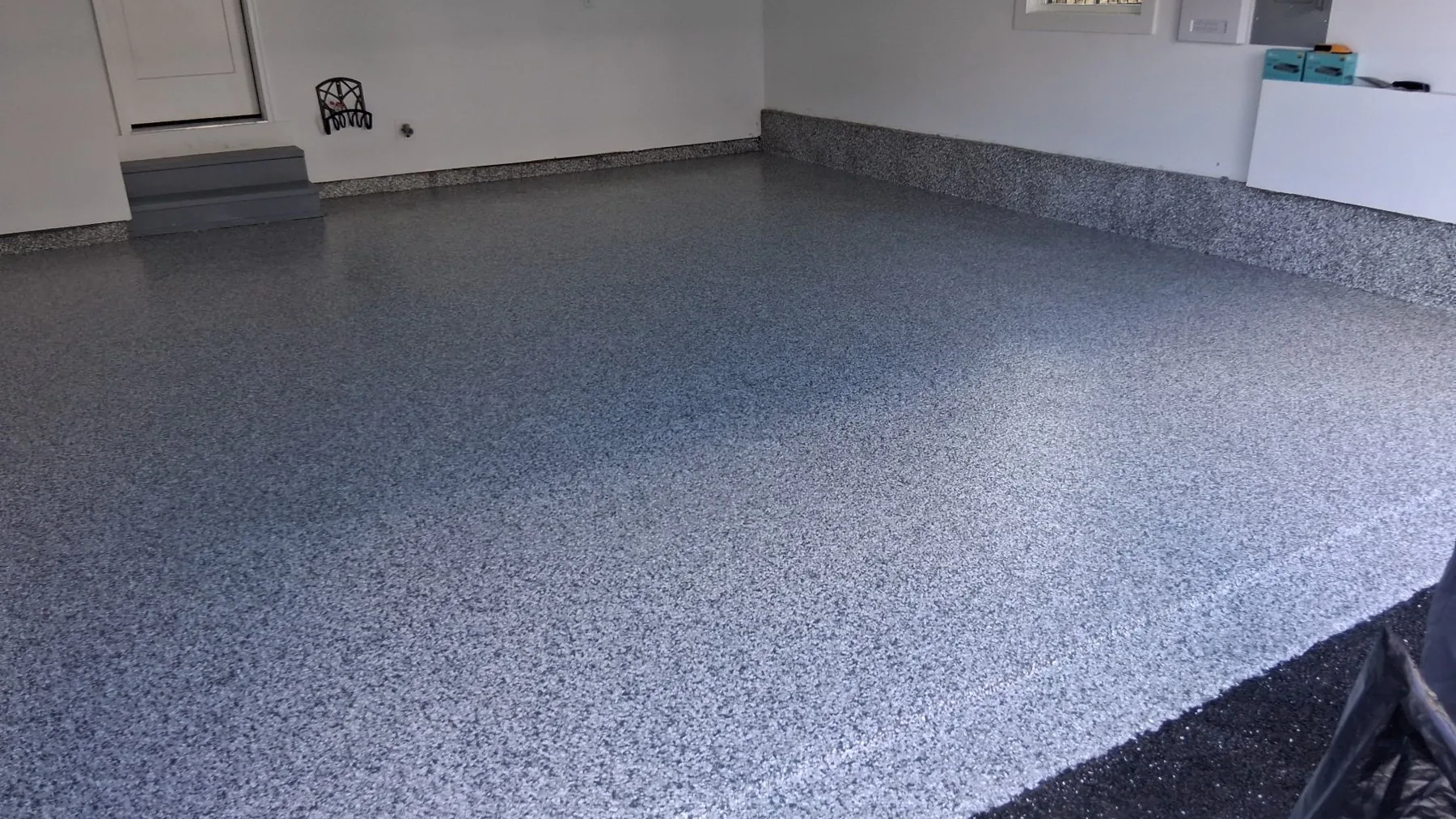
Resin is harder, seamless and far better looking. Laminate is cheaper, and you replace it rather than repairing it.
Both are repairable and both dislike heat. Resin gives you depth and movement a solid surface cannot, and solid surface is more predictable.
Similar look, very different weight. We can put resin over your existing cabinets where cast concrete usually needs them reinforced first.
Some of the best places to put this are not the one you are thinking of.
Your basement bar top is where metallic reads best: seen from above, under artificial light, and away from knives and hot pans.
A seamless, solvent-resistant bench top you can wipe down. It pairs naturally with a floor we do at the same time.
Water and no seams. A good application and a small one, so our minimum usually applies.
Commercial work where your surface is on display and takes hands rather than heat.
Very little, and there are two rules worth you remembering.
The single rule that matters. A pan straight off your hob can mark the surface, and that is true of more countertop materials than you would assume.
The clear coat is hard and it is not a cutting surface. Cutting directly on it leaves marks that need polishing out.
Nothing abrasive, nothing with grit in it, and no scouring pads. A bleach-based spray now and then is fine, just not as your daily habit.
We cut back a dull patch or a light scratch and refresh it in place, which is your advantage over stone. Deeper damage we recoat.
Unlike granite. There is no annual maintenance product to buy and nobody should be selling you one.
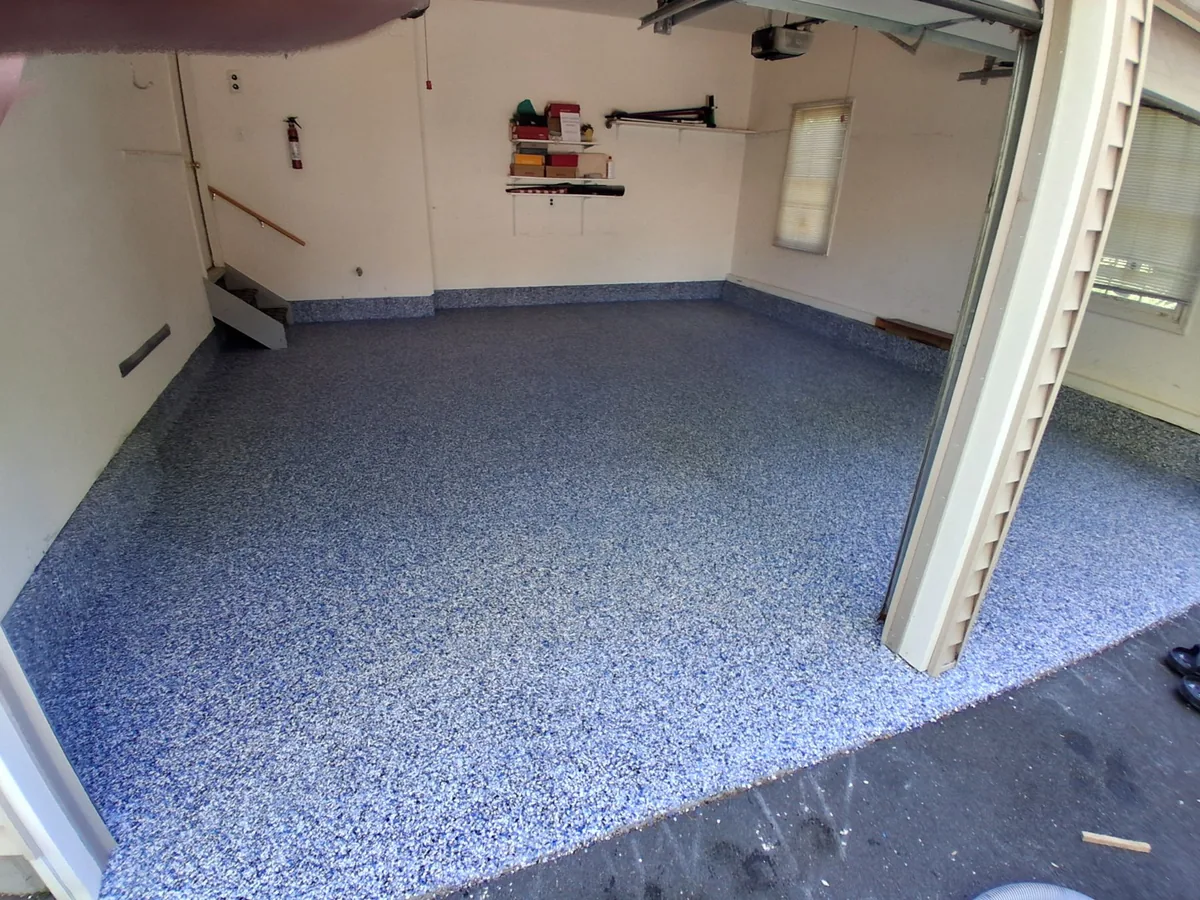
We install six systems, and most floors we put down combine two of them.
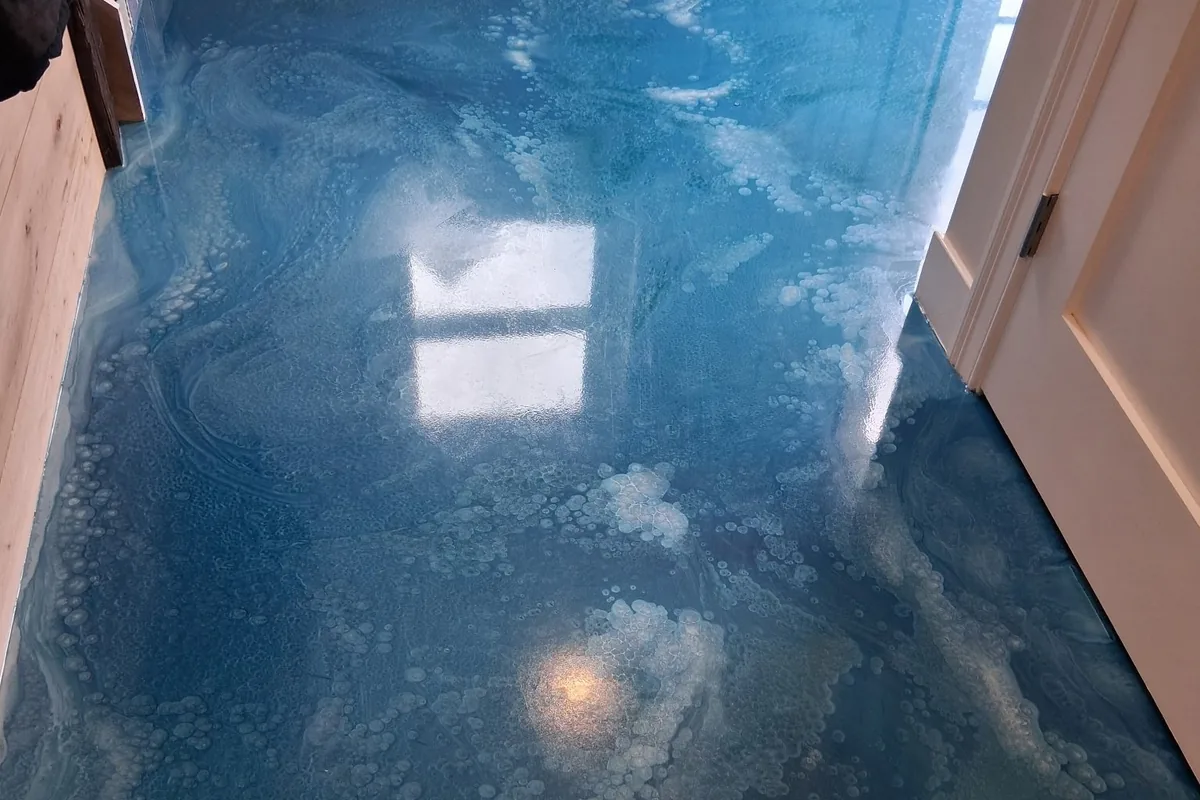
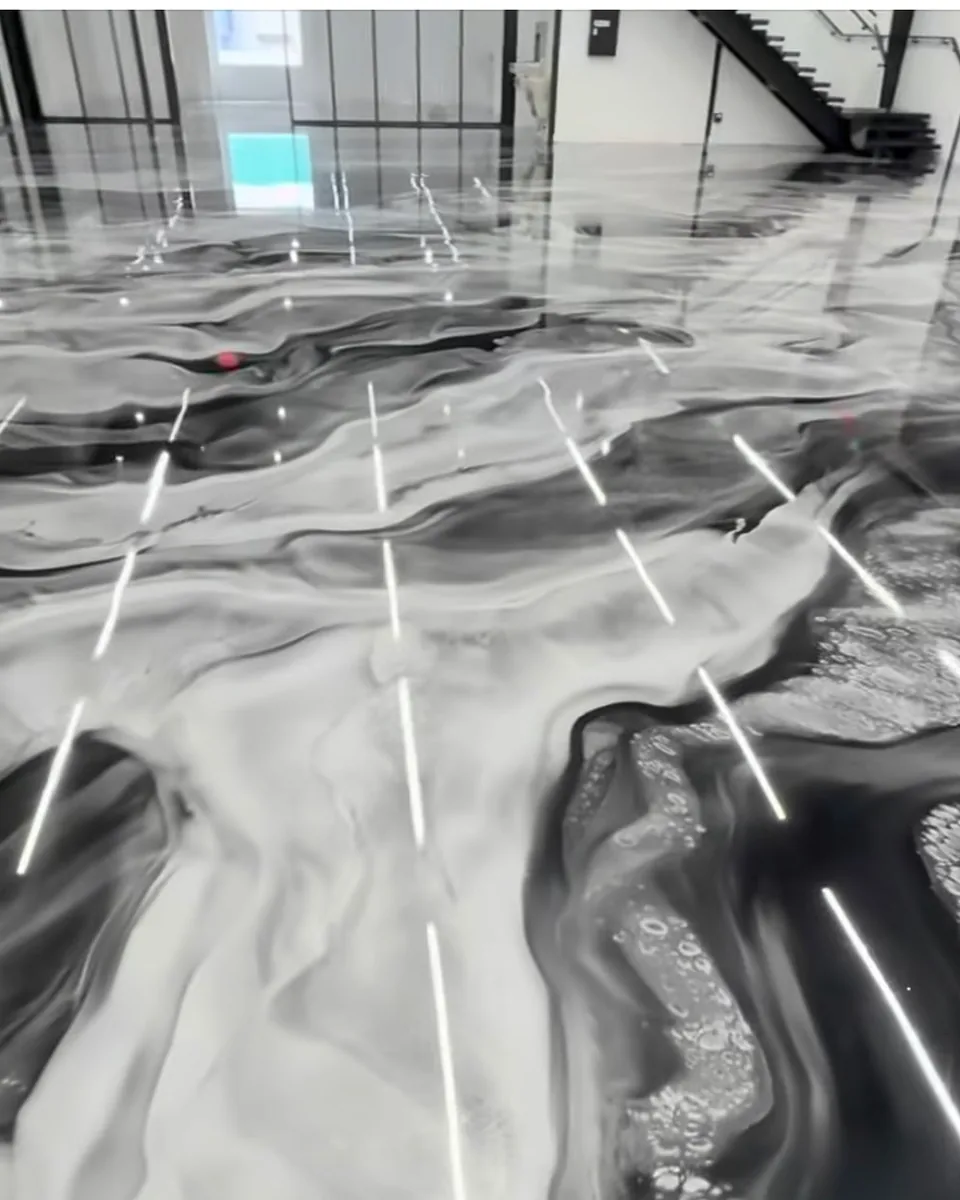
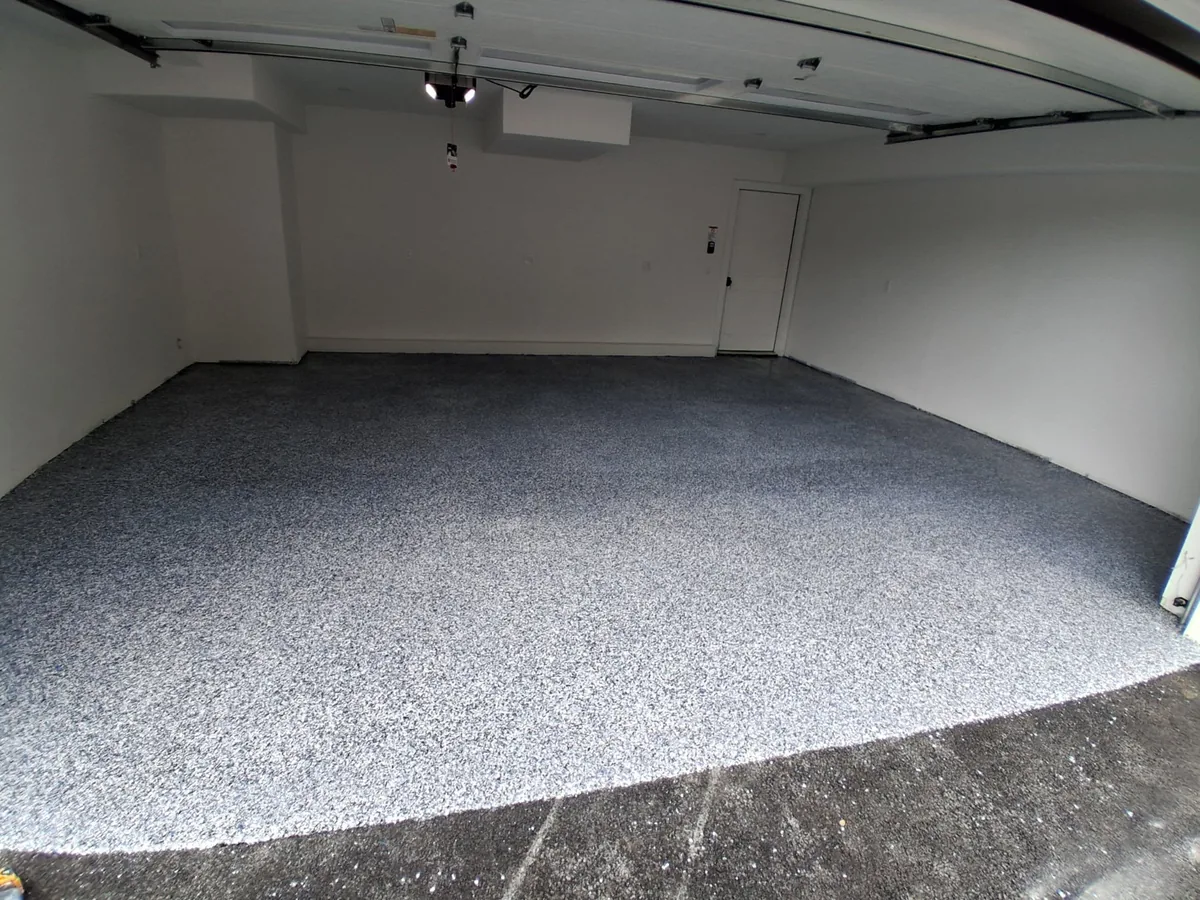
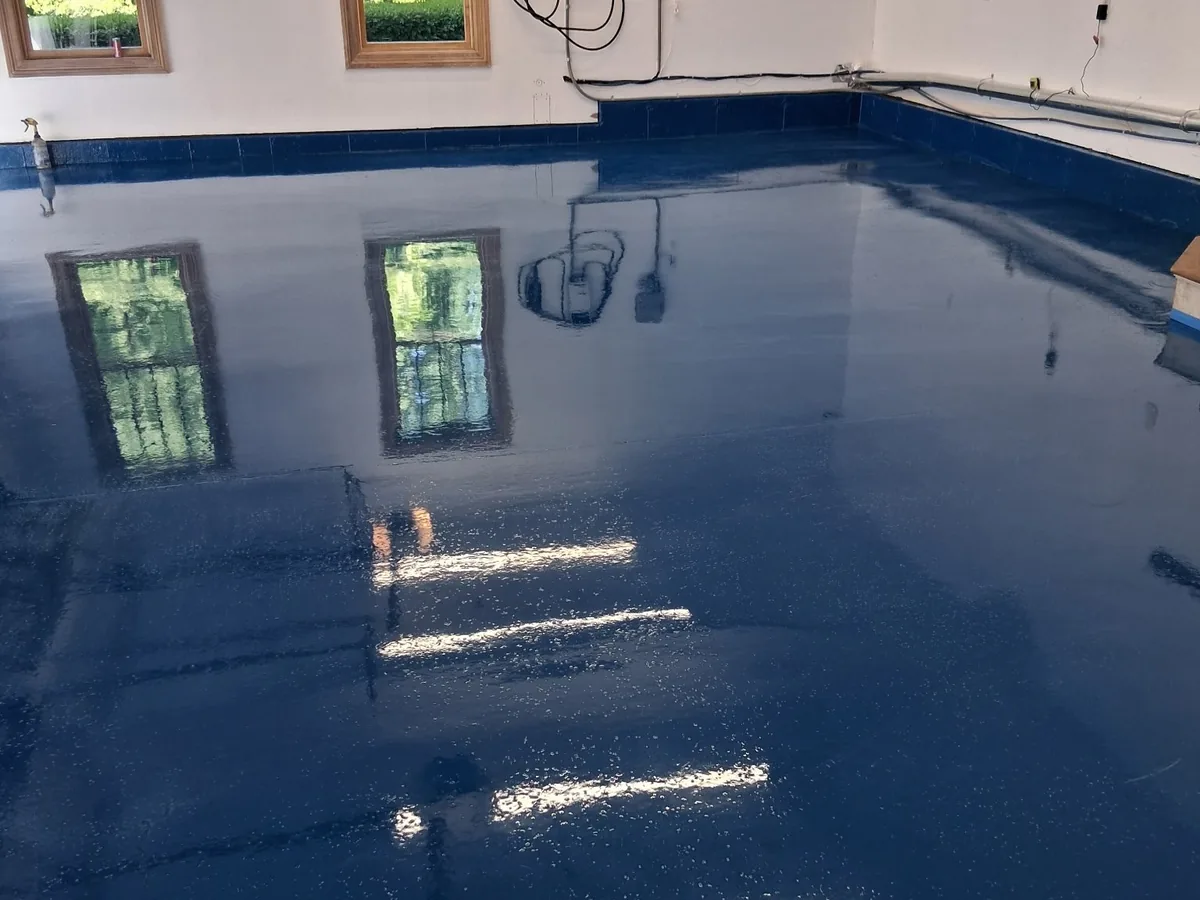
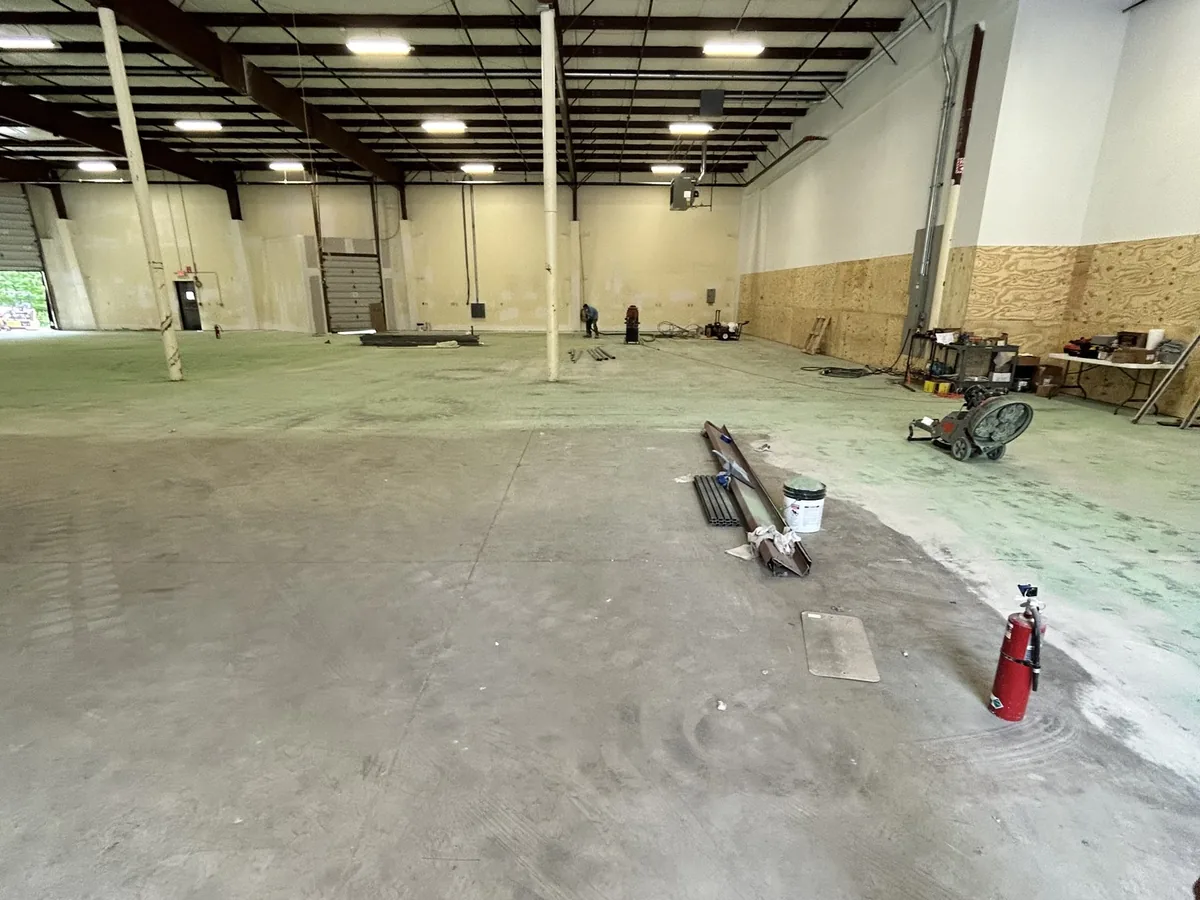
We put down four layers, and each one has its own job. Scroll and we'll take your floor apart so you can see them.
Three steps, and Brad does every one of them himself. Most residential floors are finished in a day.
Tell us the room and roughly how big it is. We'll talk you through the range and book a time to come and look, often the same day. Weekends count, and there's nothing to sign.
He checks for cracks, old coating and moisture, then measures up. You choose your flake blend or metallic against your own floor, not a brochure. Your written quote comes back the same day.
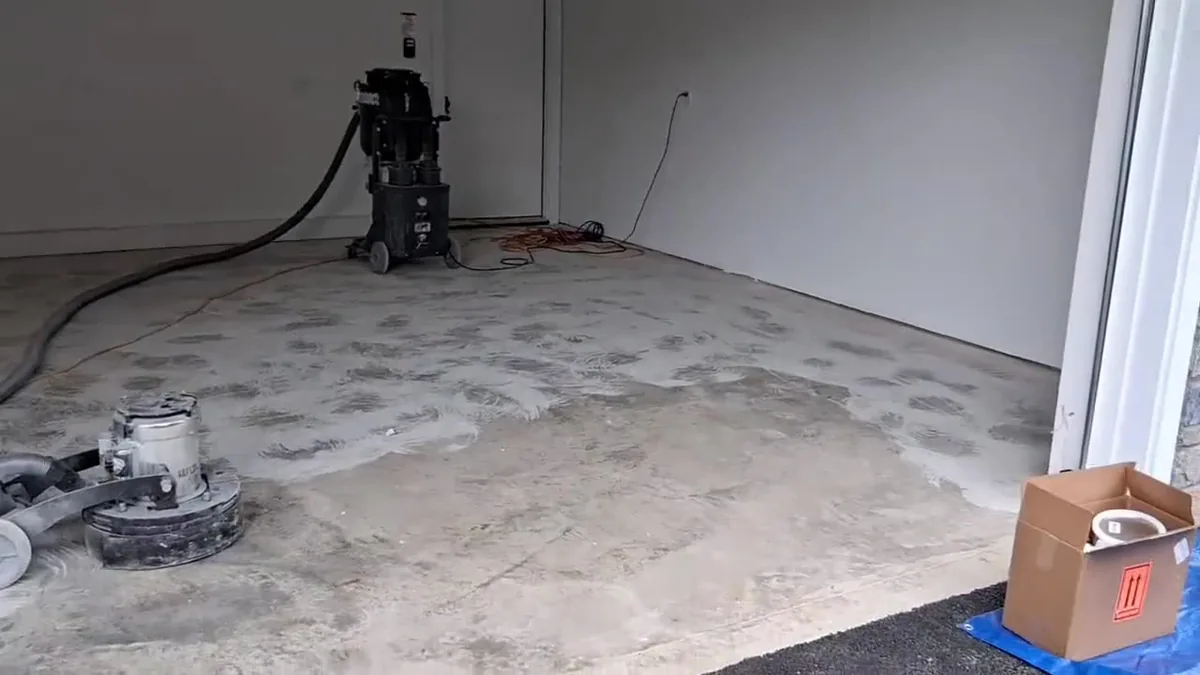
Your slab goes back to bare concrete under a diamond grinder with dust extraction. Then the primer, the body coat with your flake or metallic, and the top coat. You get your walk-on and park-on times with the quote.
Resin goes down as a liquid and cures as one surface, including around the sink. It is wiped down rather than scrubbed.
Get my free quoteOften, depending on what yours is and how sound it is. Brad will look at it.
Cure time is real and it is the constraint. Ask when he quotes so you can plan around it.
Yes, your small countertop falls under a flat minimum job rather than a rate by the foot.
Use a trivet. It handles warm, not a pan straight off your hob.
Use a board. The clear coat is hard and it is not a cutting surface.
Yes. Your small job or small countertop falls under a flat minimum rather than a rate by the foot. Brad tells you which yours is.
Not with a UV-stable top coat, which is what we put on your countertop if it sits in daylight.
Different. Resin is seamless and we repair it in place; stone takes more heat and resists scratching better.
Yes, and your basement bar is where metallic reads particularly well.
Warm water and soap. Nothing abrasive, no scouring pads, and you never need an annual sealer.
The resin layer itself is a few millimetres over whatever it is poured onto. The finished thickness comes from the substrate and the edge profile, both of which are decided with you.
We can do drainboard grooves and a sealed edge around your undermount sink. Tell us before we build the substrate, because it changes how we make the top.
Tell us roughly what you have and we'll come and look at it. The quote is free, there's nothing to sign, and you'll know what your floor costs before you commit to anything.
Get Your Free Quote Call or Text (203) 496-6386