
Cove base is usually the requirement
We turn your floor up the wall so there is no 90 degree joint at the edge. It is the detail inspectors look for and the one most often missing on a cheap installation.
Colored quartz aggregate is broadcast into resin to build a thick, dense floor with grip designed into it. It goes where the traffic is heavy and the floor gets washed down. Commercial kitchens, labs, workshops and food areas are the usual places we put it.
Free, no obligation, and nothing to sign. We answer the same day, weekends included.
Weight and build. Quartz is a mineral aggregate we use to build real thickness. Flake is a vinyl chip that mostly changes your surface.
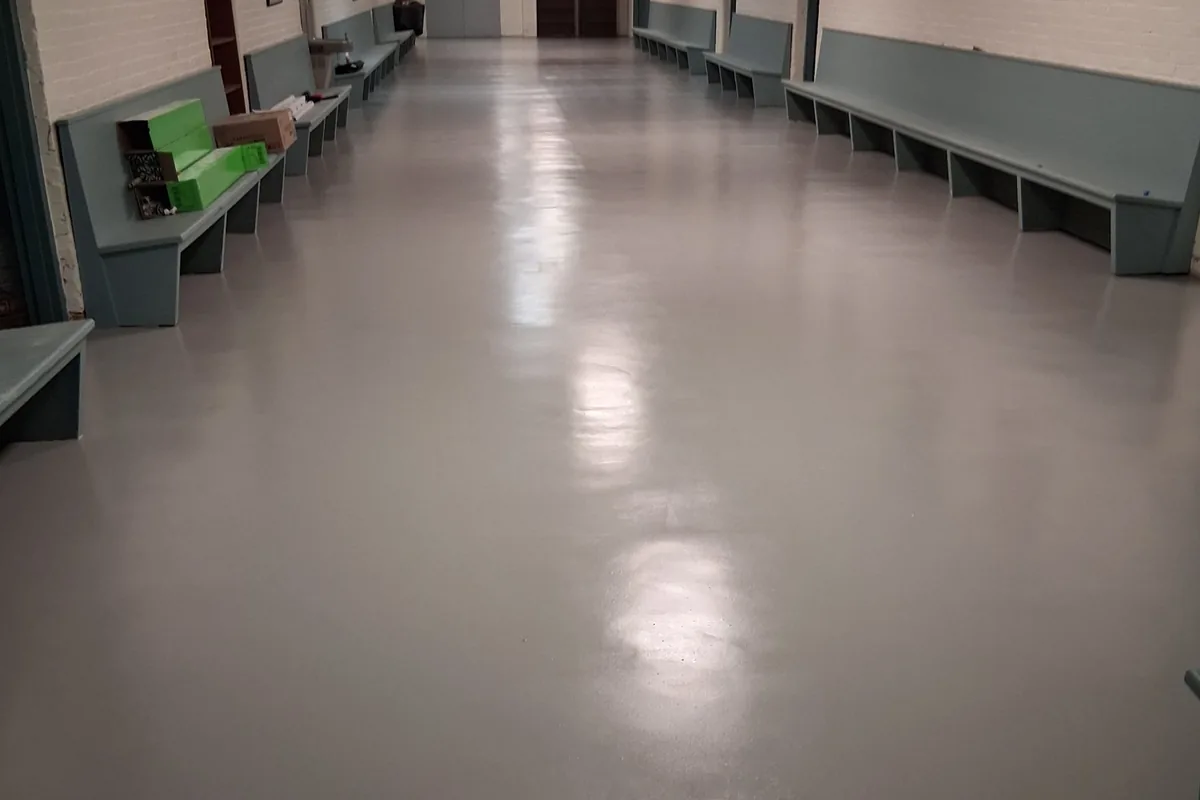
We put quartz on heavier, so your floor takes impact and abrasion better than a flake floor of the same footprint. That thickness is what you are paying for.
The aggregate itself gives you the texture, so your slip resistance does not depend on grit we added to a top coat. That matters where a floor is wet as a matter of routine.
Your surface takes hot water and commercial cleaning. In a kitchen or a lab that is usually a requirement rather than a preference.
Anywhere you have a health inspector, a wash-down hose or a pallet truck.
Wet floors, hot spills and daily cleaning. We normally put cove base up your wall in the same job so there is no joint at the floor edge.
Chemical exposure and dropped equipment. The thickness we build is what survives the second one.
It costs more than your garage needs and the look is functional. Flake does that job better for you.
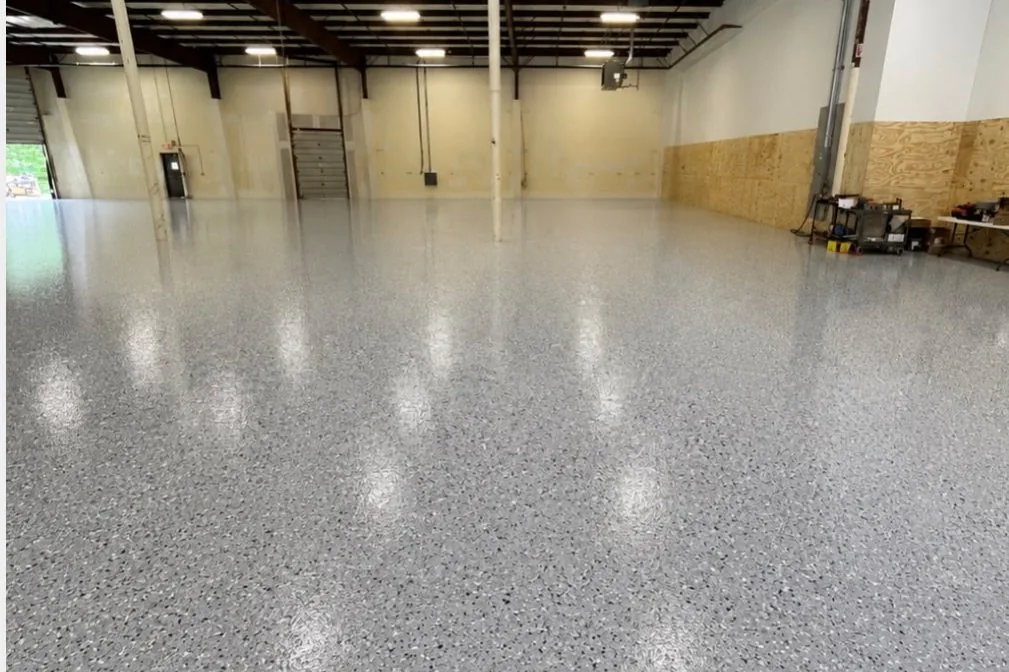


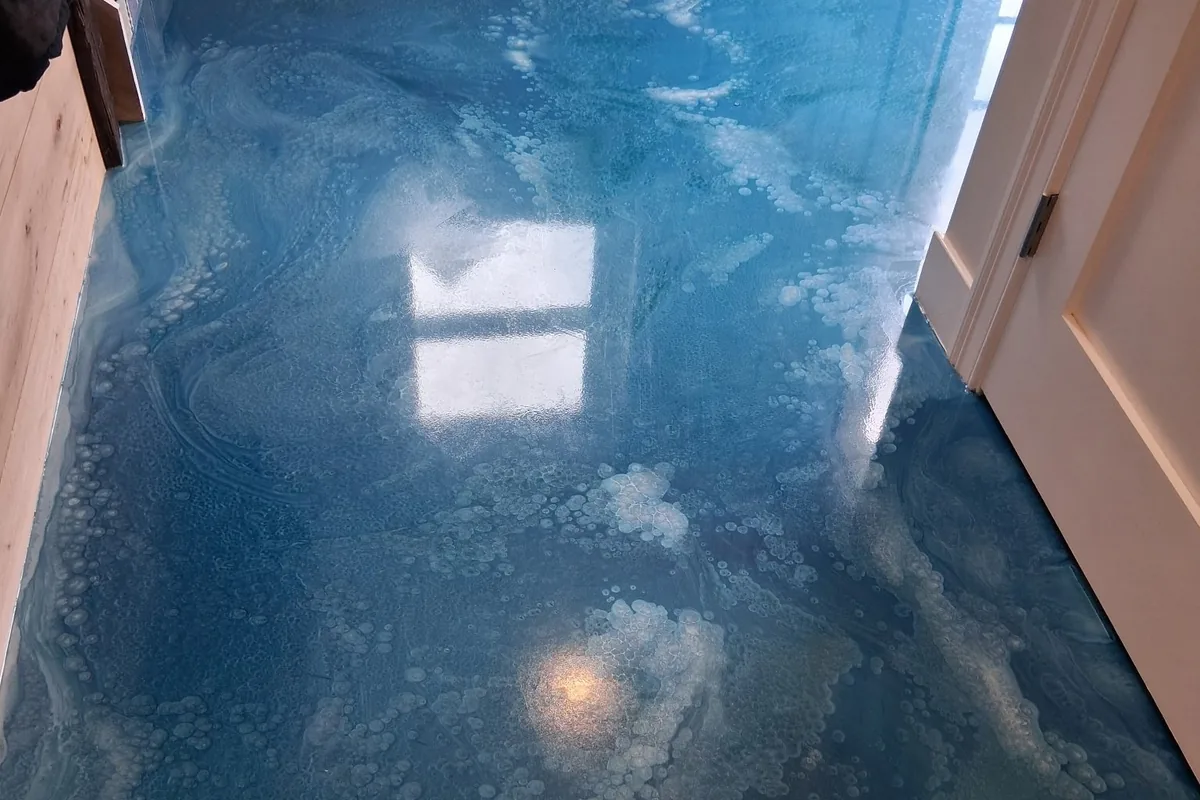
Every floor on this page is one we poured
Heavier than any other system here, and we build it in layers rather than coating it.
On the commercial floors quartz normally goes on, we shot blast your slab rather than grinding it. It opens a large area quickly and gives us a consistent profile.
We broadcast colored quartz aggregate into resin to refusal, exactly as we do flake, but the aggregate is mineral and it builds you real thickness rather than surface.
For heavier duty we repeat it, which is how your quartz system reaches builds that carry impact.
A clear or pigmented coat fills between the aggregate. How much it fills decides your finished texture, from lightly textured to almost smooth, and we specify that around how you clean it.
In food areas we turn the system up your wall so there is no joint at the floor edge.
It costs you more to install than flake, and there are specific reasons we would put it in.
Hot water, grease, daily cleaning and inspection. That combination destroys thinner systems.
Chemical exposure, plus a surface you have to clean to a standard rather than to a preference.
Warehouses, workshops, loading areas. The thickness carries what a thin coating chips under.
Your slip resistance comes from the aggregate rather than from grit we added to a top coat, so it does not wear away as a broadcast texture.
It costs more than a garage needs and the look is functional. Flake does that job better and cheaper.
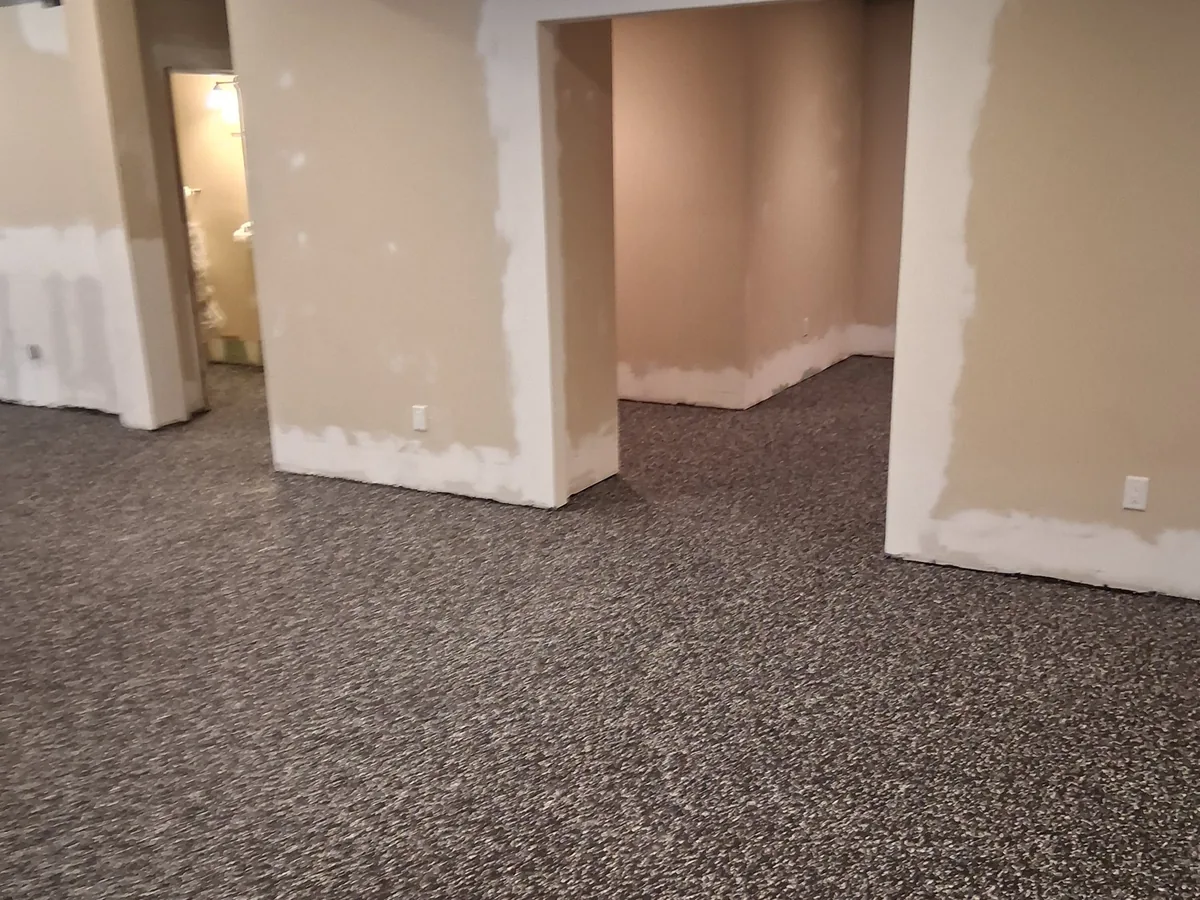
The one genuine trade-off in a quartz floor.
And holds more. In your kitchen the floor is mopped or scrubbed daily, and the texture is what the brush has to get into.
And is less safe when wet. A fully grouted quartz floor is close to smooth.
Your wet kitchen line and your dry storage area can reasonably get different finishes, and often should.
4.7 from 15 Google reviews. We publish every one of them on the reviews page, including the one star and what came of it.
best in the area when it comes to epoxy thanks gain Brad
Great experience thanks again Brad
Great experiwnce with brad thanks for the great floor
In food premises your floor is part of what gets inspected, so we specify to the requirement rather than to taste.
We turn your floor up the wall so there is no 90 degree joint at the edge. It is the detail inspectors look for and the one most often missing on a cheap installation.
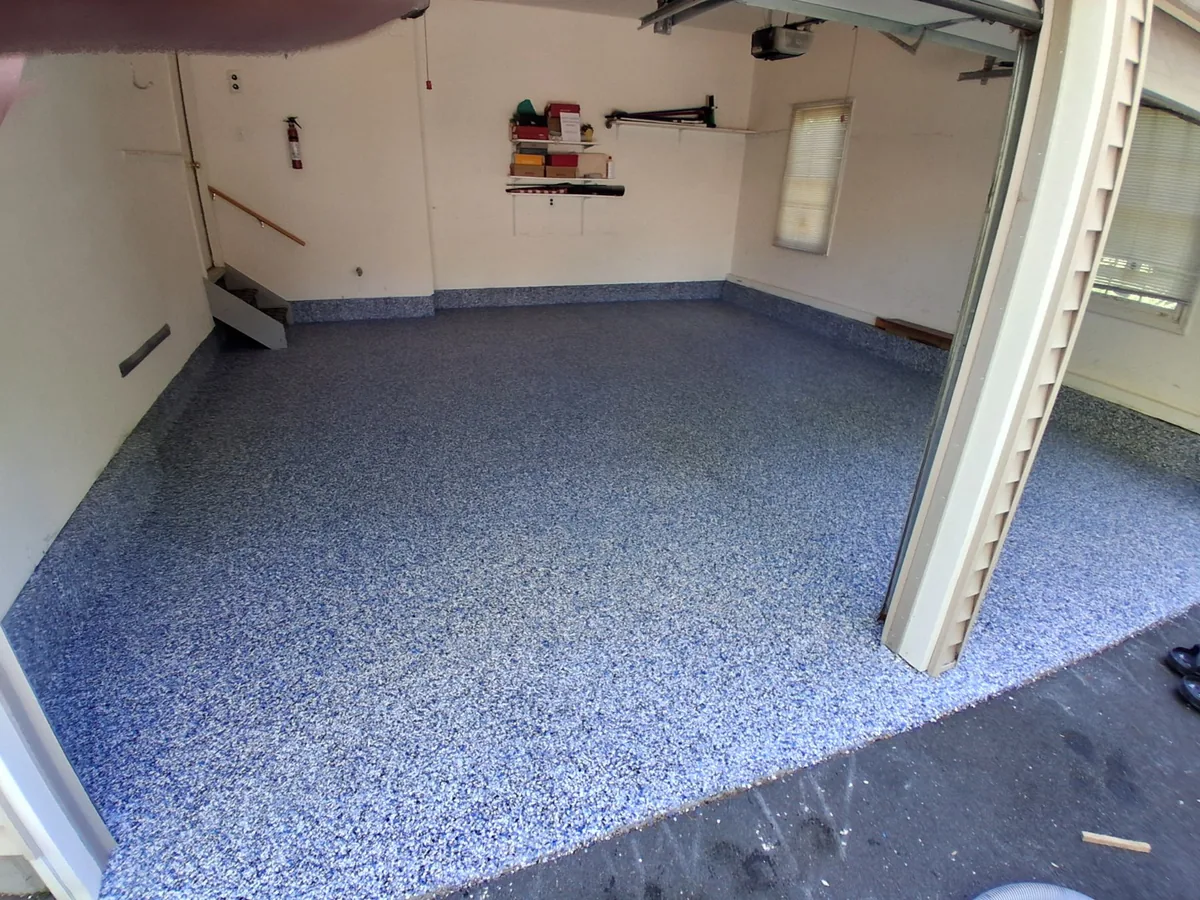
A sealed quartz system does not absorb, which is the property behind most food-safe flooring requirements you have to meet.
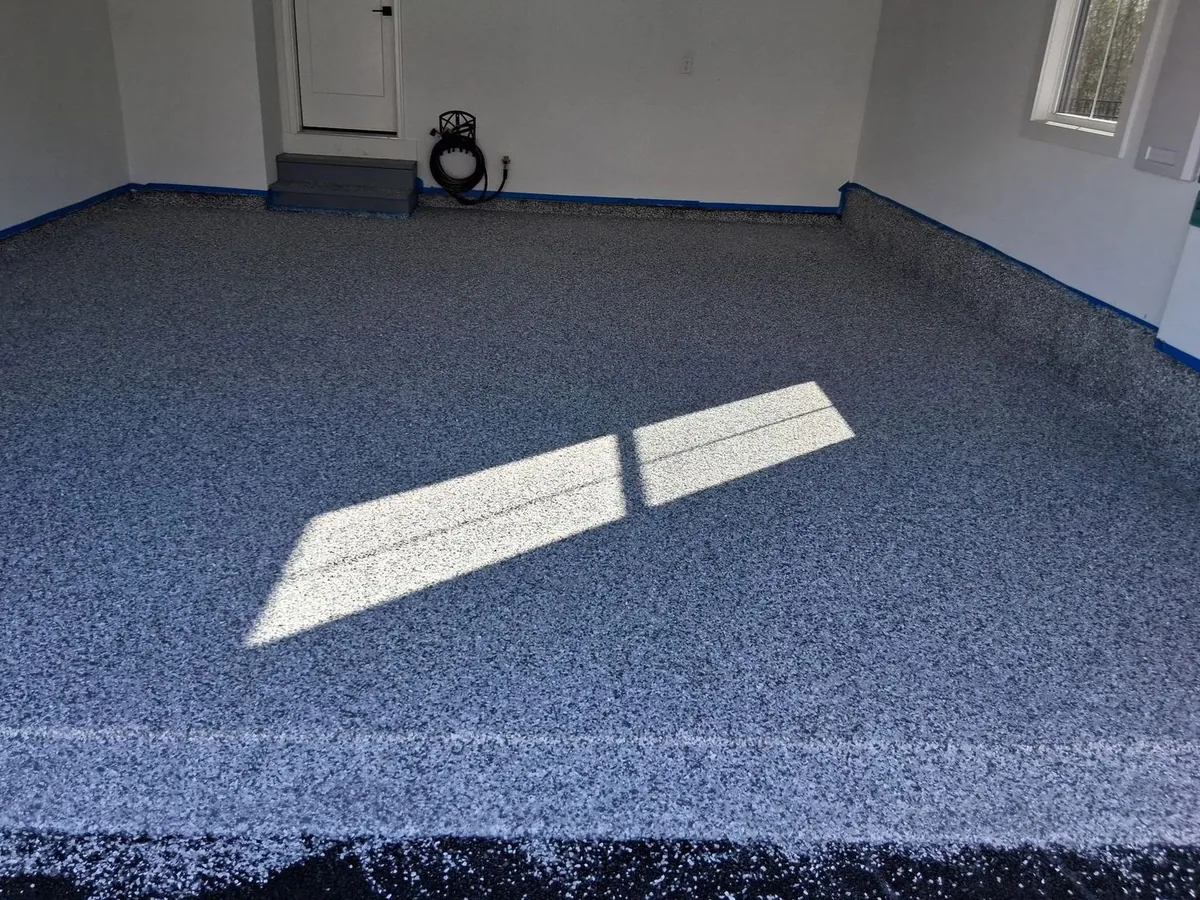
Your wash-down floor has to drain. We treat the falls as part of the floor rather than a plumbing afterthought, because correcting it later costs you a lot.

Ask us for the system data sheets. If your premises gets inspected, having them on file is worth more than remembering the brand name.
The longest-lived system Atlas installs, with predictable wear points.
Which is good, because we can renew it. We usually refresh your quartz floor by recoating rather than replacing it.
Your forklift turning circles, doorways and the ends of aisles go first. We recoat those areas on their own.
Rather than as failure. Dulling in one area is a useful early warning that something is being spilled we did not specify for.
A well-bonded quartz floor damaged by impact loses a chip. It does not delaminate, and a chip is a straightforward repair for us.
Less freedom than a pigmented system and more than people expect.
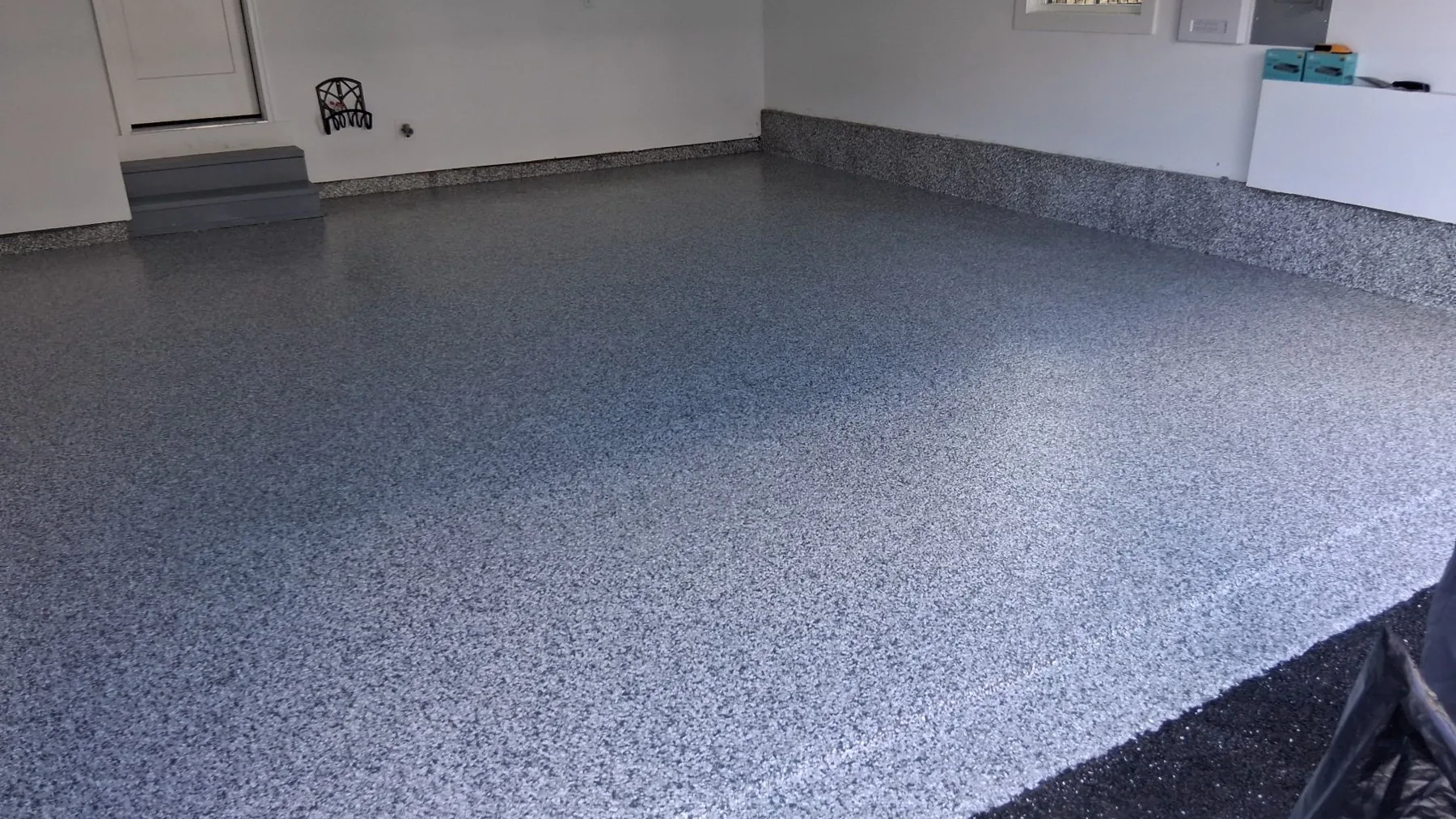
It is a colored mineral rather than a pigment, so you pick from stock colors. The range is wide.
We mix two or three aggregate colors to give you the finished look, and a blend hides soiling far better than a single color does.
As with flake, a blend in your hand reads differently across a whole floor. Ask us for a board.
Mid-tone blends hide both light flour dust and dark grease, which is your actual daily condition rather than the theoretical one.
We put down four layers, and each one has its own job. Scroll and we'll take your floor apart so you can see them.
We install six systems, and most floors we put down combine two of them.
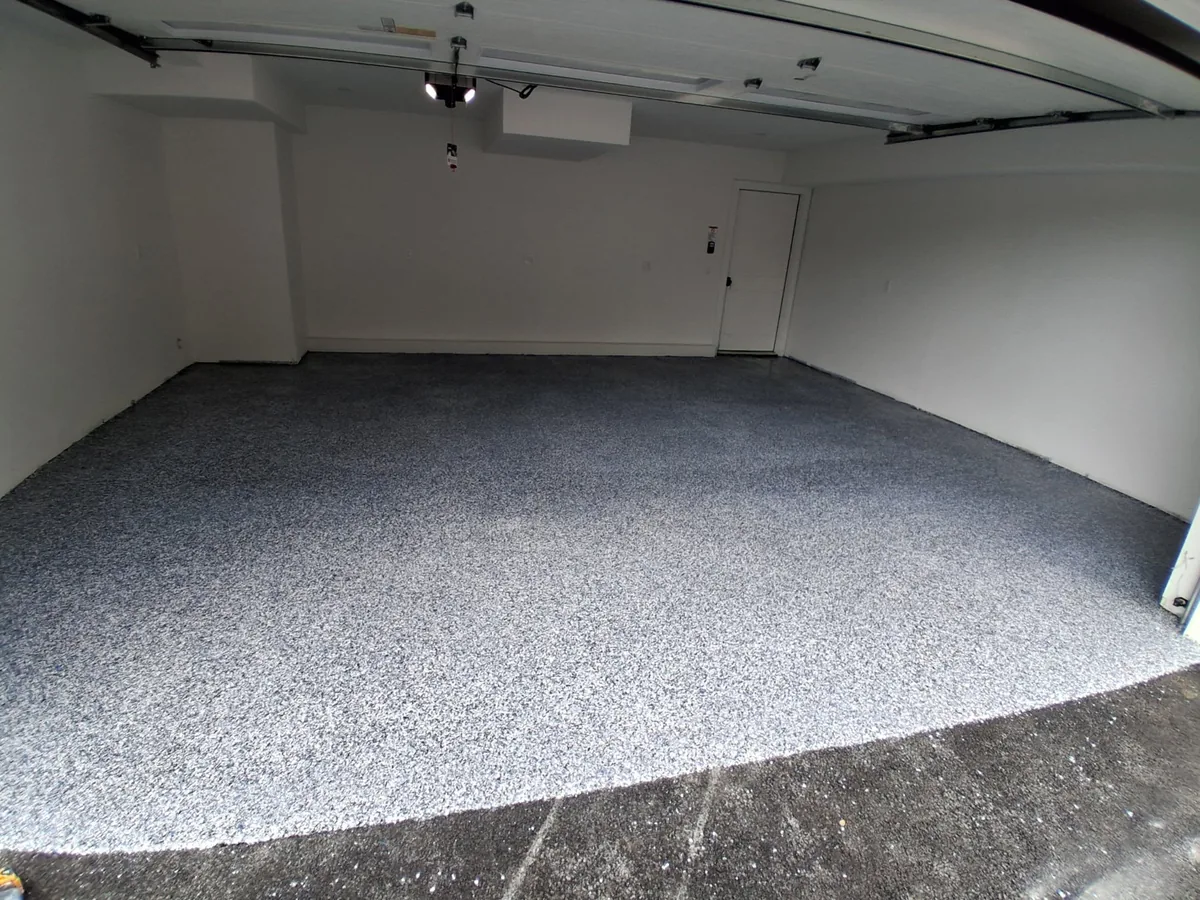
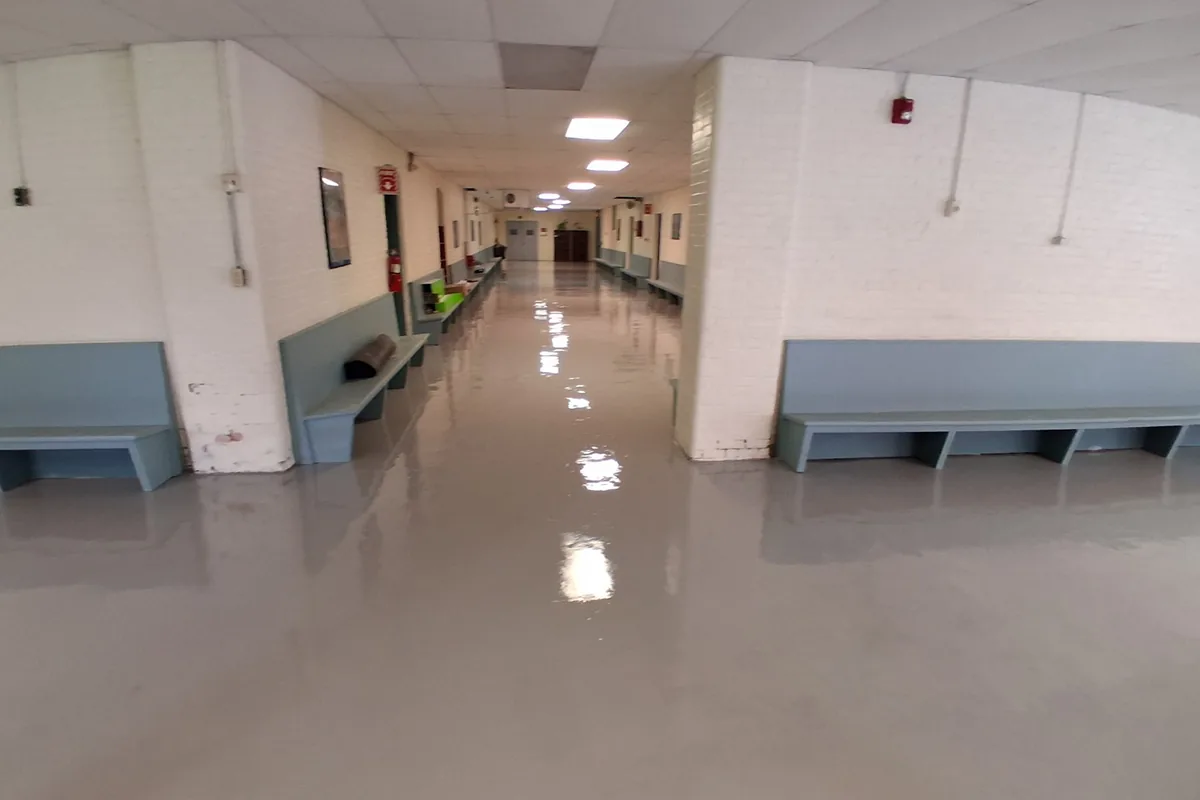
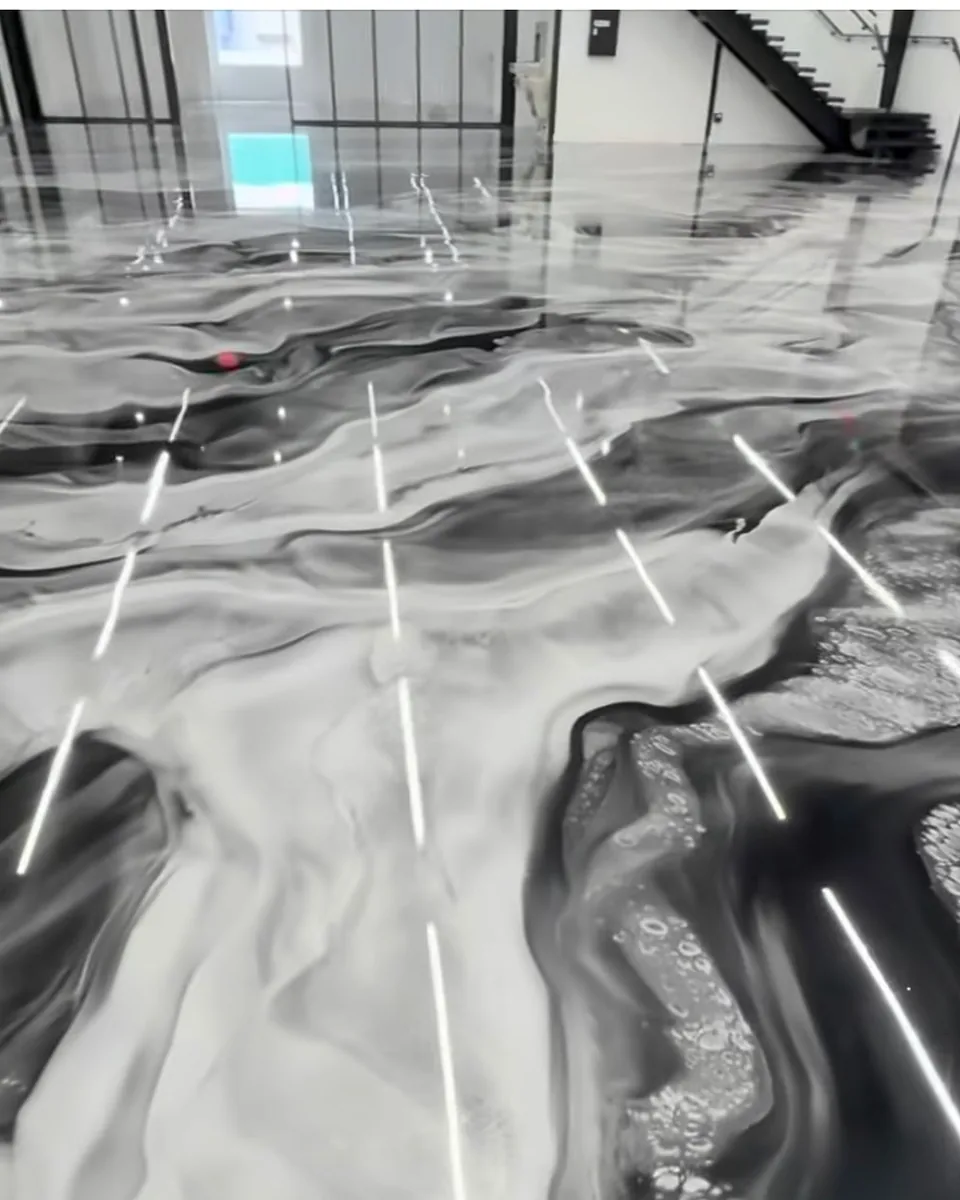
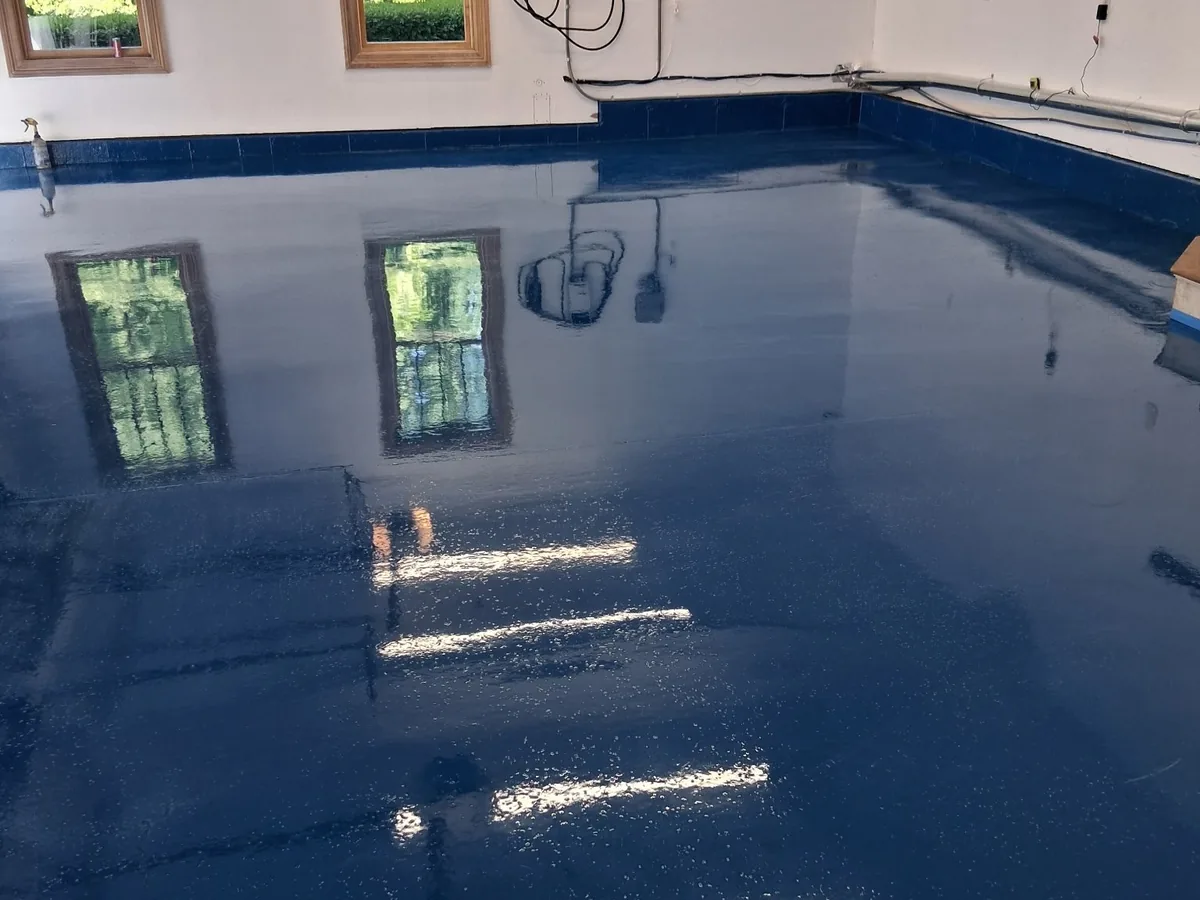
Three steps, and Brad does every one of them himself. Most residential floors are finished in a day.
Tell us the room and roughly how big it is. We'll talk you through the range and book a time to come and look, often the same day. Weekends count, and there's nothing to sign.
He checks for cracks, old coating and moisture, then measures up. You choose your flake blend or metallic against your own floor, not a brochure. Your written quote comes back the same day.
Your slab goes back to bare concrete under a diamond grinder with dust extraction. Then the primer, the body coat with your flake or metallic, and the top coat. You get your walk-on and park-on times with the quote.
Aggregate broadcast into the resin for a hard, textured surface. This is the system that goes down when slip resistance is specified rather than hoped for.
Get my free quoteNo. Polished concrete is your slab itself, ground and polished. Quartz is a resin system we build on top of it.
The aggregate comes in set colors and we blend them. The ranges are wide and it is not a paint match.
In a kitchen or a wash-down area, normally yes, so you get no joint where your floor meets the wall.
Colored quartz aggregate broadcast into resin, built in layers, then sealed. It is thicker and denser than the flake or solid color floor we would put in a house.
It is what we normally specify, with cove base up the wall so you get no joint where the floor meets it.
The aggregate comes in set colors and is blended. The range is wide but it is not a paint match.
Your grip comes from the aggregate itself rather than from grit in a top coat, and how much shows through is something we specify with you.
Rarely. It costs more than your floor needs and the finish is functional. Flake usually suits a home better.
Usually yes. We turn your floor up the wall so there is no joint at the edge, and it is the detail inspectors look for.
It is the longest-lived system we install. The grout coat wears before the aggregate does, and we refresh it by recoating rather than replacing.
The aggregate comes in stock colors and we blend them. The range is wide and it is not a paint match.
It works and it is more than your garage needs. Flake costs you less, hides the slab better and suits domestic traffic.
Tell us roughly what you have and we'll come and look at it. The quote is free, there's nothing to sign, and you'll know what your floor costs before you commit to anything.
Get Your Free Quote Call or Text (203) 496-6386