
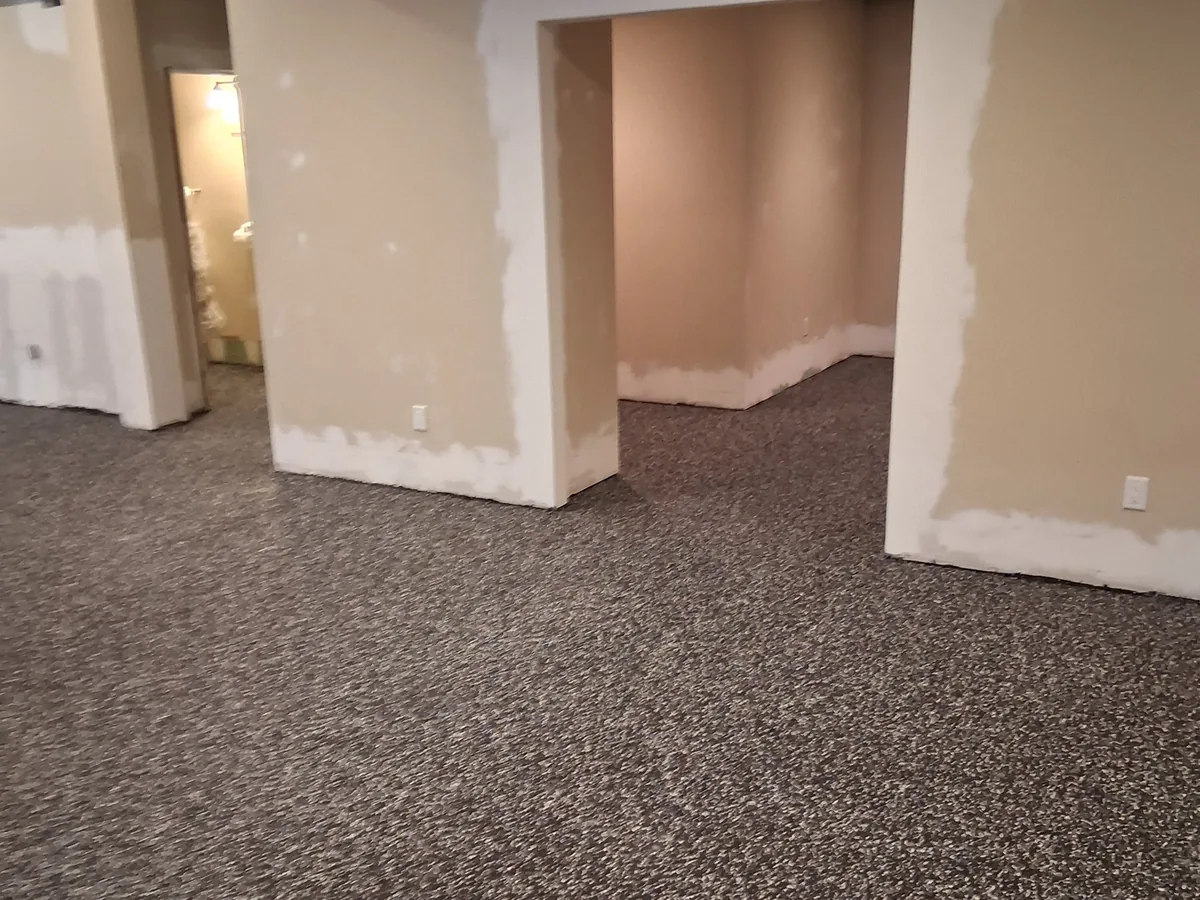
They all need the slab ground
Every system on this site fails the same way over unprepared concrete, and etching or washing is not a substitute for the grinding we do.
A resin floor is a system, not a product. Flake hides a rough slab and gives you grip. Metallic gives you a floor nobody else has. Quartz takes abuse. Solid color reads clean and plain. Polyaspartic cures fast and holds its color in sun. Anti-slip is for anywhere that gets wet.
Free, no obligation, and nothing to sign. We answer the same day, weekends included.
Start with your room and how you use it. The look comes second, because a system that is wrong for your traffic will fail whatever color it is.
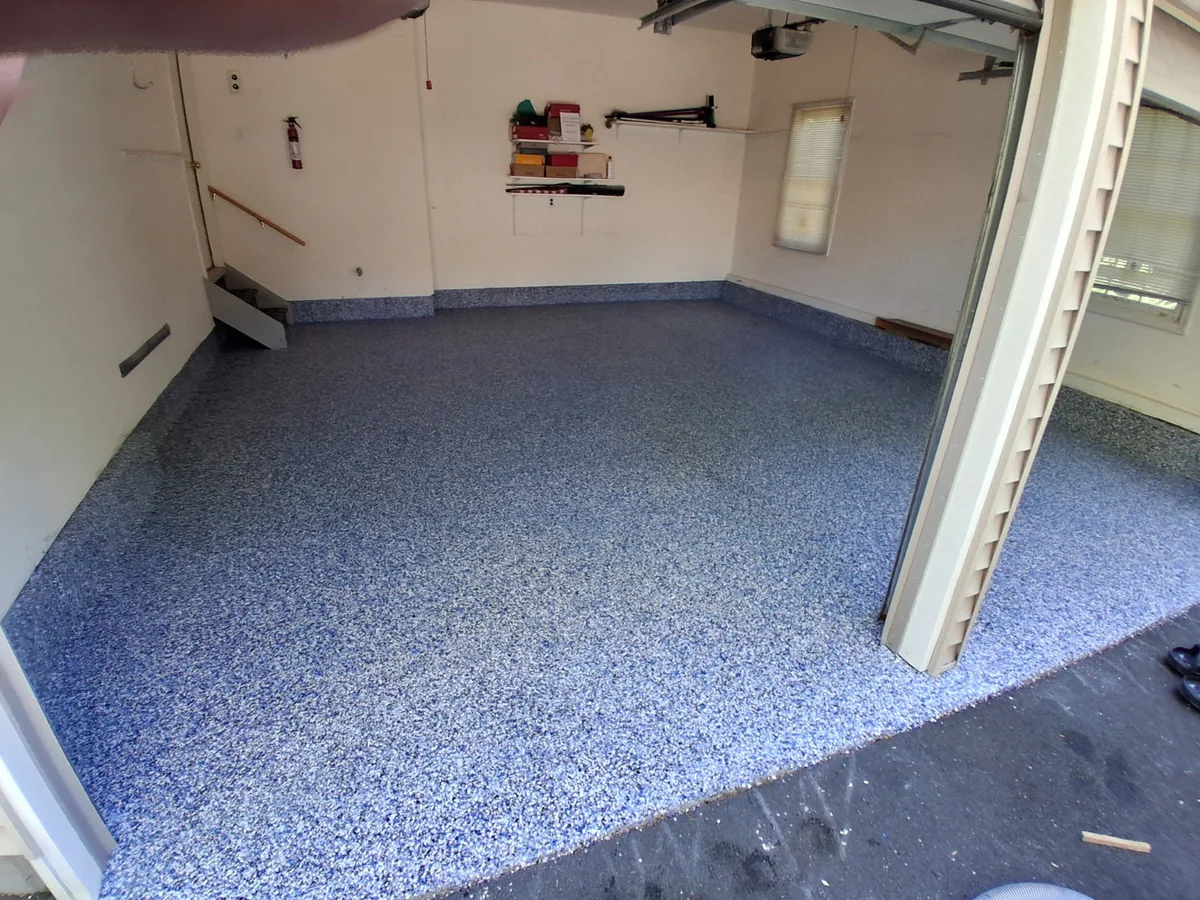
A slab with cracks, pitting or old coating on it narrows your list before anything else does. Prep is most of our job and it decides whether your floor is still there in ten years. Brad reads your slab before he talks to you about systems.
A garage takes hot tires and dropped tools. A basement takes moisture from below. A pool deck takes standing water and bare feet. A workshop takes solvents. Each of those rules something out for you.
Epoxy ambers where daylight hits it directly. If your space has a window wall, a glass door, or open sky, we make the top coat UV stable or your color shifts. This is the single most common reason a floor looks wrong two summers later.
Epoxy is the body of your floor. Polyaspartic is usually the top coat we put over it. Most floors worth having use both.
Thick, hard, and it bonds hard to prepared concrete. It carries your color and your chips. It cures slowly, which is useful, because it gives the flake time to settle flat.
Cures fast, stays clear in sunlight, and takes abrasion well. It goes on top. It is also what lets us turn your floor around in a week, because we recoat it in hours rather than overnight.
Epoxy for build and adhesion, polyaspartic for wear and color hold. If somebody sells you a floor as one or the other, they are describing its top coat.
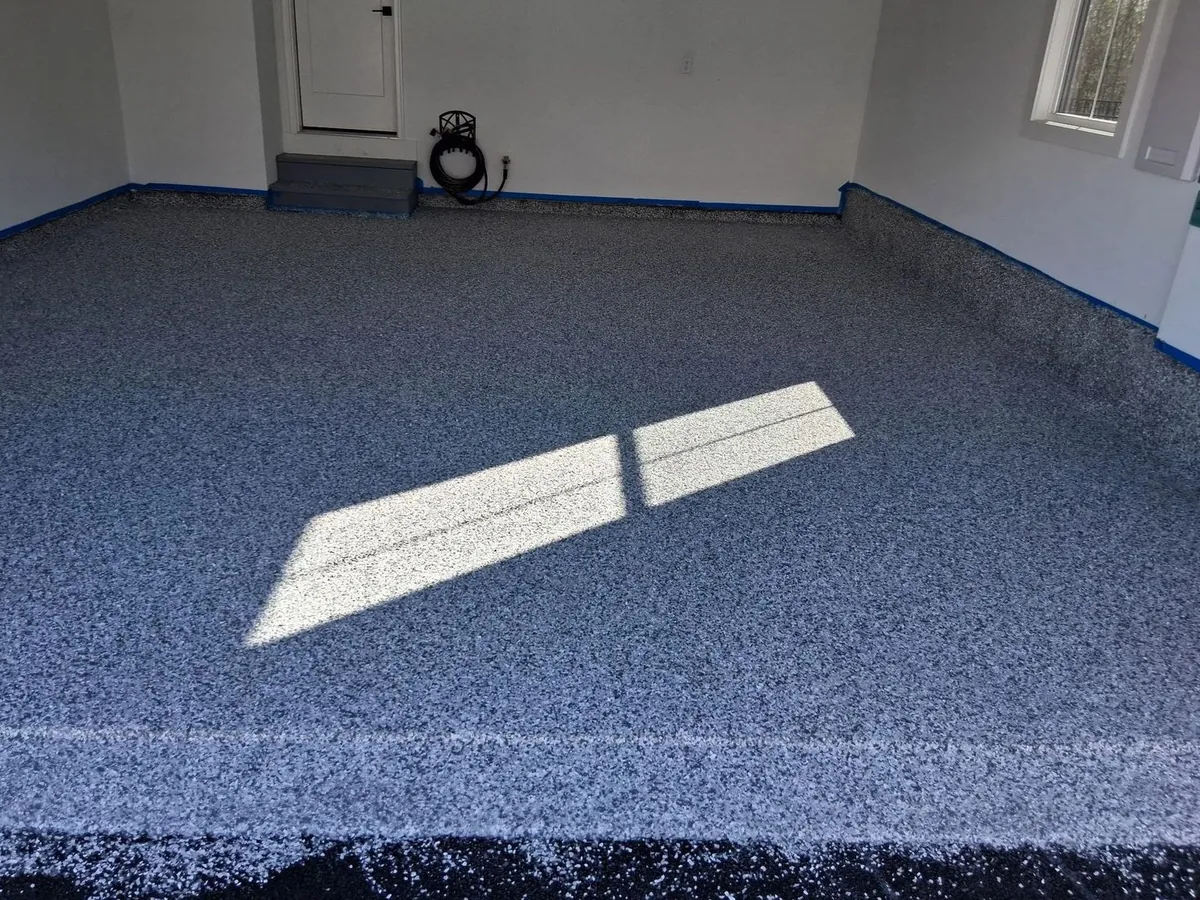
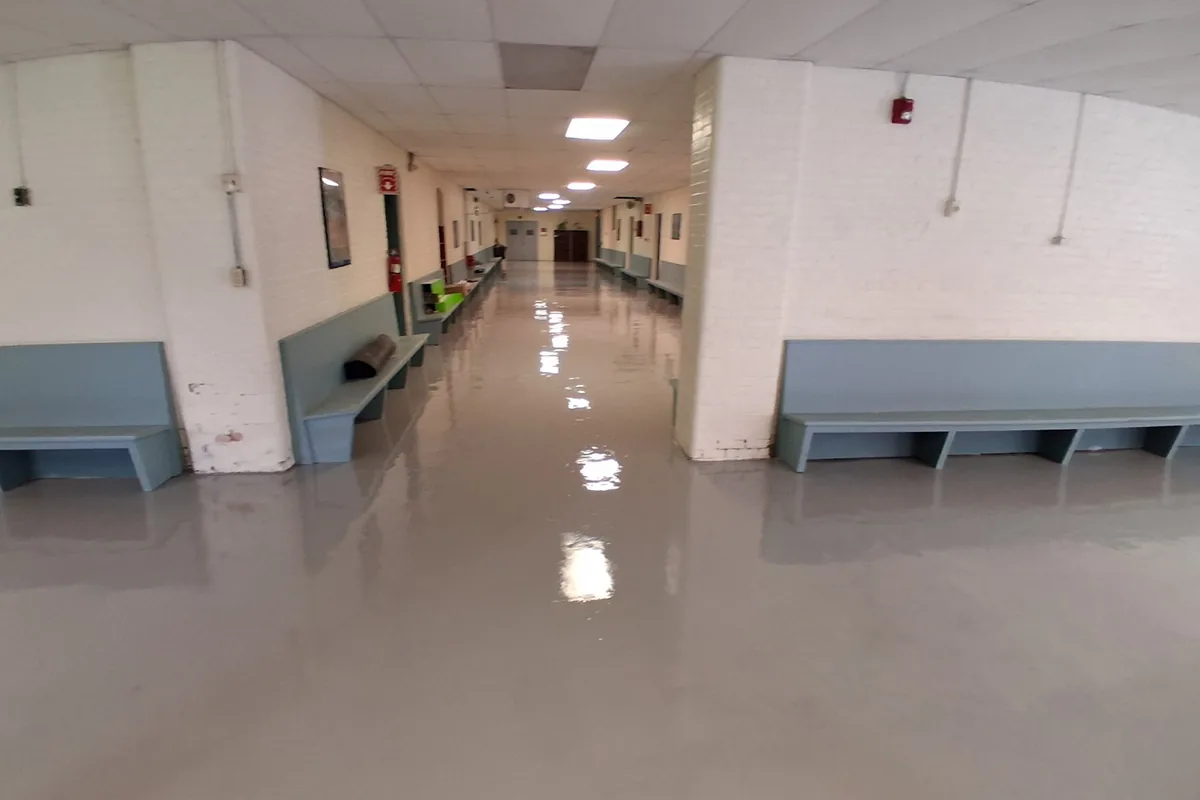
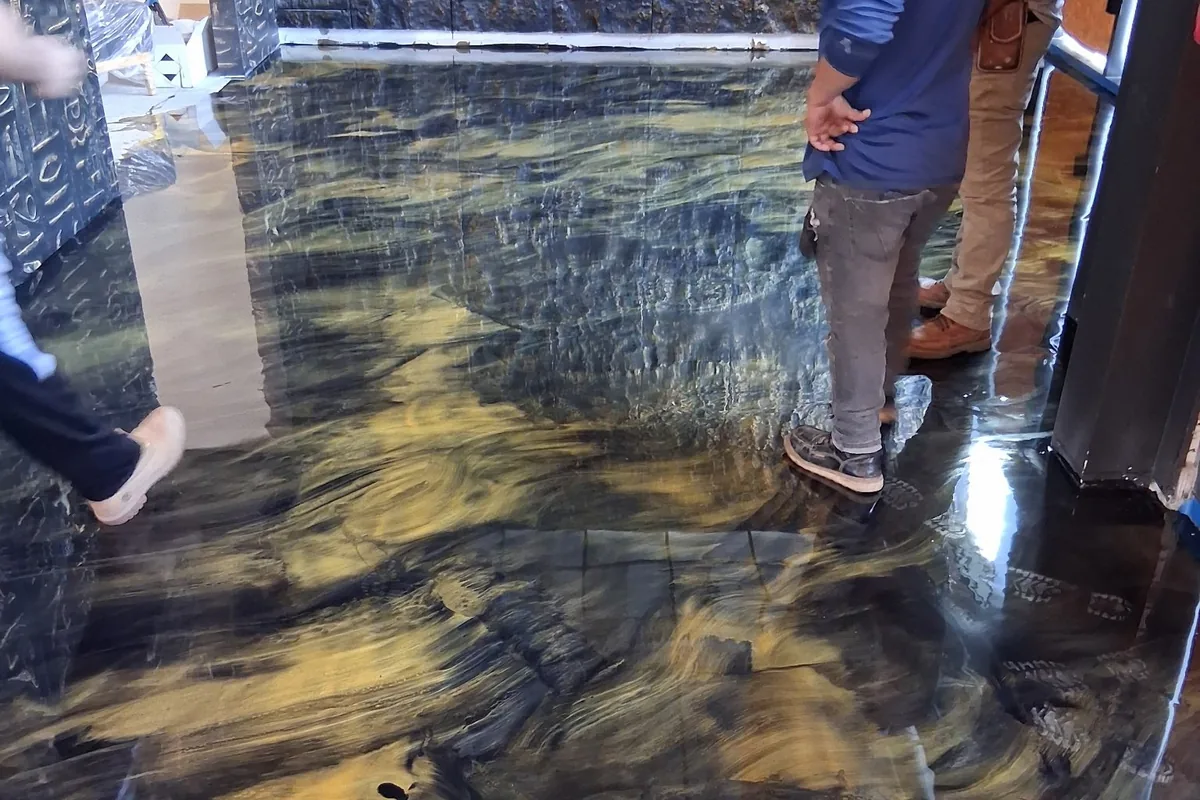
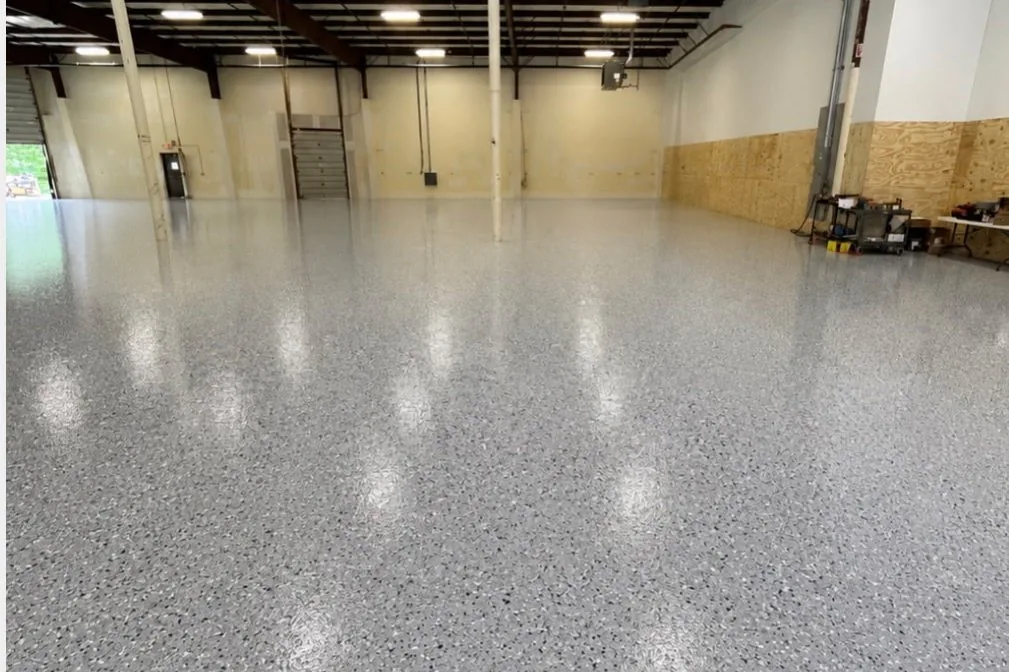
Every floor on this page is one we poured
The three words used most loosely in this trade. They are not competitors so much as different layers of the same floor we build for you.

Thick, rigid, and it bonds hard to prepared concrete. It carries your color and holds your chips. It cures slowly, which is useful, because broadcast flake needs time to settle flat.
Thinner, far faster curing, and it holds its color under ultraviolet light. It goes on top. Most floors sold to you as polyaspartic are an epoxy body with a polyaspartic top coat.
Covers a family of coatings including polyaspartic. If a quote in front of you says polyurea, ask which layer it means.
Two quotes can both say epoxy and describe different floors. Ask what the base is, what the broadcast is, and what the top coat is. Three answers, and they tell you more than the total does.
The honest short version, before the individual pages.
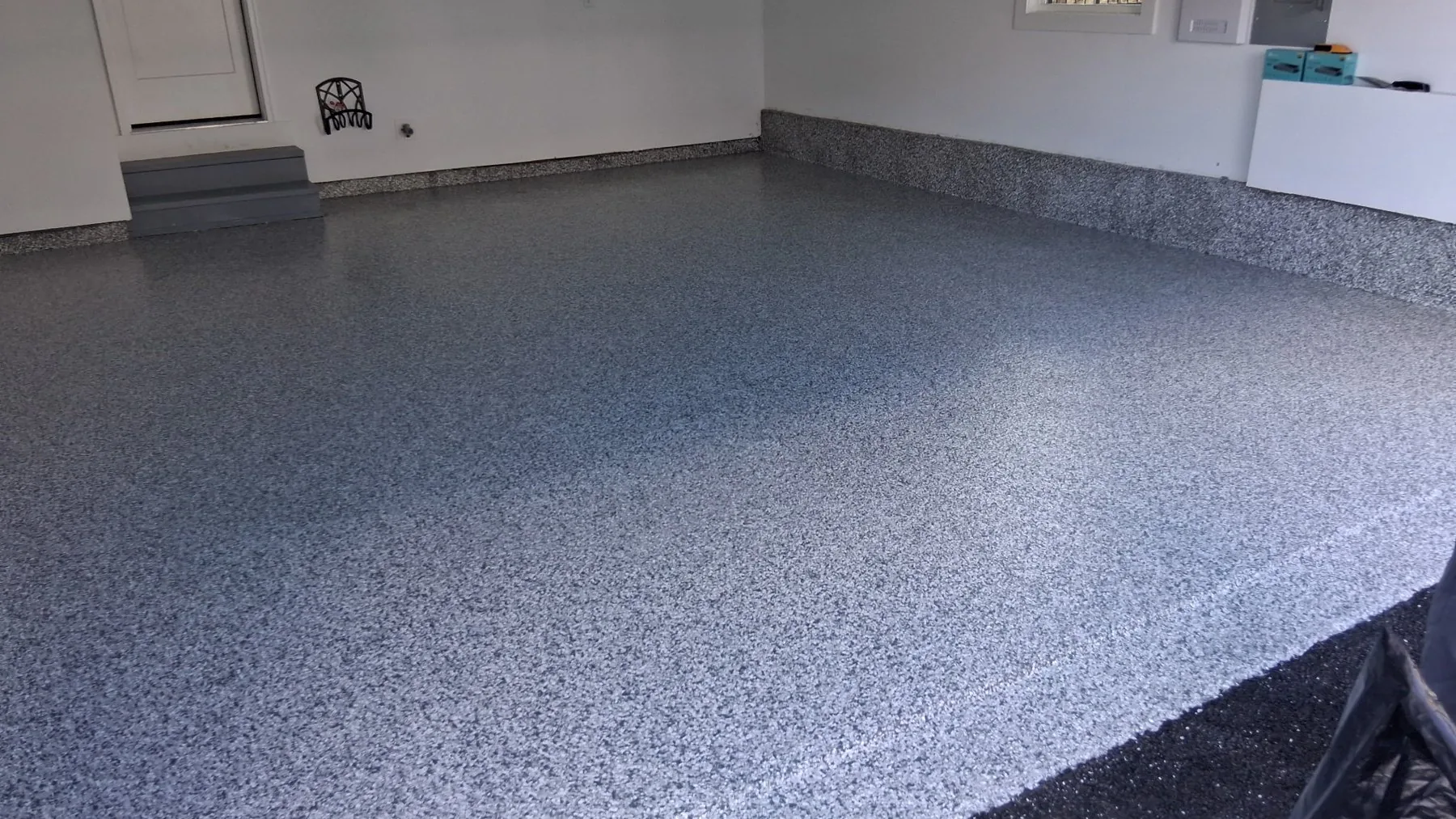
Our best all-round choice for your garage, because it hides the slab, it grips, it does not show every mark, and we can repair it invisibly.
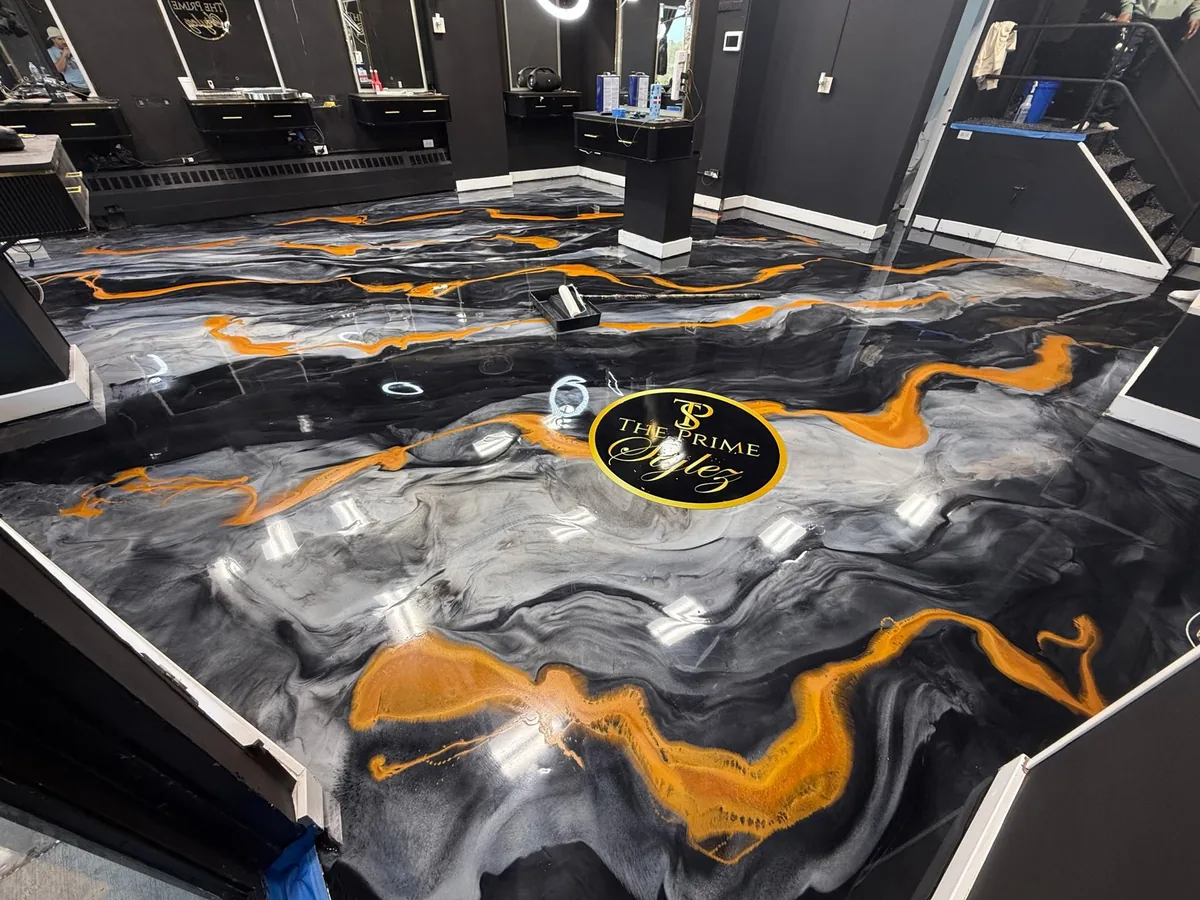
Best where you look at the floor. We cannot repeat it, it shows dust more than flake does, and it costs you more because we work it by hand.
Best where you work on the floor and wash it down. Thick, mineral, with the grip built in, and more than your house is ever going to need.
Best where you want the floor to disappear. It is the quickest for us to install and it takes line marking well, and it shows every mark in a garage.
Not usually a whole floor. It is the top coat we reach for when you have daylight, when downtime costs you money, or when we are working in the cold.
Not a system so much as something we add to one, which is aggregate for wet areas, graded for whoever is walking on it.
More than the differences, and it is the part that decides whether the one you pick lasts.
Every system on this site fails the same way over unprepared concrete, and etching or washing is not a substitute for the grinding we do.
Vapour moving up through a slab lifts any coating. It is testable before you buy anything and the test is free.
Which is good news for you: what wears is renewable without us redoing the color, the chips or the pattern underneath.

Walk on it, then wheels, then load. Putting weight back early is the most common avoidable damage you can do to a new floor.
4.7 from 15 Google reviews. We publish every one of them on the reviews page, including the one star and what came of it.
great job on my shop Floor thanks again Brad
Floors came out great and the countertops too!
thank you Brad for the wonderful job on my garage floors
Where the money goes, and where spending more genuinely buys something.
It is the largest line on your quote and it is the one that decides whether any of the rest of it was worth doing.
Solid color and flake sit at the same rate, metallic is higher because of the handwork we put into it, and quartz is a heavier build again.
UV stability and fast cure both live here, and both solve problems that cost you a lot to fix later.
Our bands drop as your floor gets bigger, so combining floors or doing a whole space at once can change your number materially.
The step most people skip and the one that prevents most disappointments.
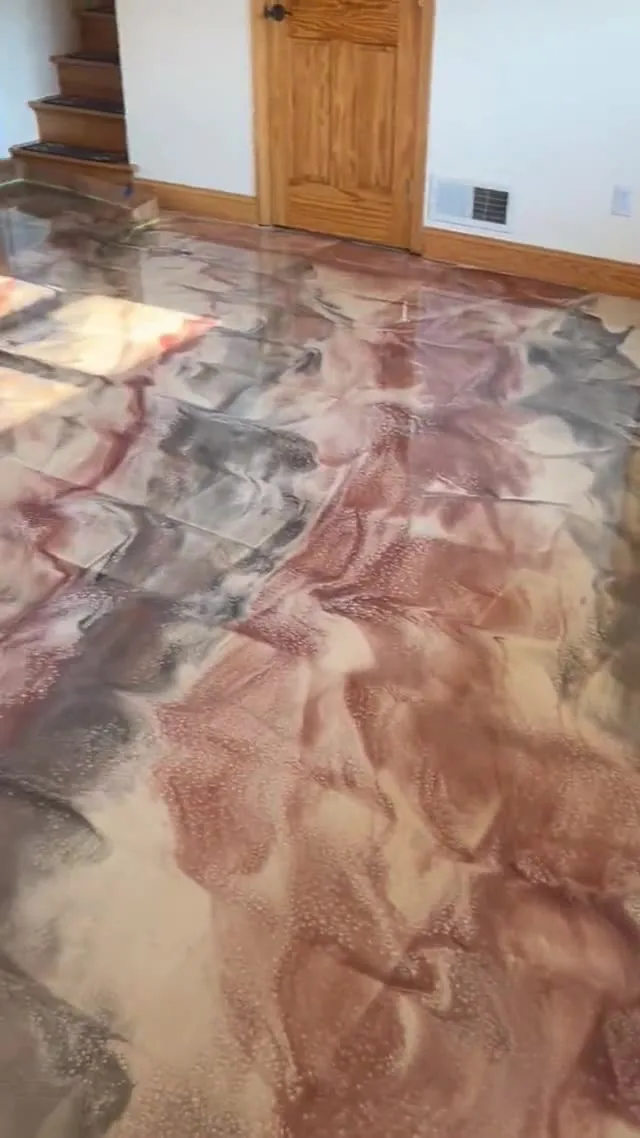
Lighting changes a resin floor more than almost any other finish. A sample seen in the room it is going in is worth several catalogues.
Held up, a flake blend reads as a pattern. On the ground under normal light it reads completely differently, and that is the view you will have of it forever.
On a flake floor it shows between the chips and at any edge, and on a metallic floor it is half your finished result.
We put down four layers, and each one has its own job. Scroll and we'll take your floor apart so you can see them.
We install six systems, and most floors we put down combine two of them.
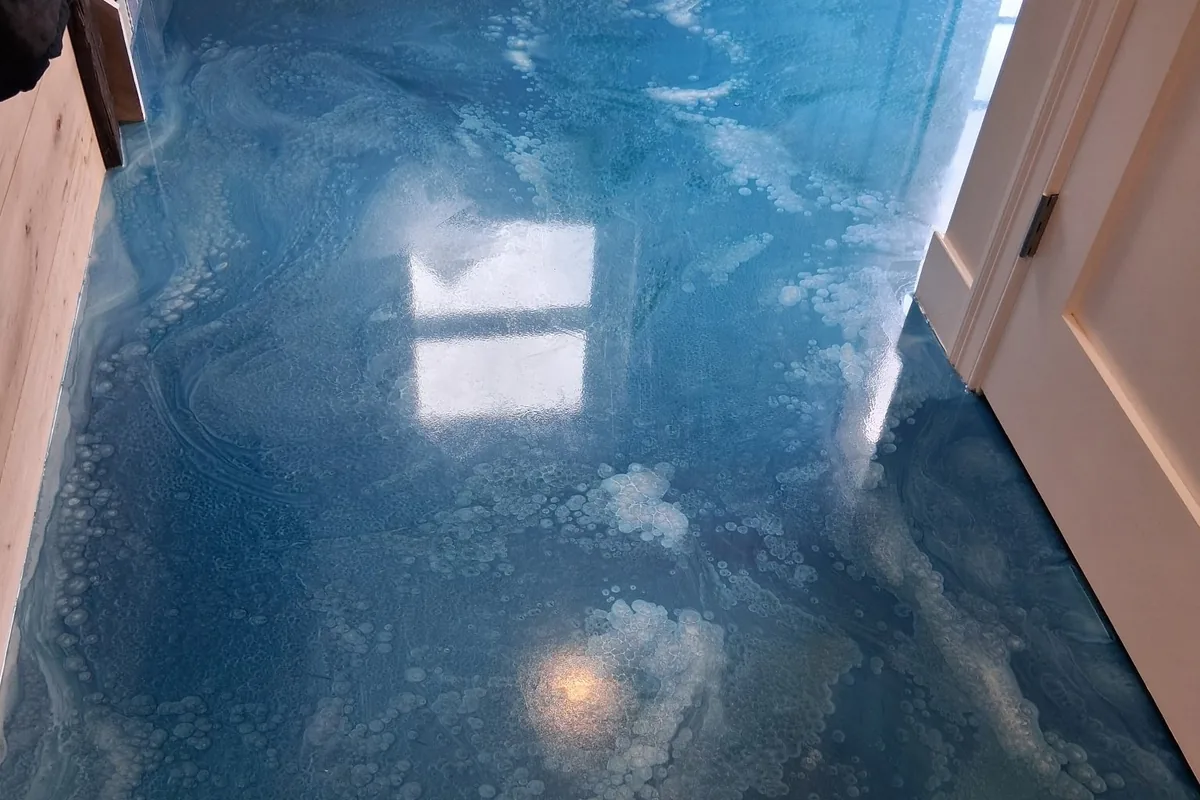
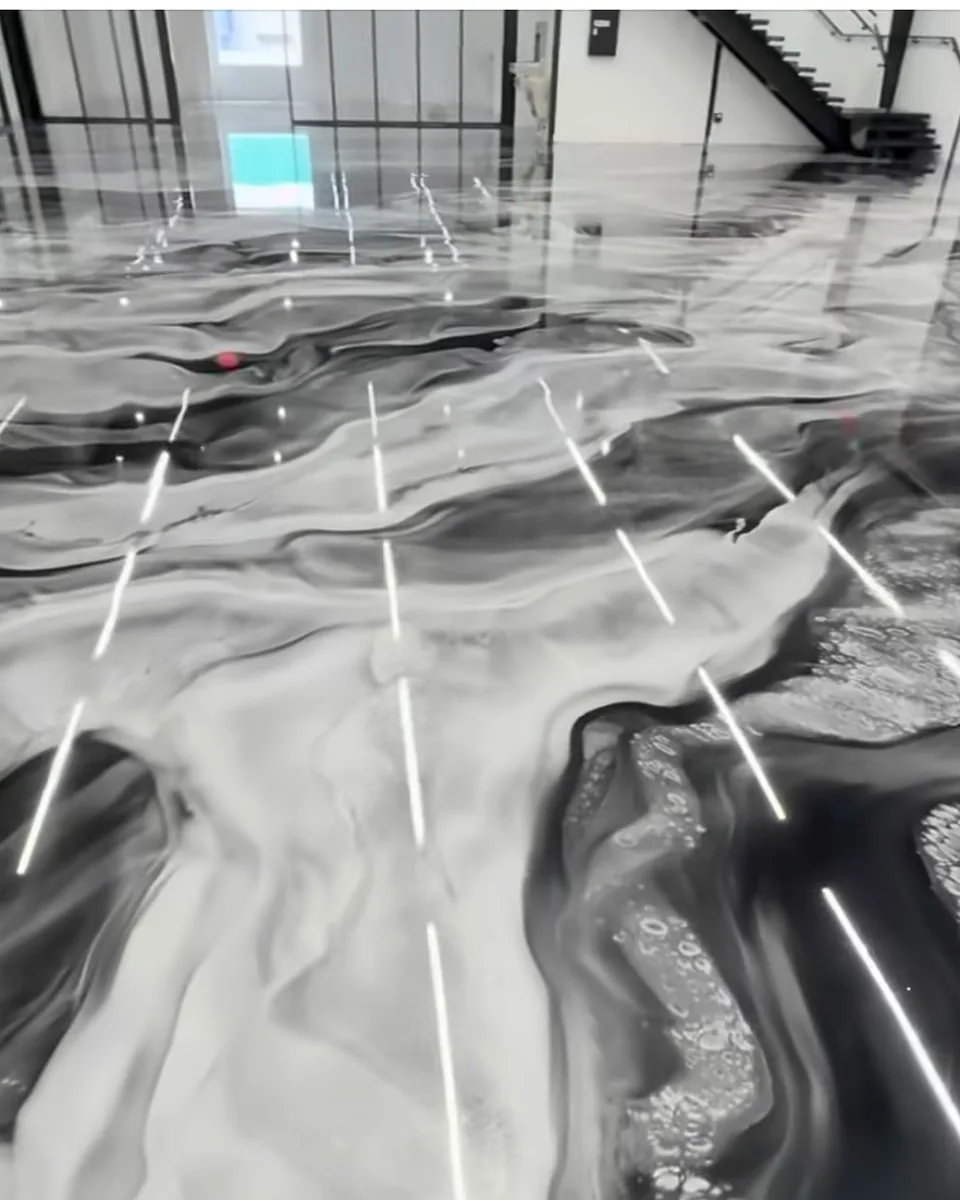
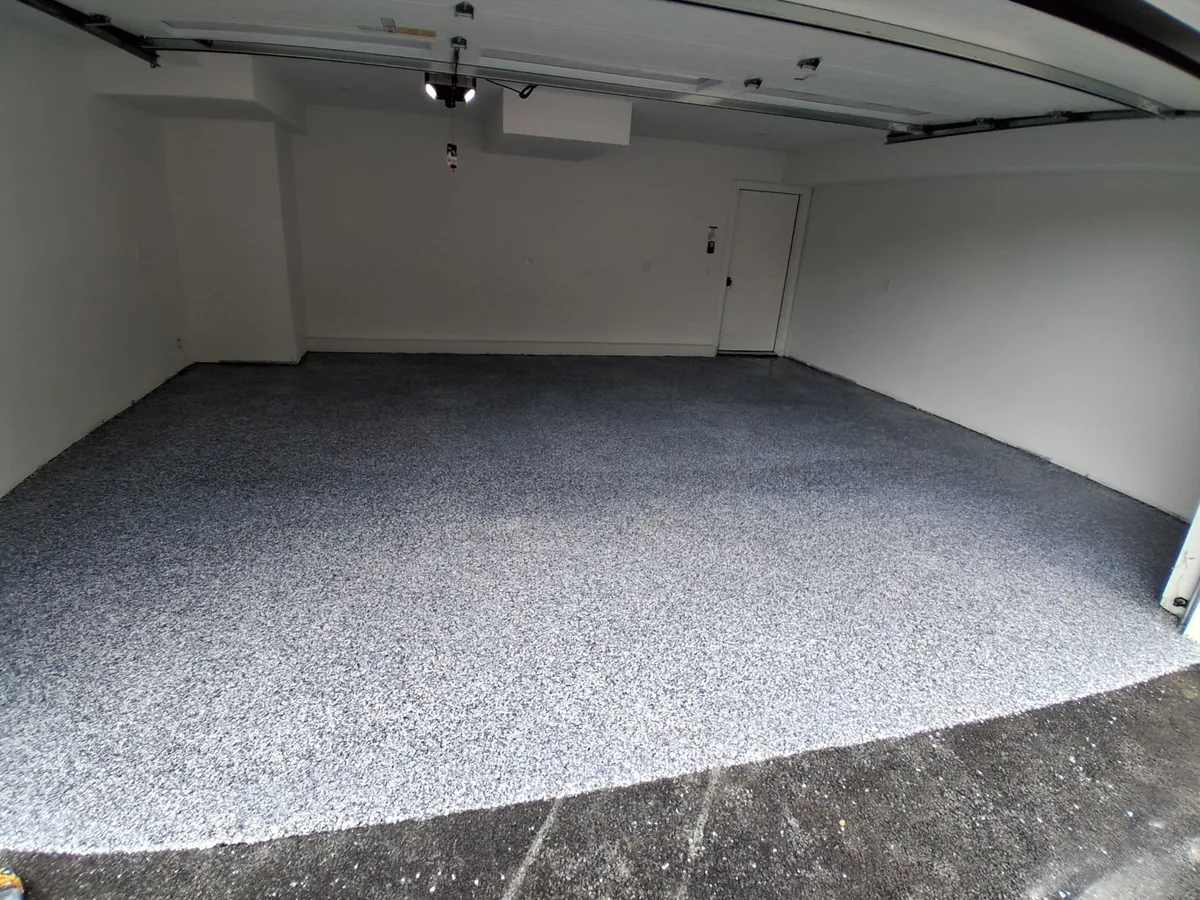
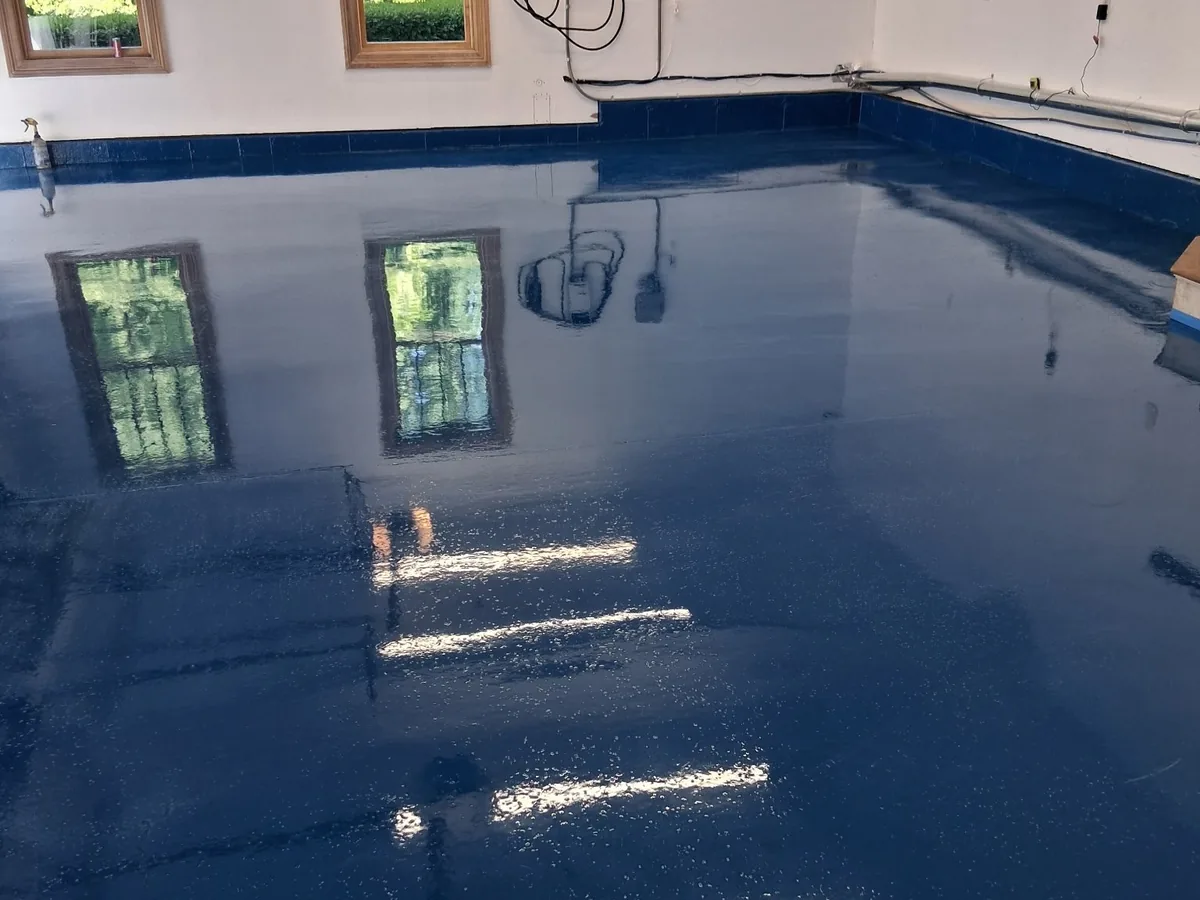
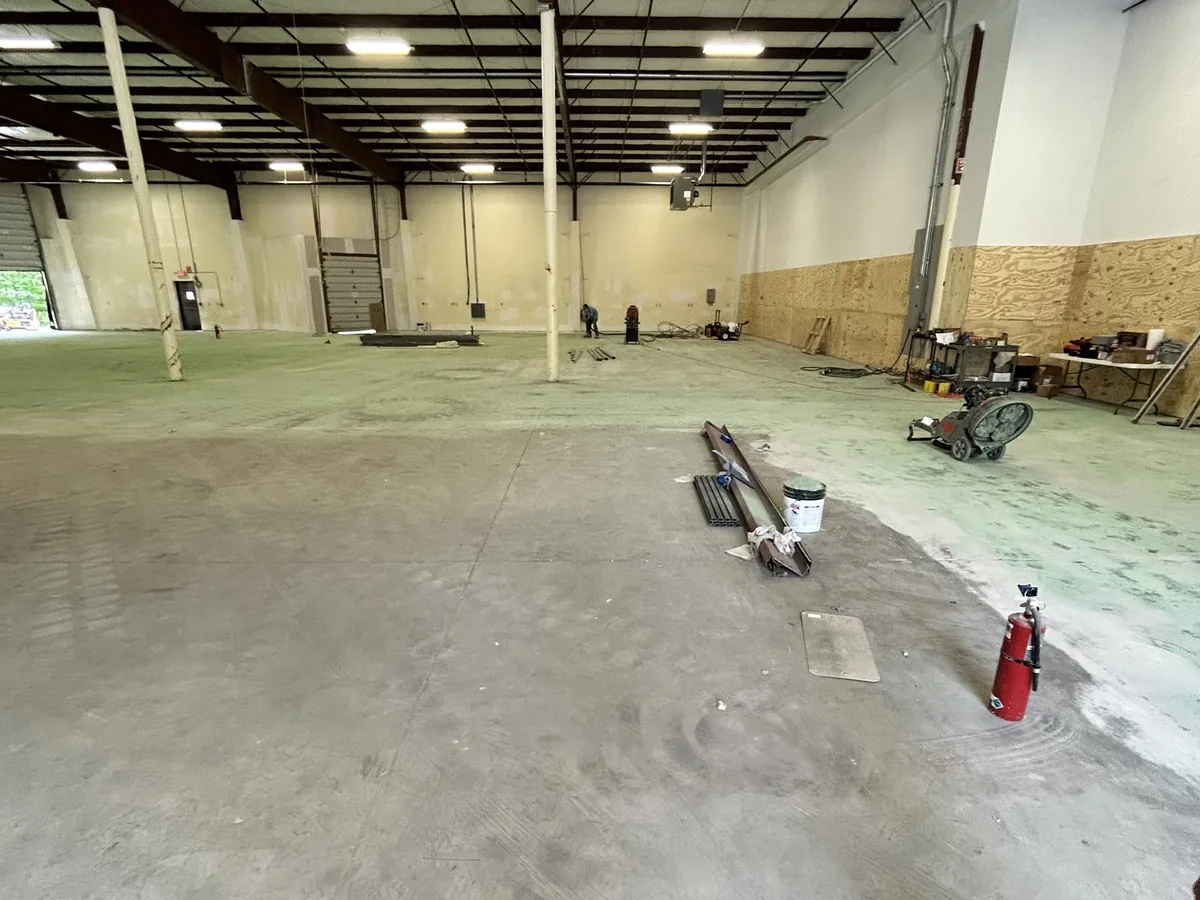
Three steps, and Brad does every one of them himself. Most residential floors are finished in a day.
Tell us the room and roughly how big it is. We'll talk you through the range and book a time to come and look, often the same day. Weekends count, and there's nothing to sign.
He checks for cracks, old coating and moisture, then measures up. You choose your flake blend or metallic against your own floor, not a brochure. Your written quote comes back the same day.
Your slab goes back to bare concrete under a diamond grinder with dust extraction. Then the primer, the body coat with your flake or metallic, and the top coat. You get your walk-on and park-on times with the quote.
Traffic, water, daylight and downtime. Answer those four and the system follows.
Get my free quoteFlake, by a distance. It hides your slab, grips when the car brings water in, and it does not show every mark.
Usually, once we have cut, filled and ground your cracks flat. A crack that is still moving is a different problem and Brad will tell you rather than coat over it.
It depends on the system and the temperature, and it is one of the first things Brad tells you when he quotes. Walking on it comes well before parking on it.
Yes, we do both. The systems are the same, your traffic is not, which is why quartz and anti-slip come up more on commercial jobs.
Epoxy is the thick body of your floor that bonds to the concrete. Polyaspartic is a fast-curing, UV-stable top coat that goes over it. We use both on most floors.
For your garage, flake. For somewhere on display, metallic. For heavy commercial traffic and wash-down, quartz. Your room decides it.
Quartz builds the most thickness and carries the most impact. In practice our preparation decides how long your floor lasts more than the system name does.
They usually are. We pair an epoxy body with a polyaspartic top coat most often, and we can add anti-slip aggregate to any of them.
Solid color and flake sit lowest and go down quickest. Metallic sits higher because we hand-work it while the resin moves.
Flake, in most houses. It sits at our base rate, hides your slab, grips, and we repair it invisibly. Where you should spend more is the top coat.
Ask us for one at the quote. Lighting changes a resin floor more than almost any other finish, so see it in the room it is going in.
Tell us roughly what you have and we'll come and look at it. The quote is free, there's nothing to sign, and you'll know what your floor costs before you commit to anything.
Get Your Free Quote Call or Text (203) 496-6386