

Start with the traffic
Cars and household use point us at flake. Forklifts and impact point at quartz. Somewhere you look at points at metallic. Somewhere nobody sees points at solid color.
We coat every concrete floor a home or a business has, and the preparation underneath is what makes it last. The coating is the part you see. The grinding is the part that decides whether you are still happy with your floor in five years.
Free, no obligation, and nothing to sign. We answer the same day, weekends included.
Our order of work does not change, whatever your room is. Most of the time and most of your money goes into the part nobody sees.
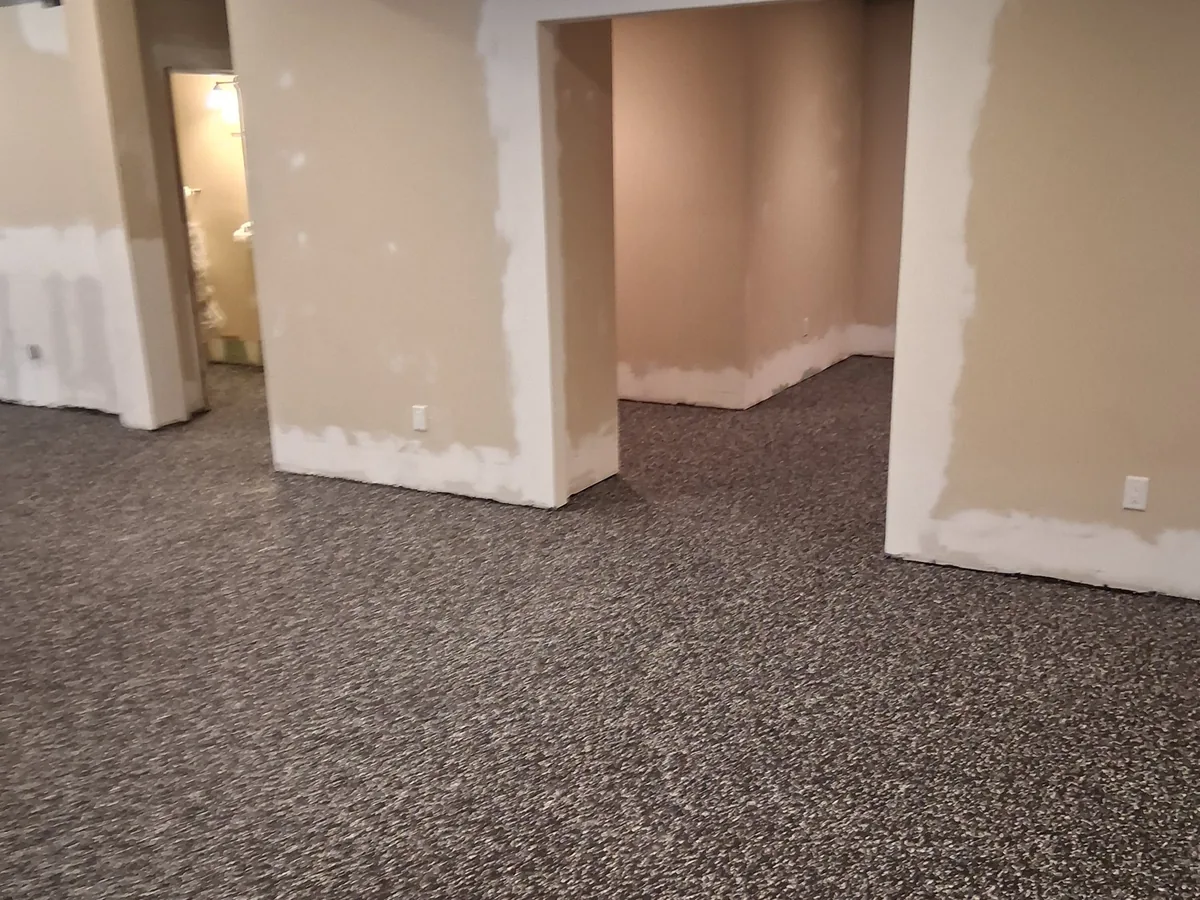
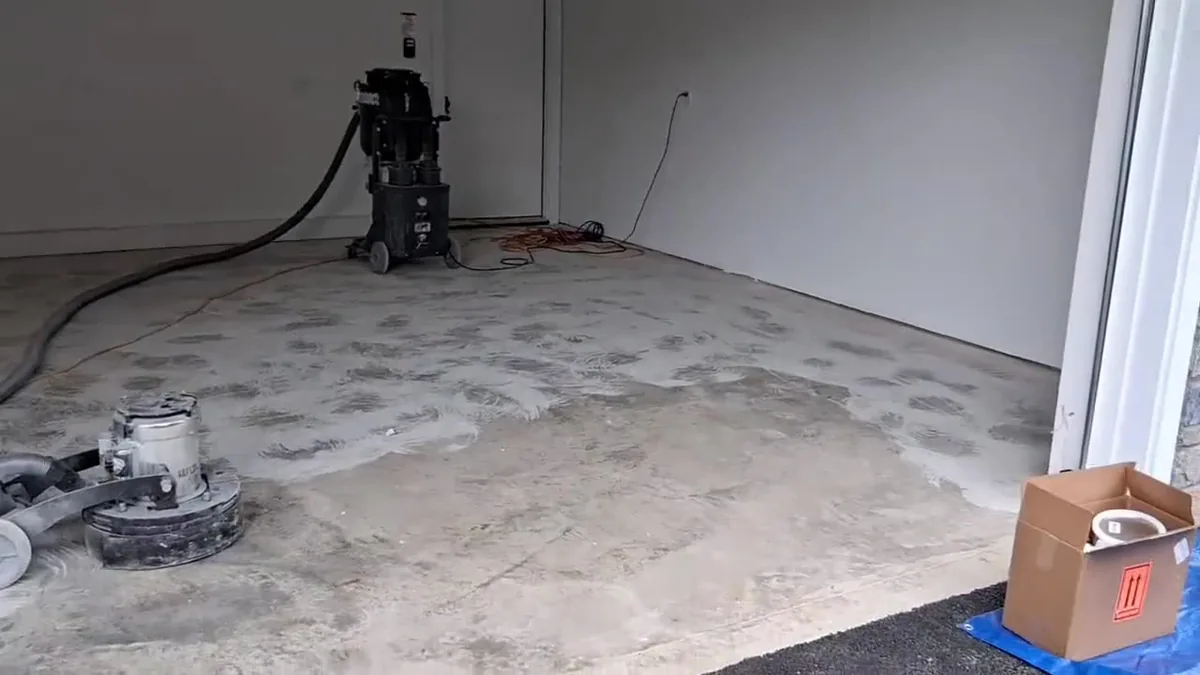
We diamond grind your floor back to bare, sound concrete with dust extraction running. We cut and fill the cracks, patch the pitting and take off any old coating. A coating is only as good as its bond, and we make the bond here.
A base coat carries your color or your chips, and the top coat takes your traffic. Which system we use depends on what your room does, which is what the pages below are about.
Cure time is real and it varies by system and by temperature. Walking on it comes before parking on it, and Brad tells you both numbers when he quotes.
Traffic, chemicals, water and daylight. Each of them rules something in or out before we talk to you about color.
Your garage takes a car and dropped tools. A warehouse takes pallet trucks and impact. That difference is why we build some floors thicker and with aggregate rather than thin.
A pool patio is wet as a matter of routine and a workshop sees solvents. We choose your surface for that rather than making it pretty and hoping.
Epoxy ambers where sun falls on it directly. If your room has a glass door, a window wall or open sky, we specify a UV-stable top coat, or your color shifts within a couple of summers.
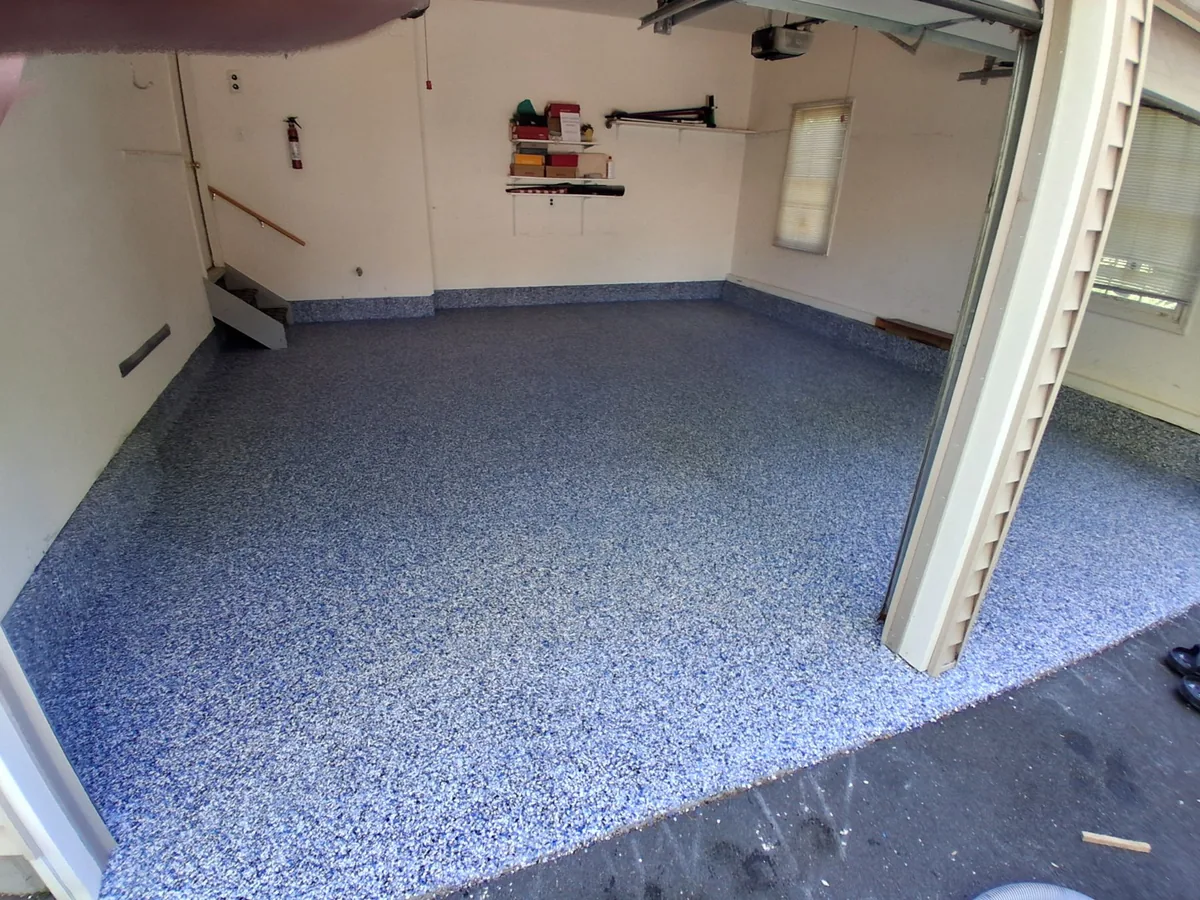
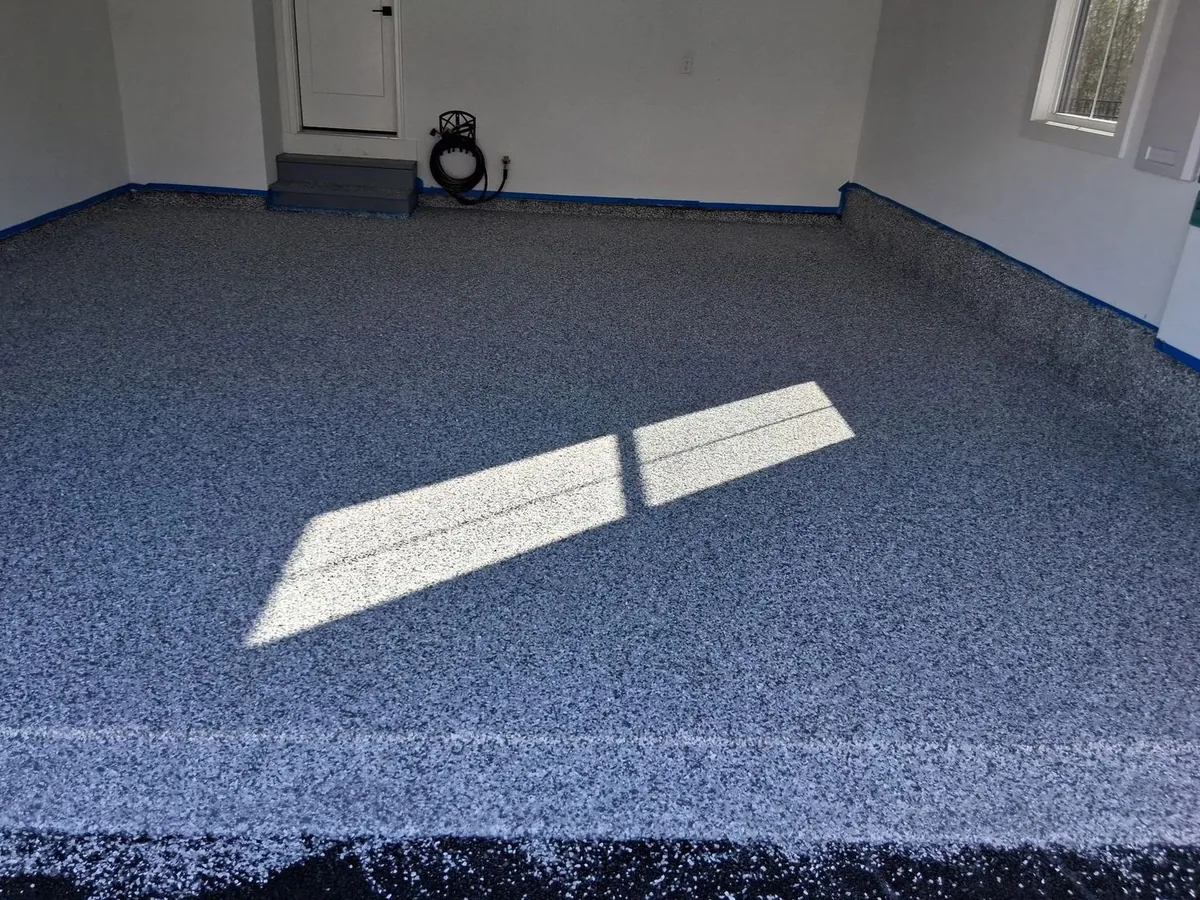

Every floor on this page is one we poured
We work from Milford across both counties, on garages and basements, on retail and restaurant floors, and on warehouse and plant floors. The trade is one trade; what we specify for you is not.
Garages, basements, pool decks and countertops. The job we do most is a two-car garage in flake, and the second is a basement slab sealed before the room gets finished.
Retail, showrooms, restaurants and back of house. Here your constraint is almost never the floor, it is the number of days you cannot use the space, and that changes what we specify before anything else does.
Warehouses, workshops and plant floors. Impact, chemicals and forklift traffic decide how we build it, and we specify your floor from what actually happens on it rather than from a product range.
Structural concrete repair, slab replacement and waterproofing walls. Where your floor needs one of those first, Brad will tell you rather than coat over it.
Our sequence does not change between a garage and a plant floor. What changes is how long each step takes on your job and what goes down in the middle.
Before we quote. Age, cracks, previous coatings, pitting, oil, and whether your slab is passing moisture. Two floors of identical size can be quite different jobs, and this visit is where we find that out.
We diamond grind or shot blast with extraction. Not acid etching and not pressure washing. Grinding opens your concrete so the resin keys into it mechanically, and it takes off laitance, old sealer and contamination in the same pass.
We cut your cracks into a V, vacuum them and fill them, then patch spalled edges and pits. Joints get honoured or filled, and we decide that with you rather than by default.
Where your slab is thirsty or damp, a vapour-tolerant primer or a mitigation layer goes on before the system. Skipping it is the most expensive shortcut in this trade.
Base coat, broadcast if the system has one, then clear top coats. Your top coat is the sacrificial layer and it is what we can renew later without redoing your floor.
Walk-on first, then wheels, then heavy load. Three different dates, all of them on your quote, all of them dependent on the system and that week's temperature.
Six systems, and your room decides more than the color chart does.
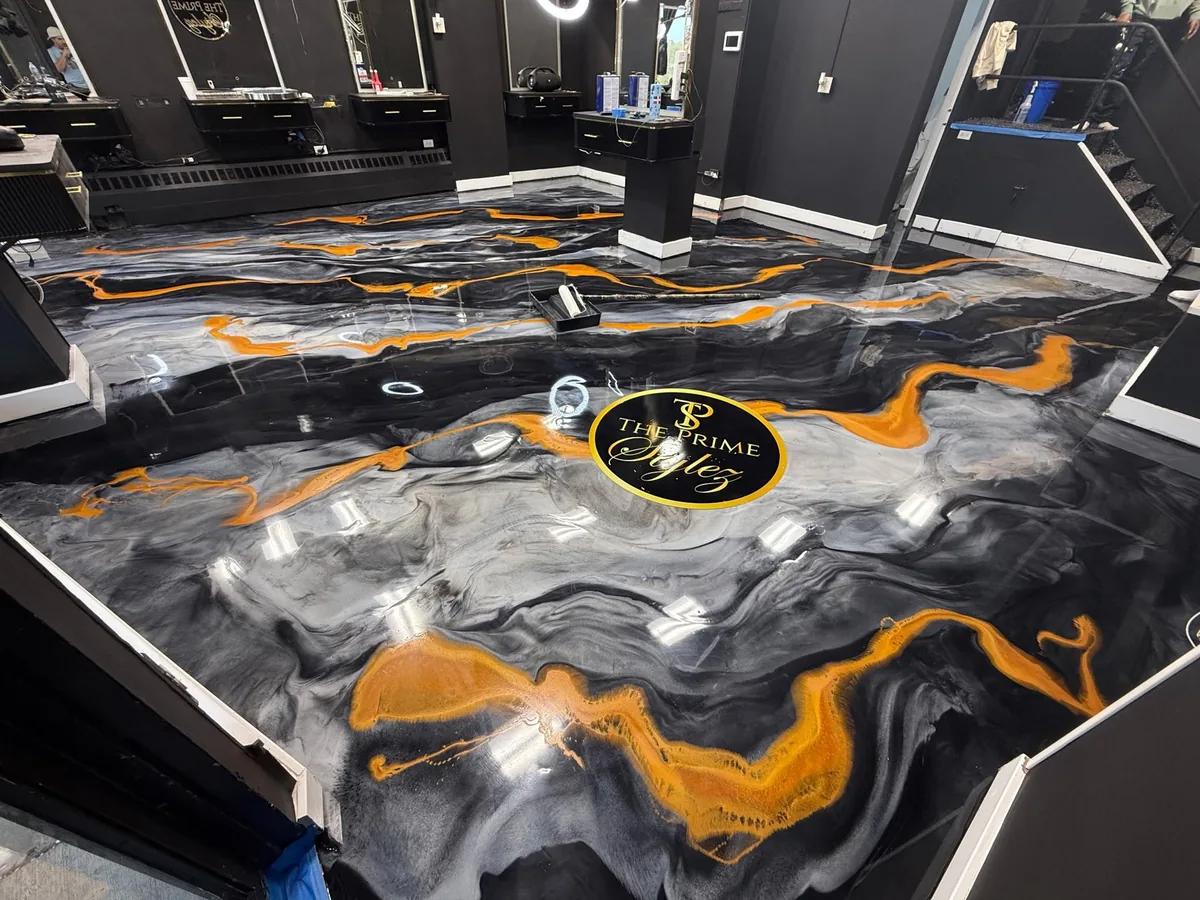
Cars and household use point us at flake. Forklifts and impact point at quartz. Somewhere you look at points at metallic. Somewhere nobody sees points at solid color.
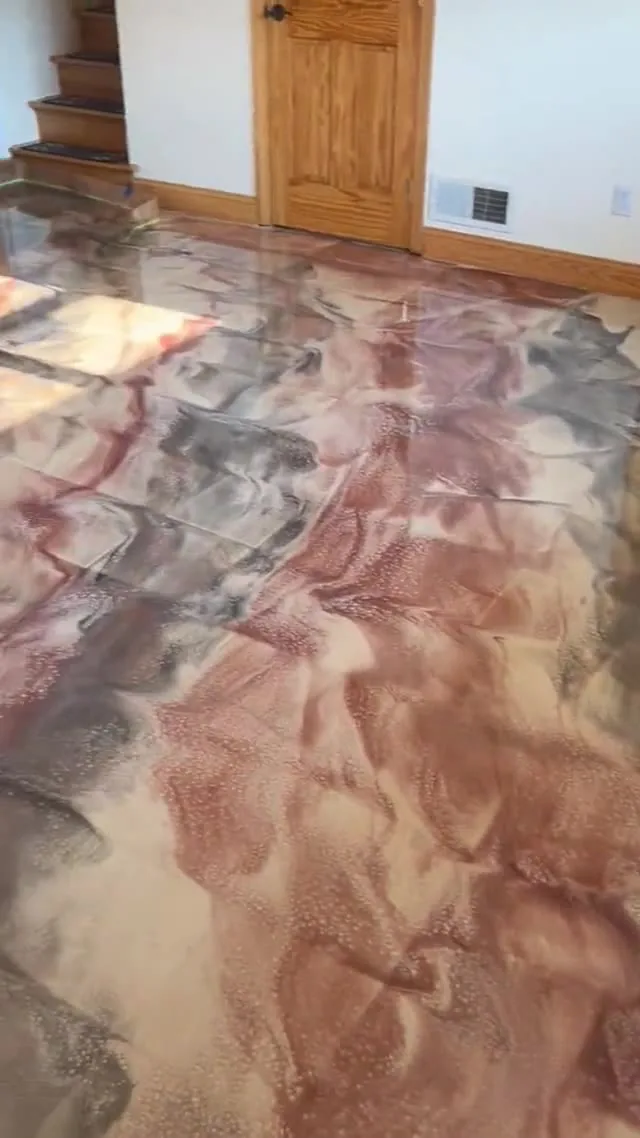
Anywhere wet as a matter of routine, we specify traction into the surface rather than adding it afterwards as a mat or a treatment.
Clear epoxy ambers under UV. If you have glass doors, a window wall or anything outdoors, we use a UV-stable top coat or your color shifts within a couple of summers.
If losing the space costs you money, that is the argument for a fast-cure top coat. If it does not, we would rather spend your budget on preparation.
4.7 from 15 Google reviews. We publish every one of them on the reviews page, including the one star and what came of it.
Great experiwnce with brad thanks for the great floor
great job on my garage floors thanks again
great job on my Epoxy floors and countertops
The part of your floor that is invisible when it is finished and decisive for how long it lasts.
On a typical residential floor, our grinding and repair take substantially longer than putting the coating down. That is the work you are paying for.
A quote well under the others is usually a quote for less preparation. The coating on top can be identical and your floor will not last, because what was skipped is the part that makes it stick.
Two contractors reading your slab can reasonably disagree about how much repair it needs. That is a conversation worth having with both of us rather than a reason to pick the lower number.
Nobody can price preparation from a photograph. Anybody who quotes a floor sight unseen is pricing the slab they hope you have.
How will you prepare the slab, what happens if it tests wet, how thick is the system, and what is the top coat. Those answers separate contractors faster than price does, because the two who cannot answer them are the two whose floors fail.
Whether the floor is going to be looked at or worked on. Almost every specification decision follows from that one answer, and it is the thing a contractor cannot tell you.
We install six systems, and most floors we put down combine two of them.
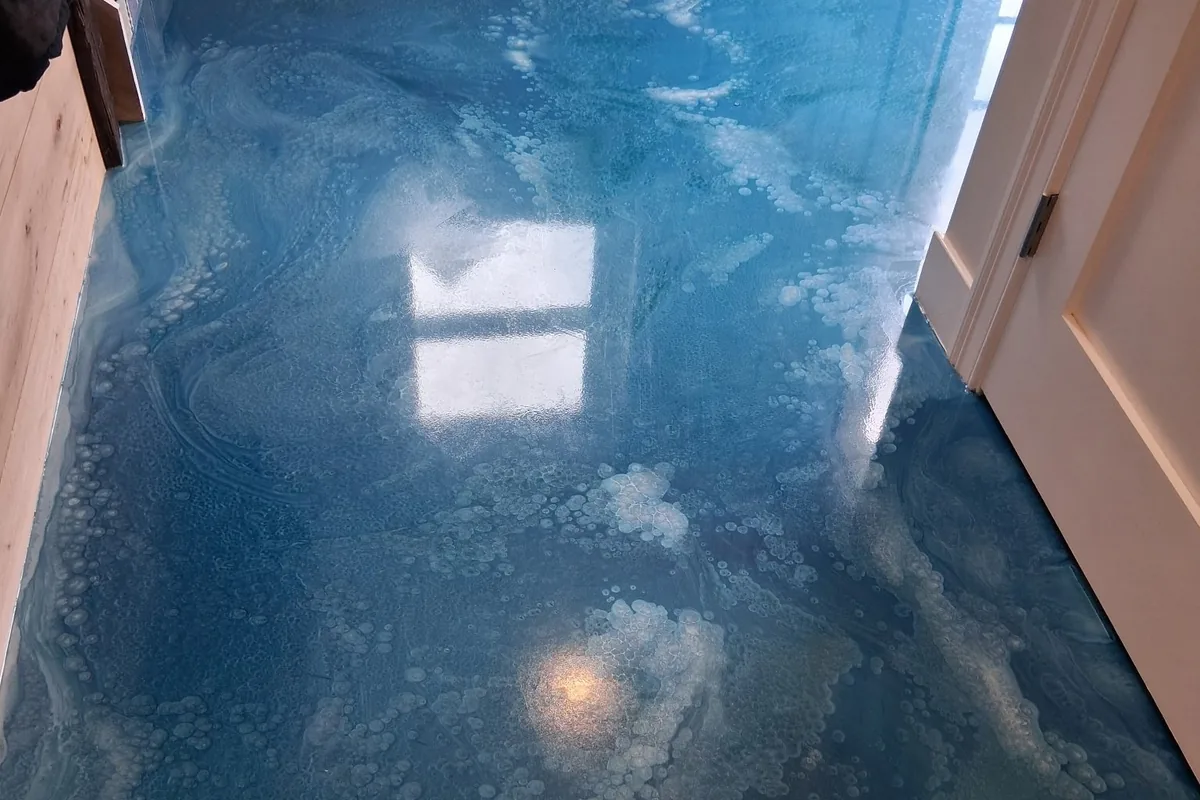
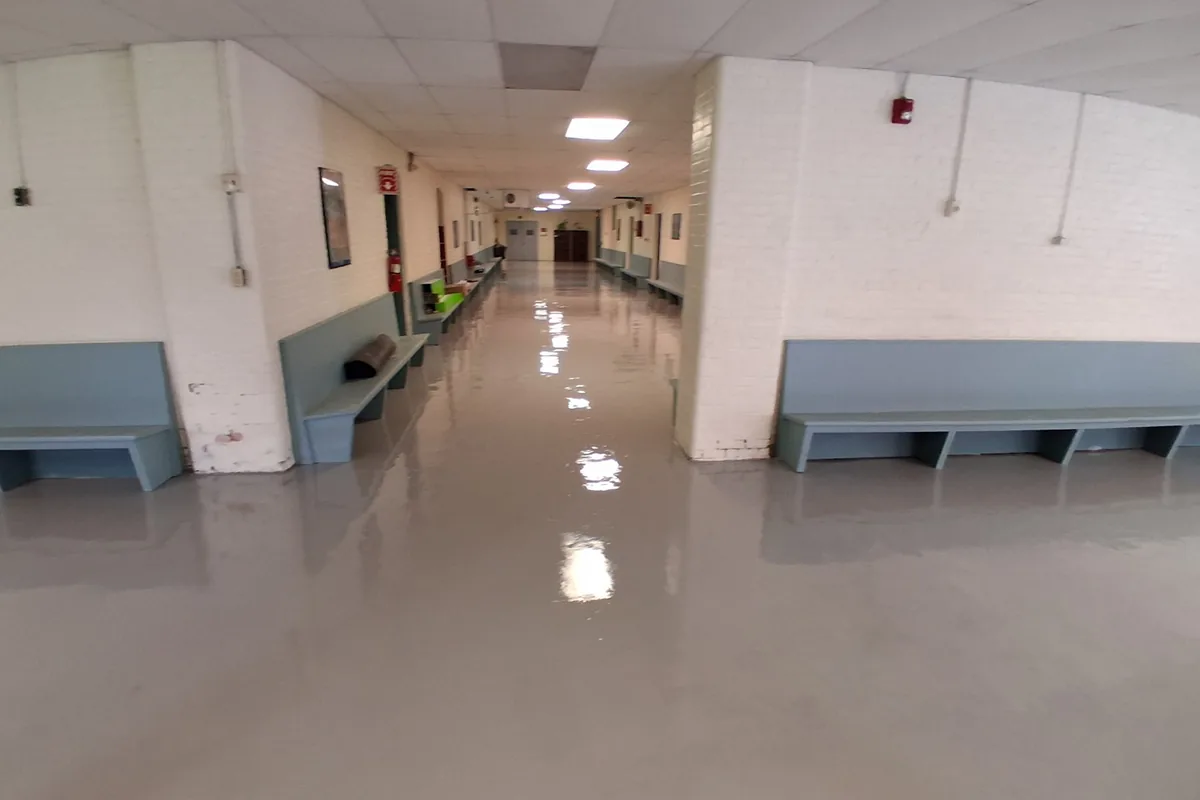

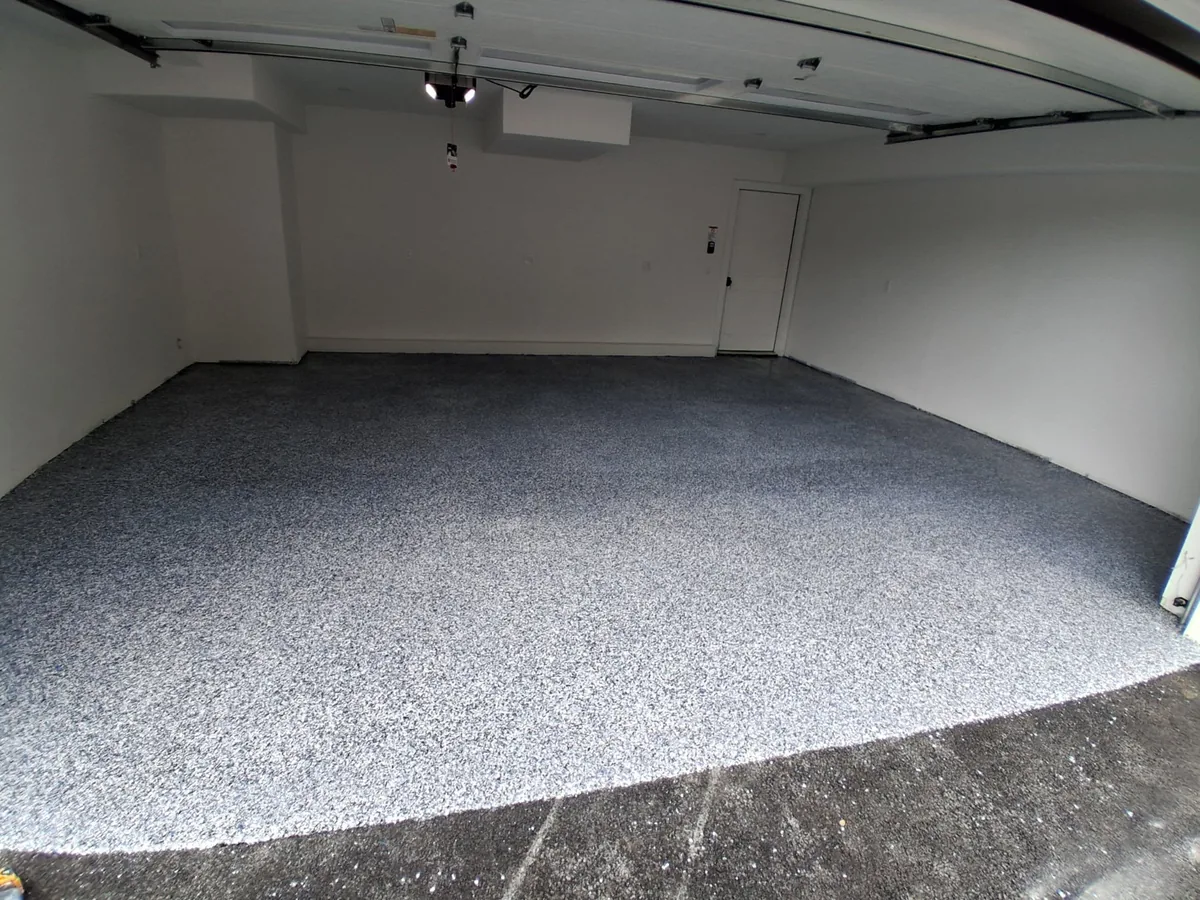
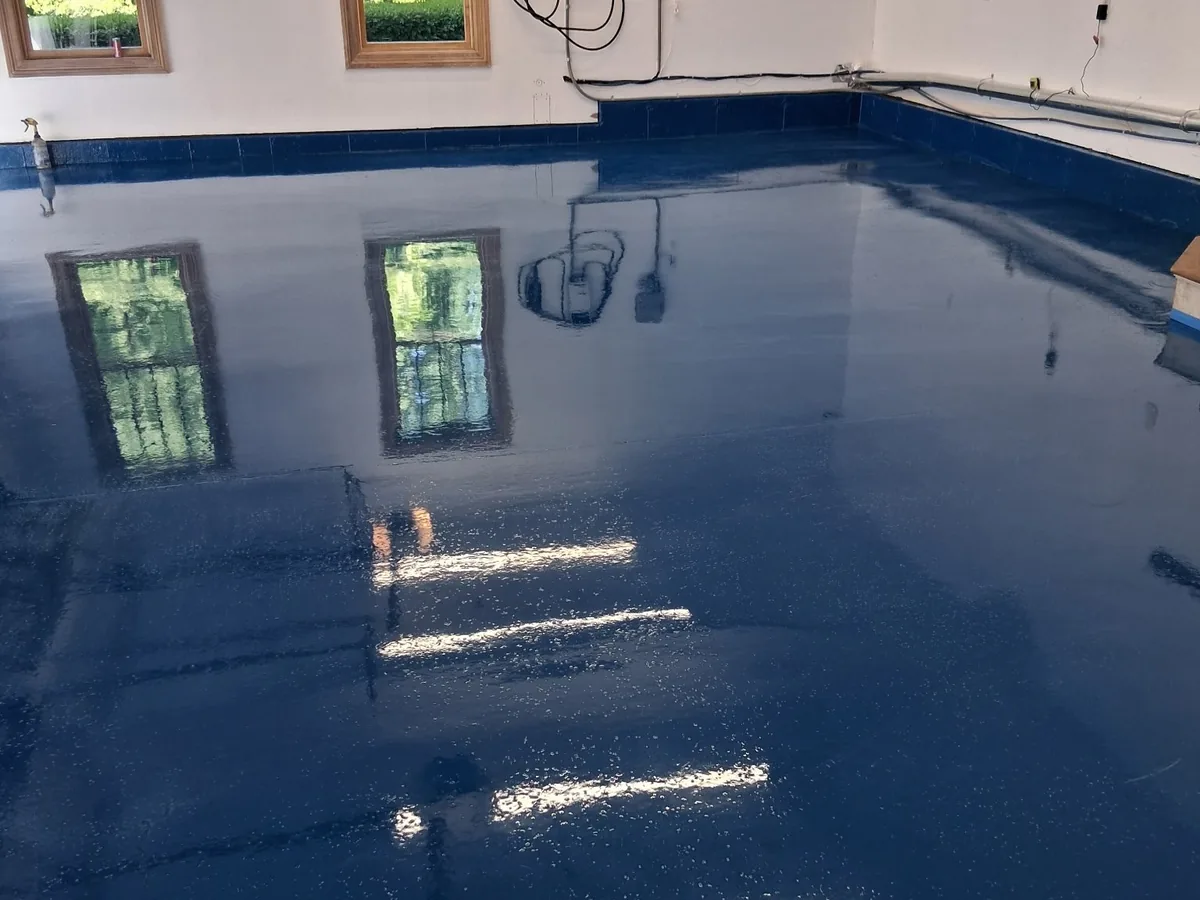
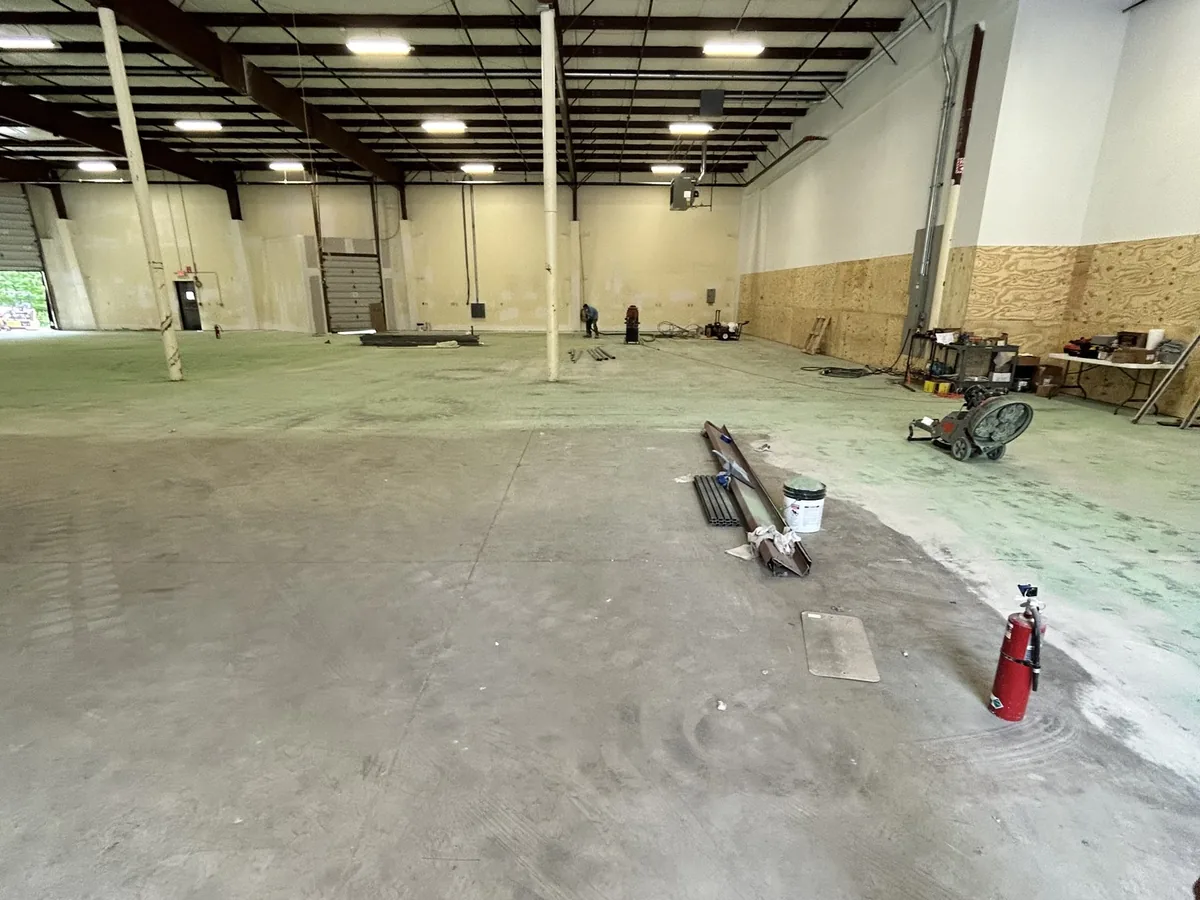
We put down four layers, and each one has its own job. Scroll and we'll take your floor apart so you can see them.
Slide to your size and see what fits it. Brad gives you the exact number when he's seen the slab.
Three steps, and Brad does every one of them himself. Most residential floors are finished in a day.
Tell us the room and roughly how big it is. We'll talk you through the range and book a time to come and look, often the same day. Weekends count, and there's nothing to sign.
He checks for cracks, old coating and moisture, then measures up. You choose your flake blend or metallic against your own floor, not a brochure. Your written quote comes back the same day.
Your slab goes back to bare concrete under a diamond grinder with dust extraction. Then the primer, the body coat with your flake or metallic, and the top coat. You get your walk-on and park-on times with the quote.
Grinding the slab back to bare concrete is slow, dusty and invisible in the finished floor. It is also what a cheap quote leaves out.
Get my free quoteGarages, basements, pool patios, countertops, retail and shop floors, and industrial floors. We do residential and commercial both.
Yes. We work across Fairfield and New Haven County as a matter of routine, and Brad travels further for larger jobs.
Most residential floors are a small number of days on site including grinding and cure. The slab decides, which is why he looks at it first.
Yes. We hold Connecticut Home Improvement Contractor registration #0661733, and we are insured.
We coat garages, basements, pool patios, countertops, commercial premises and industrial floors, across Fairfield and New Haven County from our base in Milford.
Yes, we do both. The systems overlap, the traffic does not, and we specify from what happens on your floor.
Most residential floors are a small number of days on site including grinding and cure. The slab decides, which is why Brad looks first.
Yes, and you sign nothing for one.
Yes. We hold Connecticut Home Improvement Contractor registration #0661733.
We cover 48 towns across Fairfield and New Haven County, all within about 30 miles of Milford, and we travel further for larger commercial and industrial work.
If yours is worn but sound, often. If it is lifting, we take it off first, because recoating over a failed bond repeats the failure.
Tell us roughly what you have and we'll come and look at it. The quote is free, there's nothing to sign, and you'll know what your floor costs before you commit to anything.
Get Your Free Quote Call or Text (203) 496-6386