
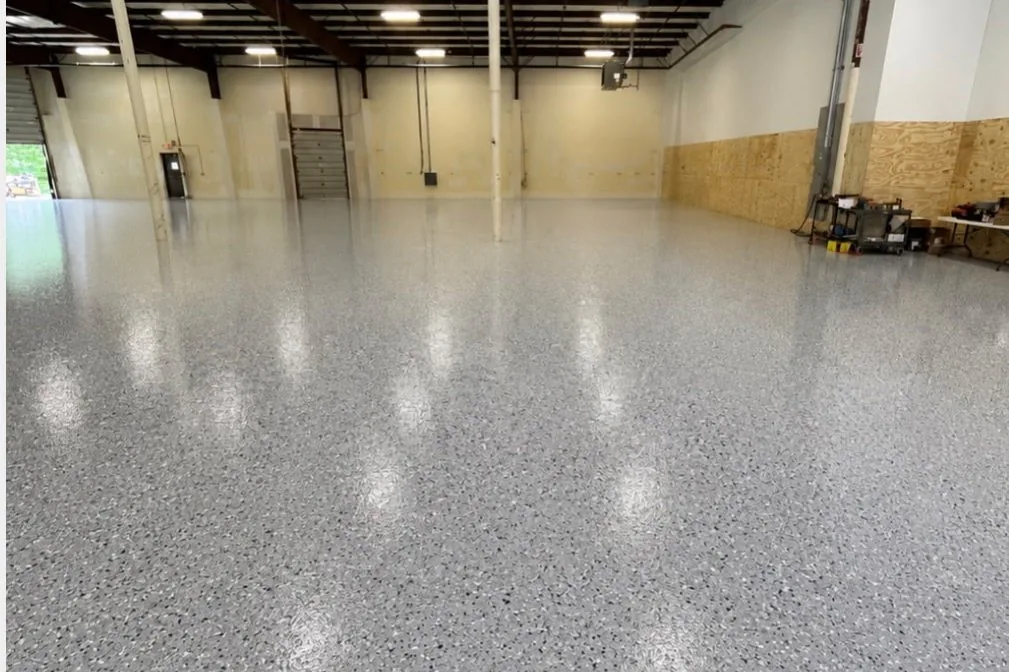
Coefficient of friction
Slip resistance is measurable, wet and dry, and systems have published figures. If your floor has to meet a standard, ask us for the number rather than the adjective.
Aggregate is broadcast into the coating so the surface has texture that works when it is wet. It goes on pool decks, ramps, entryways, walk-in coolers and commercial kitchens. The amount of grit is adjustable, and getting it right is a judgement about bare feet against boots.
Free, no obligation, and nothing to sign. We answer the same day, weekends included.
More is not automatically better for you. Texture that grips also holds dirt and is harder on skin.
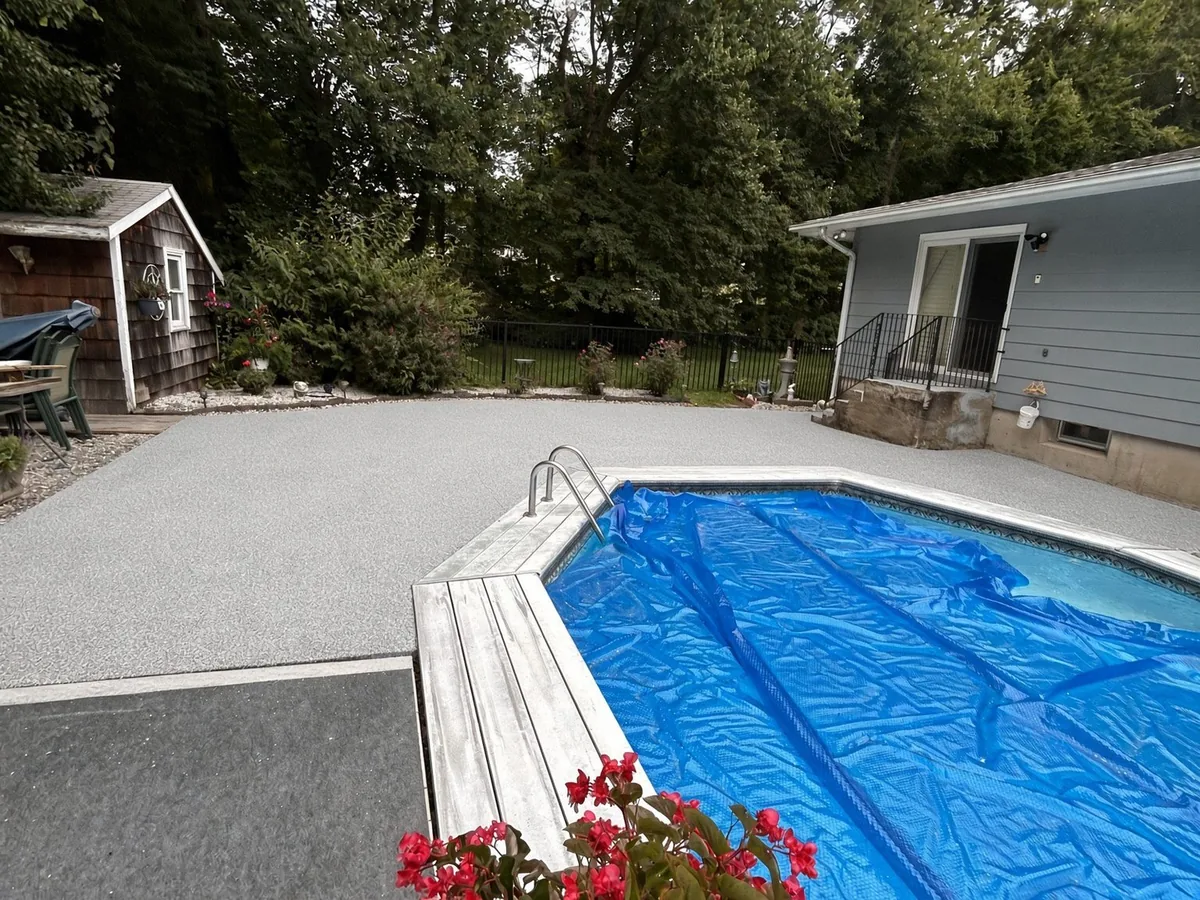
Your pool deck or shower room needs traction that does not tear feet. That points us at a finer aggregate and a smoother profile than we would give a loading ramp.
Your ramp, loading area or kitchen with staff in work shoes takes a coarser profile. It grips harder and it is easier to clean than it looks.
The rougher we make it, the more it holds. In your kitchen that is a real consideration, because the floor gets washed daily and the texture is what the mop has to get into.
Usually you call us after somebody has had a fall, or because an inspection is coming.
Standing water and bare feet. It is also outdoors, so we make your top coat hold its color.
Where water gets walked in. A slope plus a wet floor is the worst combination in any building, and it is cheap for us to fix while we are coating.
Grease and water together. We usually specify quartz for you here, so your grip and your wash-down resistance come from one system.
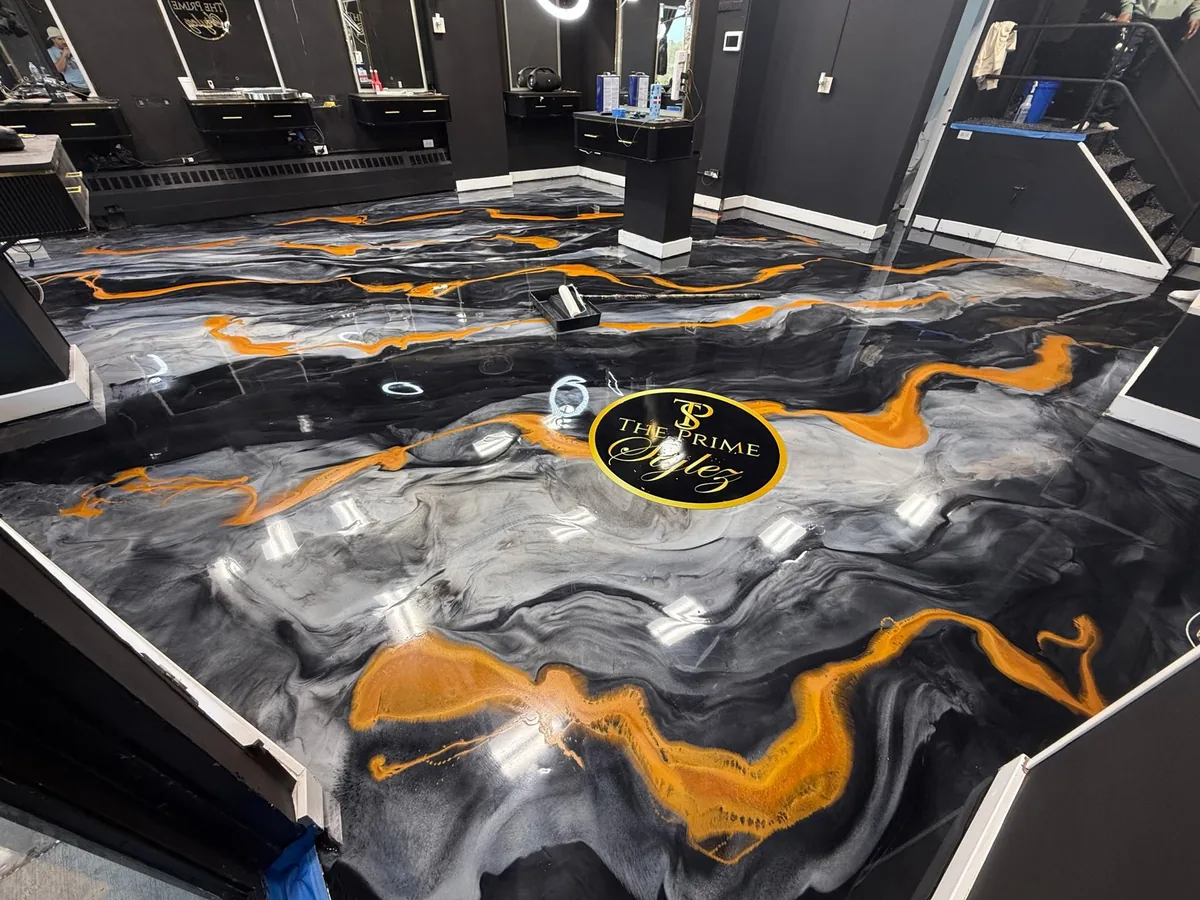
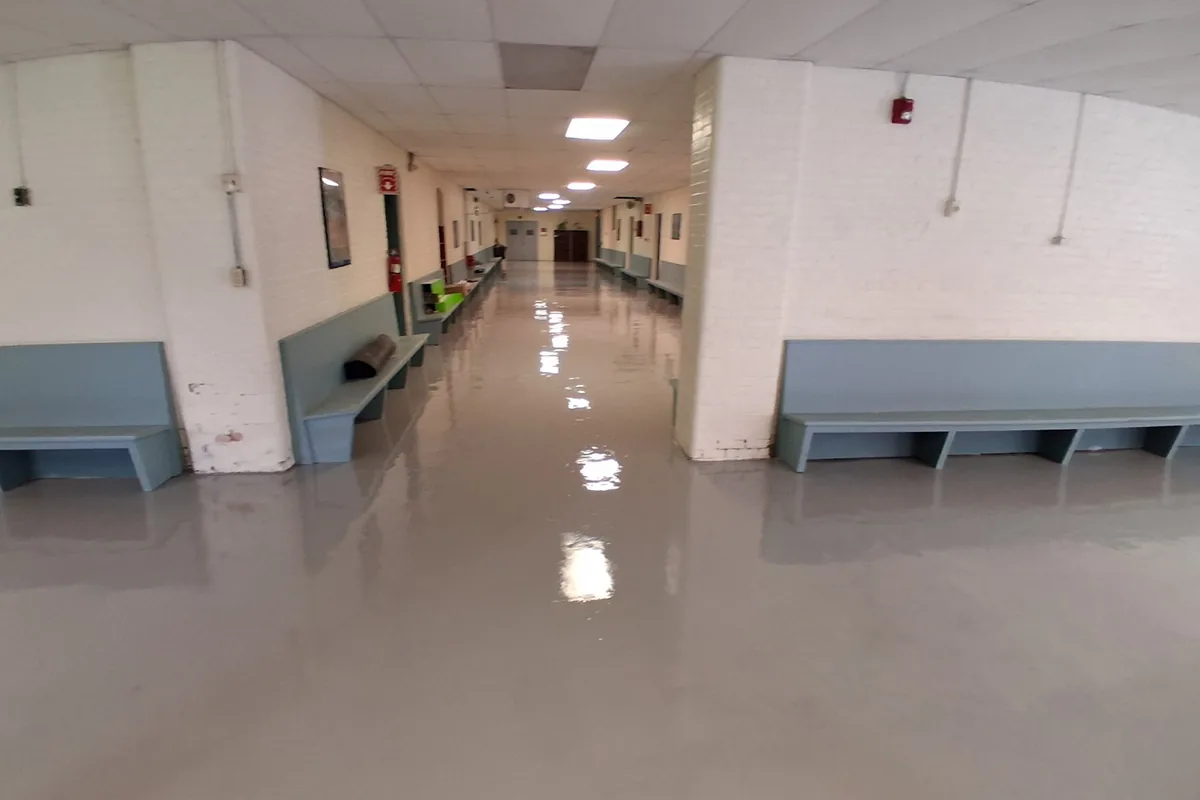
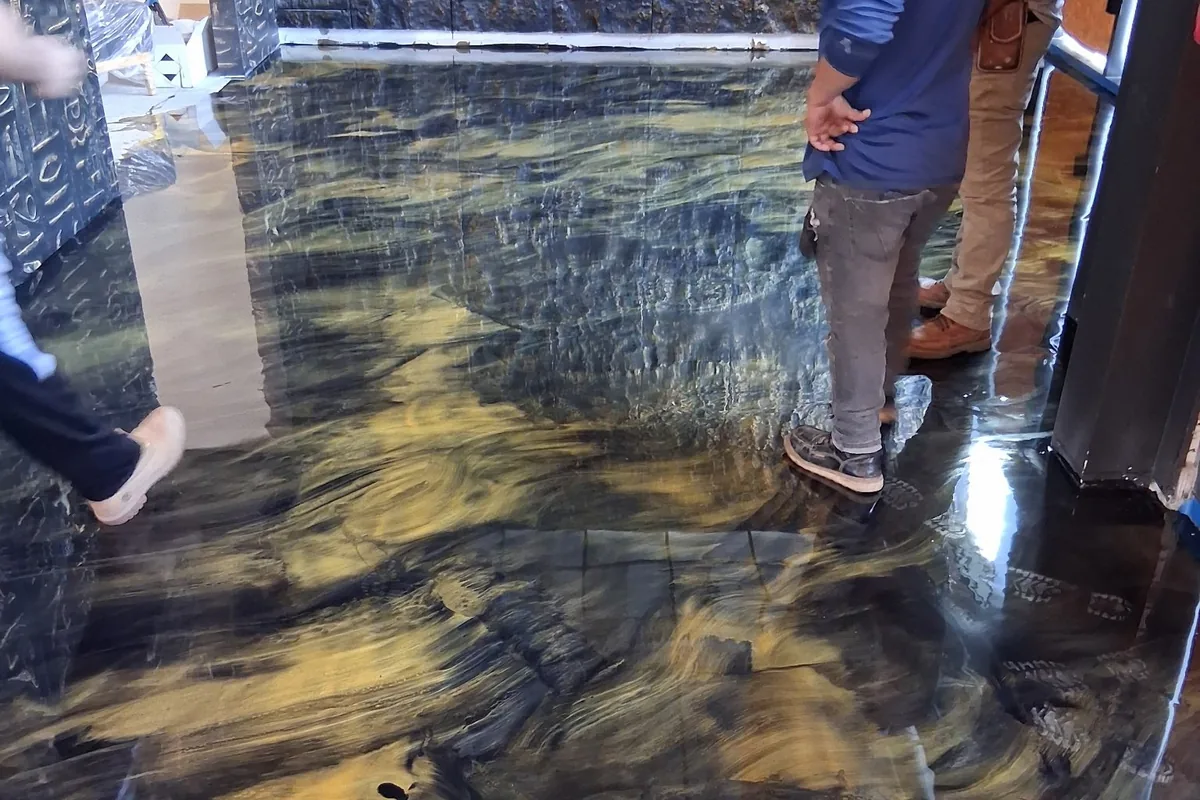
Every floor on this page is one we poured
Two approaches, and only one of them lasts.
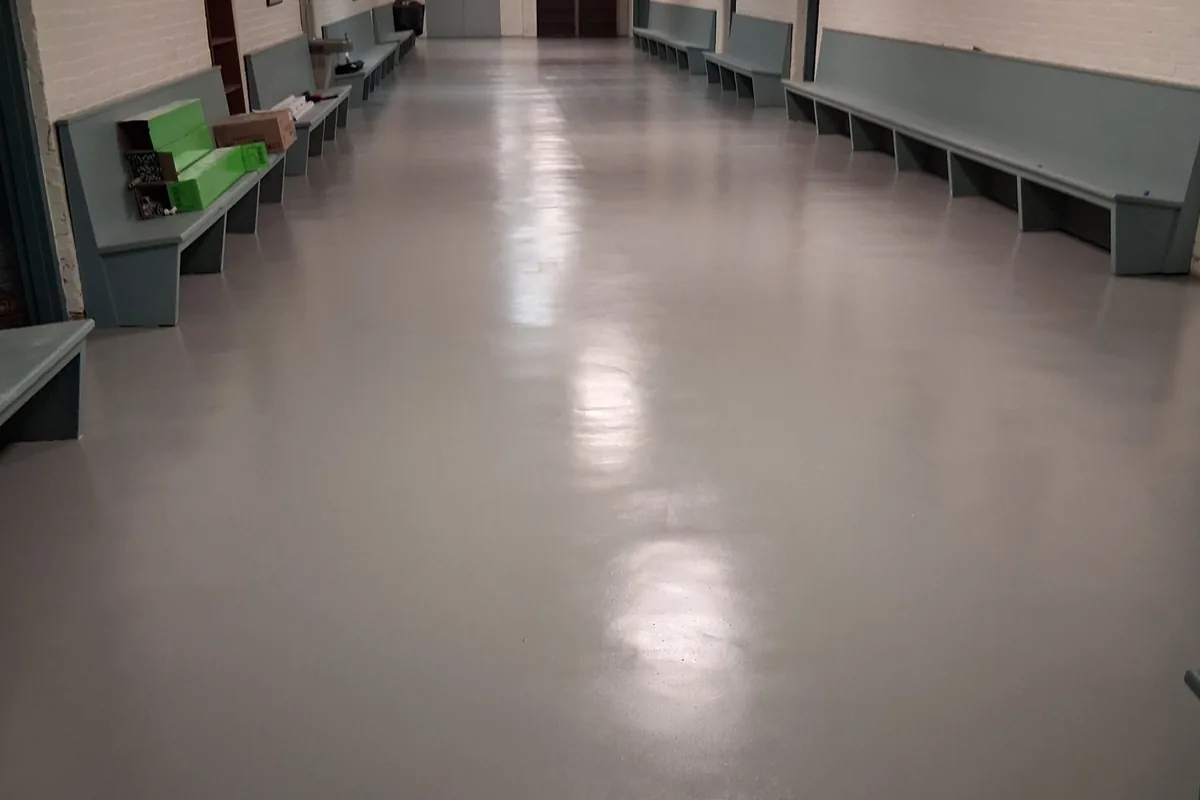
We throw sand, aluminum oxide or a polymer grit into the wet coat and seal it. The texture is part of your floor and it wears at the same rate the floor does.
We mix it into the final clear and roll it on. Simpler, cheaper, and it gives a finer profile that suits bare feet better.
Anything applied on top of a finished floor as a treatment. It wears off exactly where the traffic is, which is where you needed it.
Coarse for boots and wheels, fine and rounded for bare feet. The wrong grade in a barefoot area is genuinely unpleasant and people stop using the space.
Usually after an incident, and better before one.
Standing water and bare feet. Fine, rounded aggregate.
Where water gets walked in and your floor slopes. The worst combination in any building, and one of the least expensive things to fix while we are coating anyway.
Grease and water together. We normally specify quartz so your grip and your wash-down resistance come from one system.
Boots, wheels and weather. Coarse profile, and outdoors means we give you a UV-stable top coat as well.
We often give your marked walkways a different profile from the surrounding floor, which does double duty as a visual cue.
Every increase in grip is an increase in what the floor holds.
Dirt, grease and cleaning residue sit in the profile. Your coarse floor in a kitchen needs deck brushing rather than mopping.
Not to the cleaning regime on paper. A floor too rough for you to clean properly ends up dirty, and a dirty textured floor is more slippery than a clean smooth one.
Coarse where it is wet, finer elsewhere. Most buildings do not need one profile throughout, and yours probably does not either.
4.7 from 15 Google reviews. We publish every one of them on the reviews page, including the one star and what came of it.
great job on my shop Floor thanks again Brad
Floors came out great and the countertops too!
thank you Brad for the wonderful job on my garage floors
The trade talks about grip loosely. If it matters to you legally or for insurance, it is worth knowing what is actually being specified.
Slip resistance is measurable, wet and dry, and systems have published figures. If your floor has to meet a standard, ask us for the number rather than the adjective.
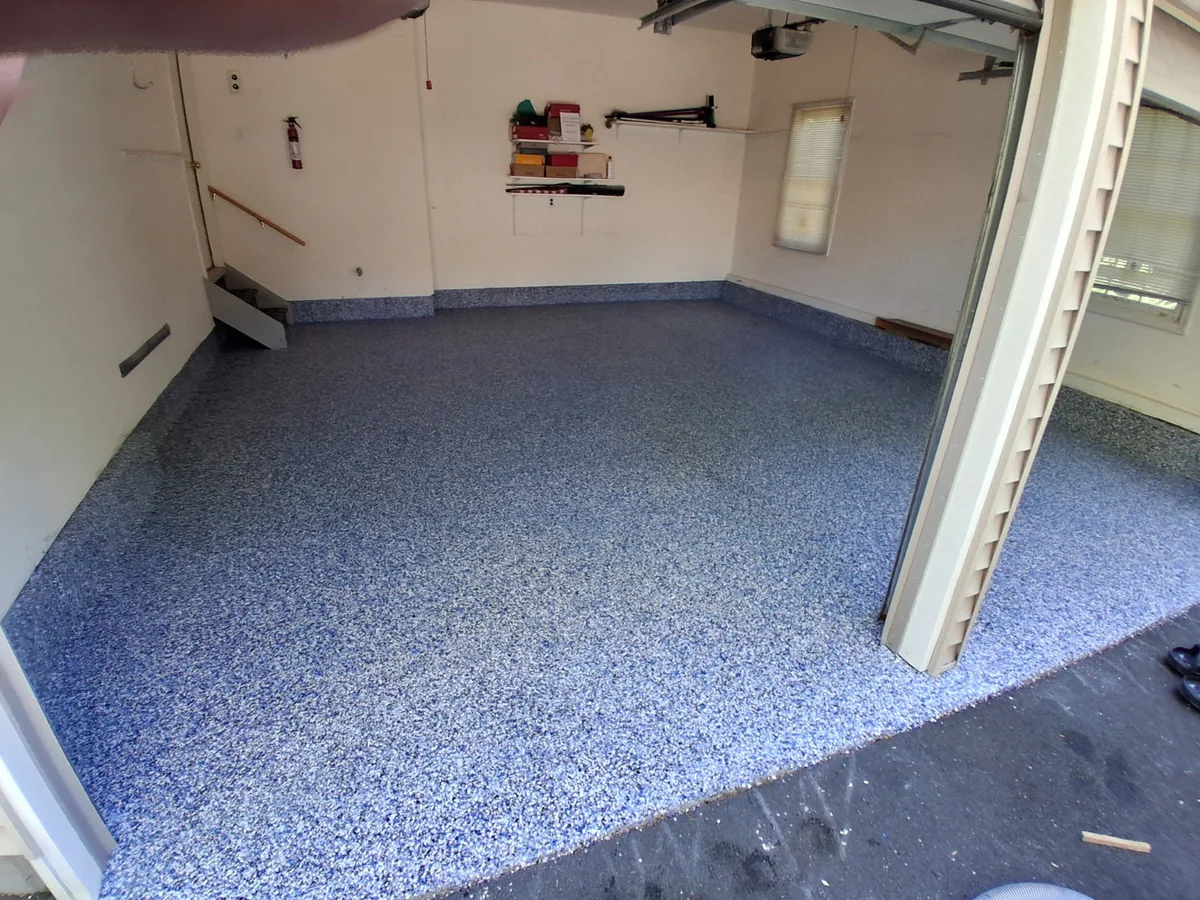
Almost every slip happens on a wet floor. A specification quoted dry tells you very little.
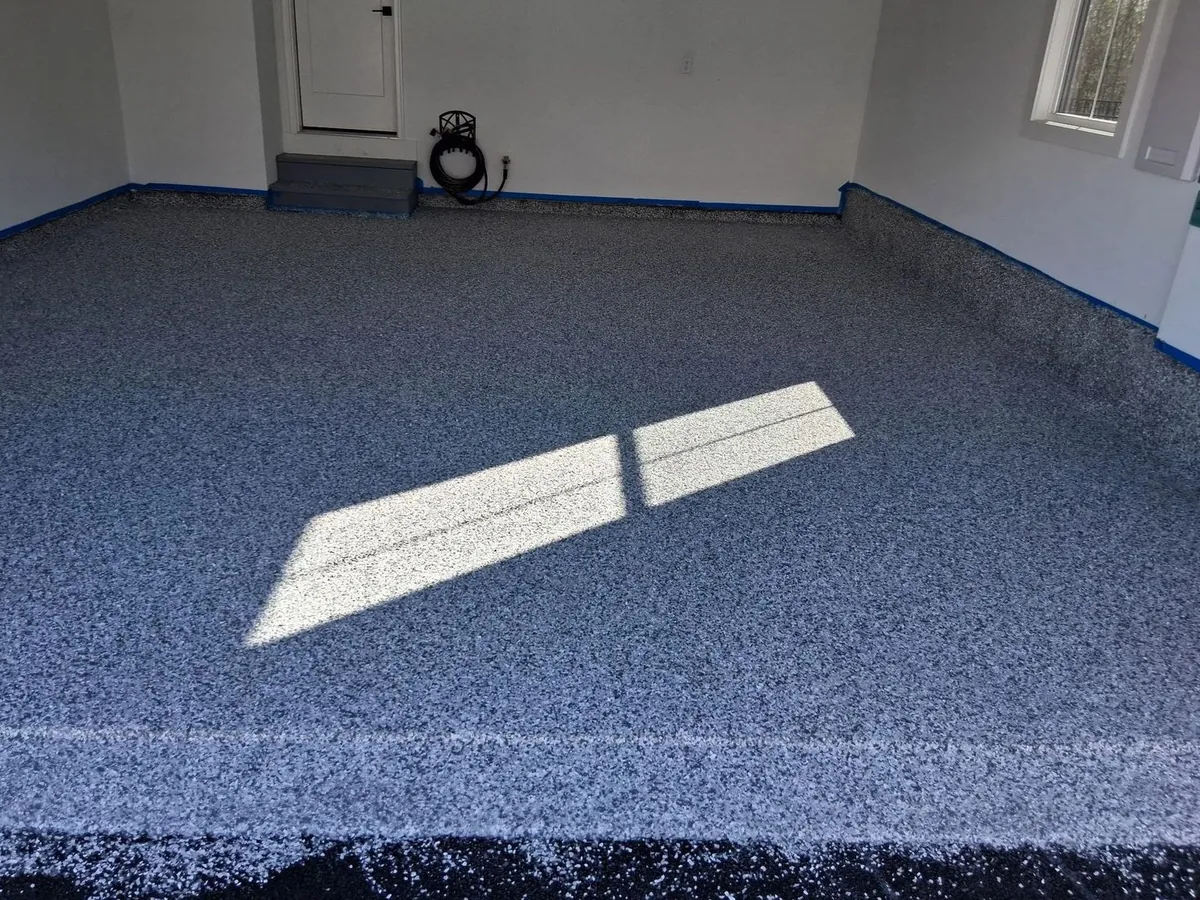
Your grip comes from the physical texture. Two floors with the same coating and different aggregate grades behave completely differently.

Commercial kitchens, public entrances, ramps and wet processing. If you have a requirement, tell us at the quote so we specify it rather than approximate it.
Common, and it is worth knowing which version of it lasts.
We abrade your existing floor and put a new top coat with aggregate on. This is a real fix and it lasts as long as the coating does.
Applied to a finished floor to micro-roughen it. They work, and they wear off where your traffic is, which is exactly where you needed the grip.
Fine as an immediate measure after an incident. They lift, they trap water underneath, and they are not a floor.
Your existing floor has to be sound and bonded. Adding grip to a coating that is already failing buys you nothing.
The domestic side of a specification usually discussed commercially.

The highest-risk surface in your garden. A finer aggregate that works barefoot is the right answer, and it is a small area for us to treat.
A deck that falls to drain is a deck people slip on. Your grip matters more on the slope than on the flat part.
Constantly wet, usually barefoot, and often overlooked when we specify your main deck. Mention them.
The slab outside your door in a Connecticut winter. Grit in the top coat there is worth more to you than anywhere inside the garage.
We put down four layers, and each one has its own job. Scroll and we'll take your floor apart so you can see them.
We install six systems, and most floors we put down combine two of them.
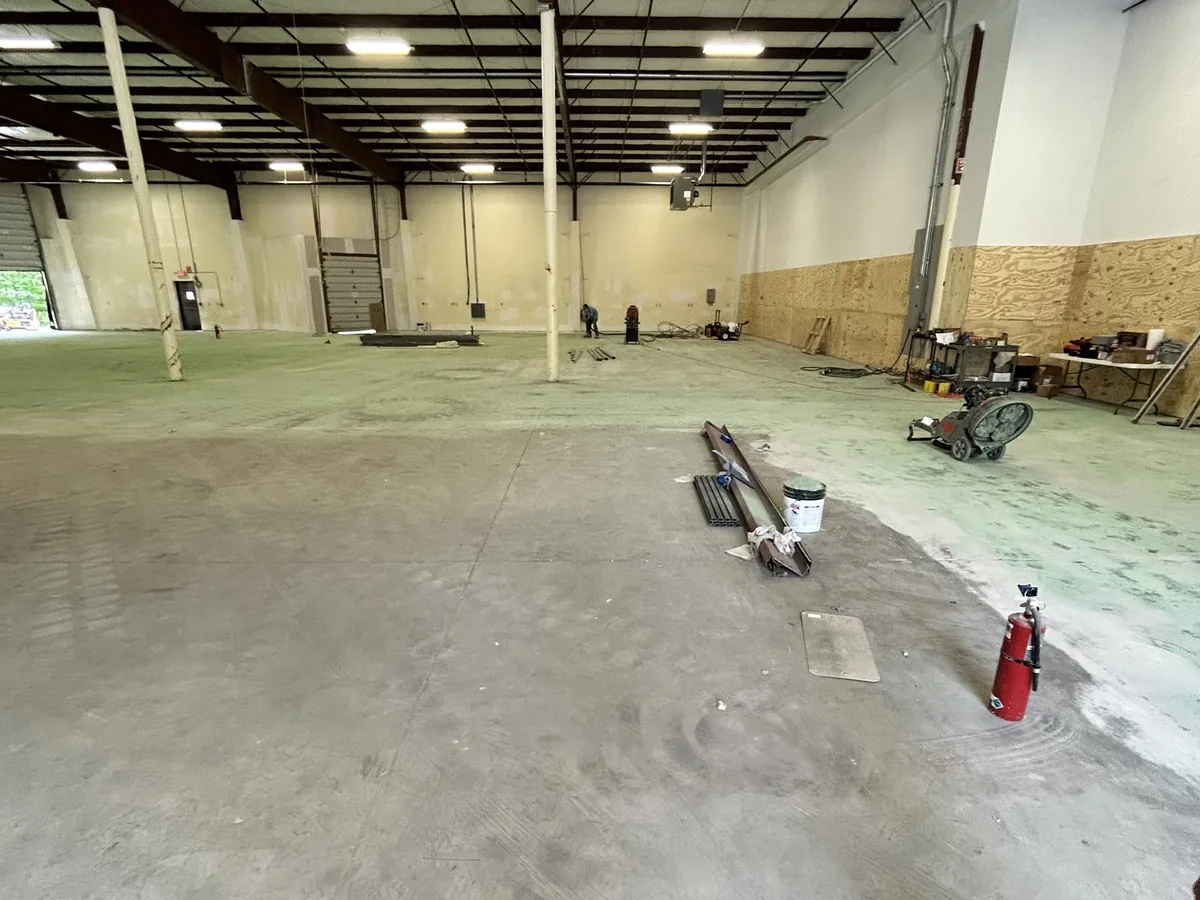
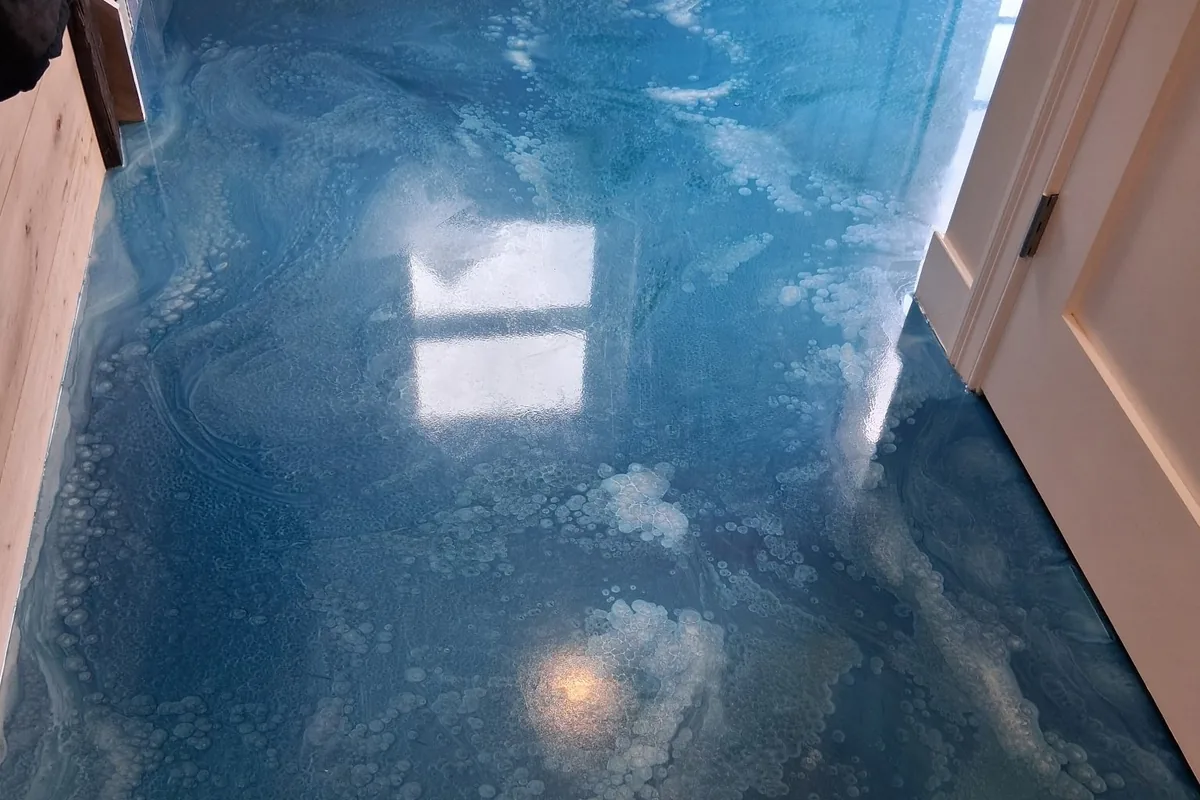
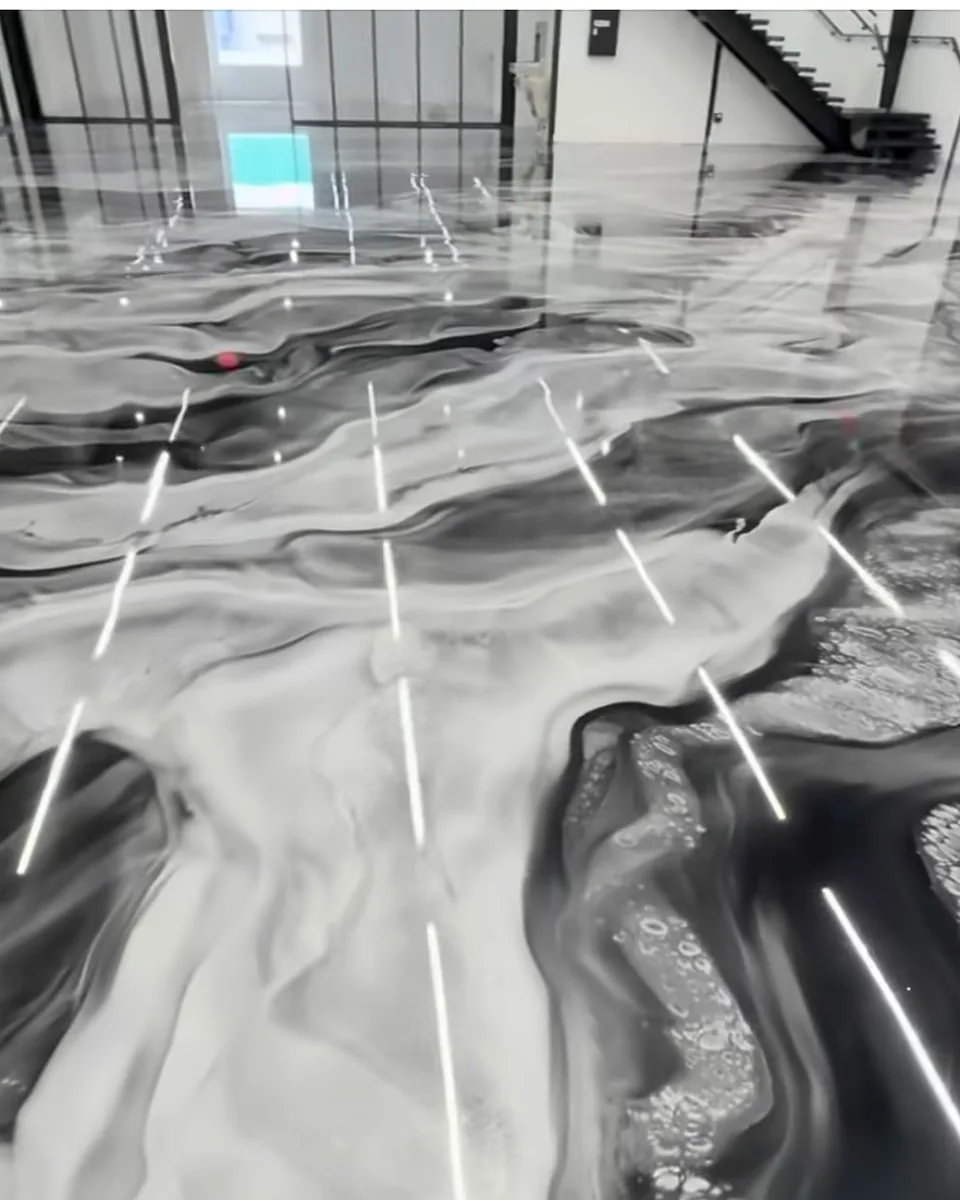
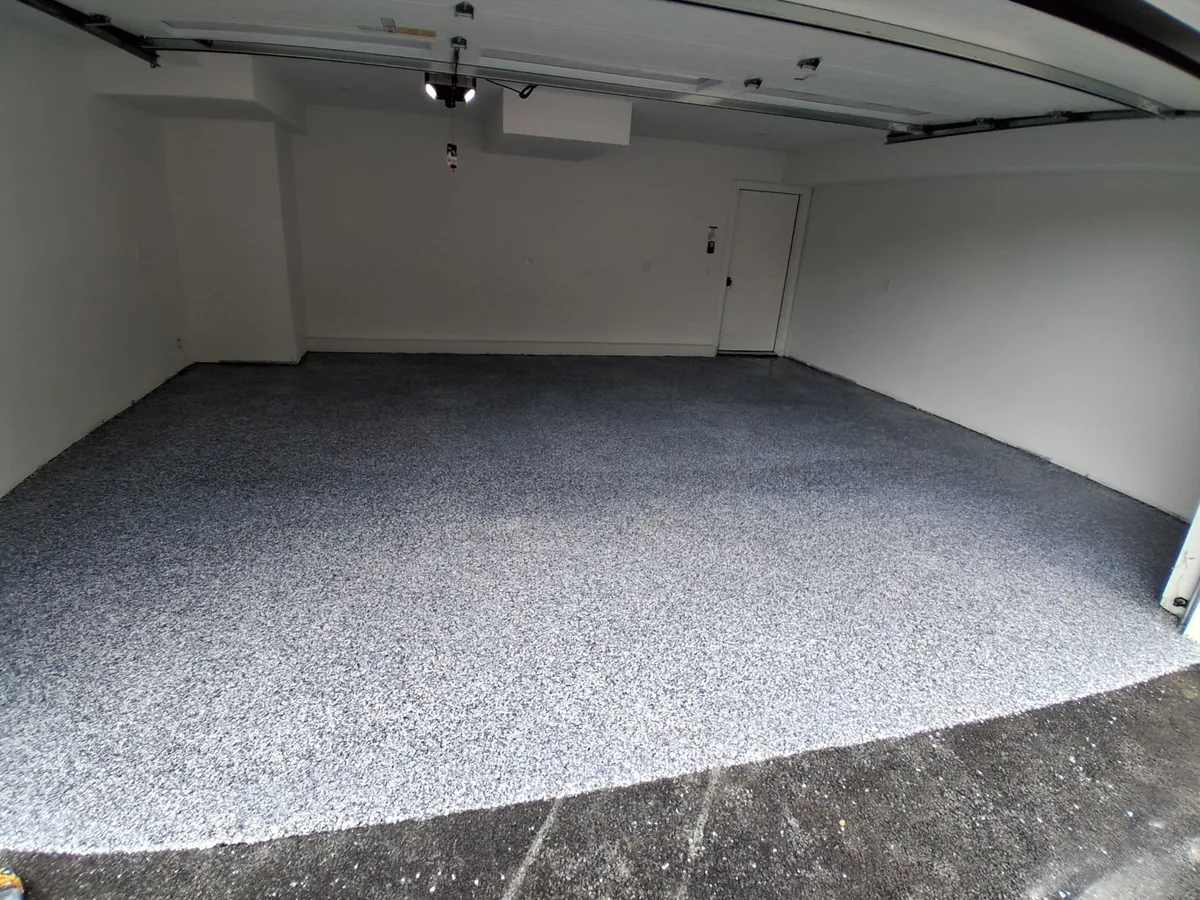
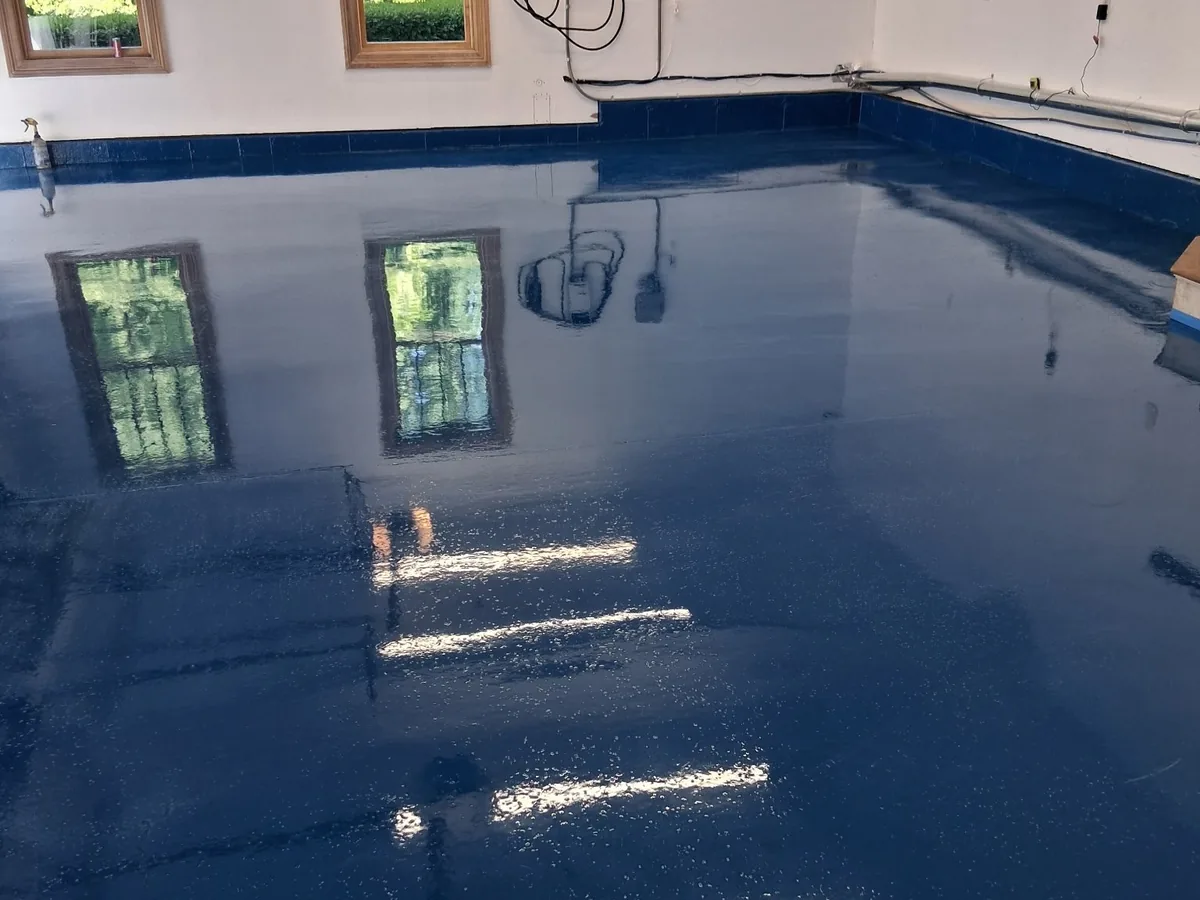
Three steps, and Brad does every one of them himself. Most residential floors are finished in a day.
Tell us the room and roughly how big it is. We'll talk you through the range and book a time to come and look, often the same day. Weekends count, and there's nothing to sign.
He checks for cracks, old coating and moisture, then measures up. You choose your flake blend or metallic against your own floor, not a brochure. Your written quote comes back the same day.
Your slab goes back to bare concrete under a diamond grinder with dust extraction. Then the primer, the body coat with your flake or metallic, and the top coat. You get your walk-on and park-on times with the quote.
Slip resistance is a coefficient of friction, wet and dry. If your floor has to meet a standard, ask for the figure and the method.
Get my free quoteOften. We prepare your existing surface and recoat with aggregate in the top coat. Your floor has to be sound to start with.
Not if we specified it for bare feet. We choose the aggregate grade for your room, which is why it is worth telling us who uses the space.
Your traction comes from the profile, and the profile wears where traffic concentrates. Walkways wear before the edges do.
A coating with aggregate broadcast into it, or grit suspended in the top coat, so your surface has texture that works when it is wet.
Often, by preparing the existing surface and recoating with aggregate in the top coat. The existing floor has to be sound to start with.
Not if it is specified for bare feet. The aggregate grade is chosen for the room, which is why it matters to say who uses the space.
Your traction comes from the profile and the profile wears where traffic concentrates. Walkways wear before edges do.
Yes, and that is your trade-off. We match the profile to the cleaning that will actually happen rather than to the regime on paper.
By coefficient of friction, wet and dry. If your floor has to meet a standard, ask us for the figure rather than the description.
Yes, by abrading it and recoating with aggregate in the top coat. Surface treatments wear off exactly where the traffic is.
On steps, slopes and anywhere that stays wet, yes, with a fine aggregate chosen for bare feet.
Tell us roughly what you have and we'll come and look at it. The quote is free, there's nothing to sign, and you'll know what your floor costs before you commit to anything.
Get Your Free Quote Call or Text (203) 496-6386