
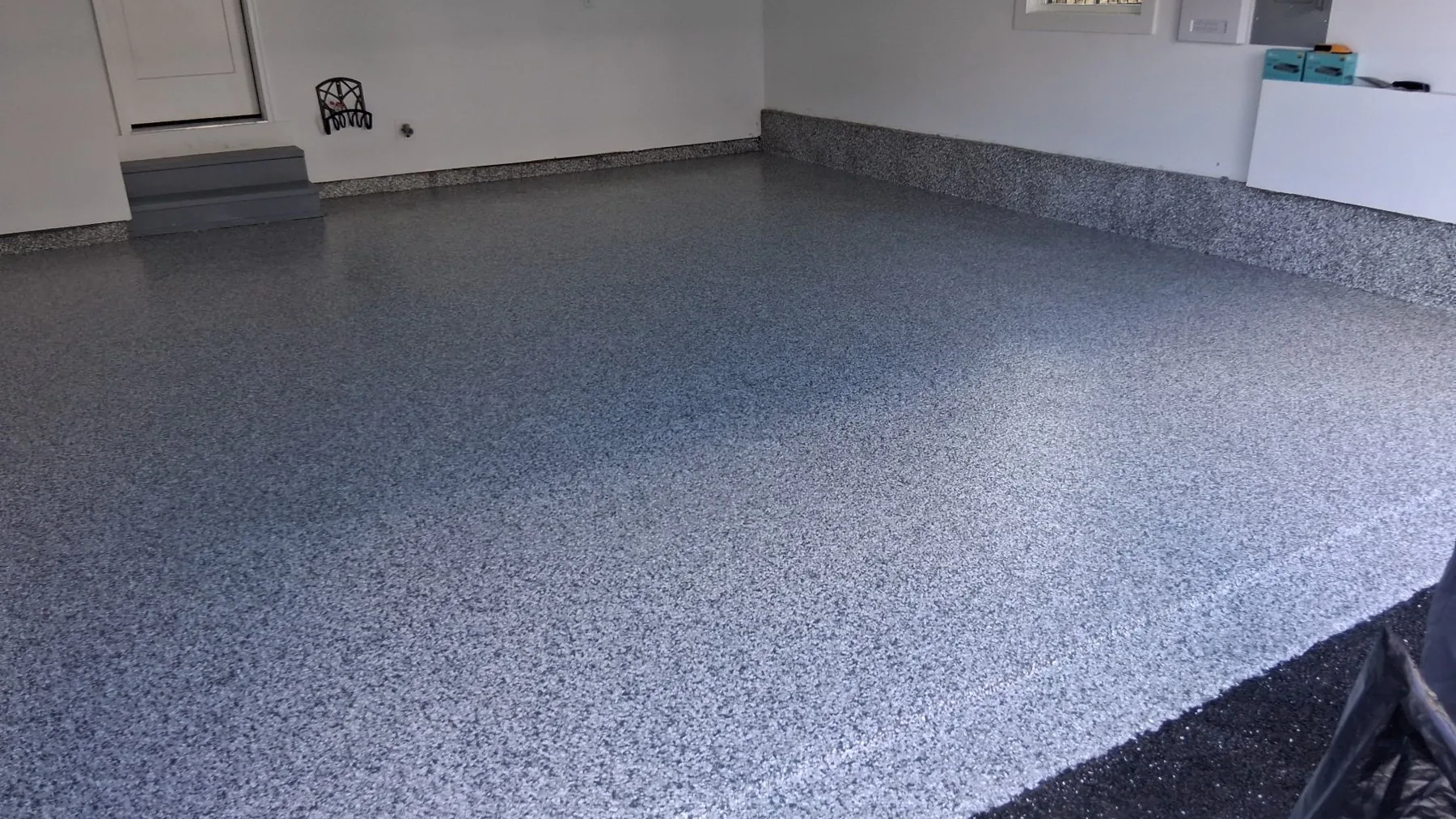
It shows dust more than flake
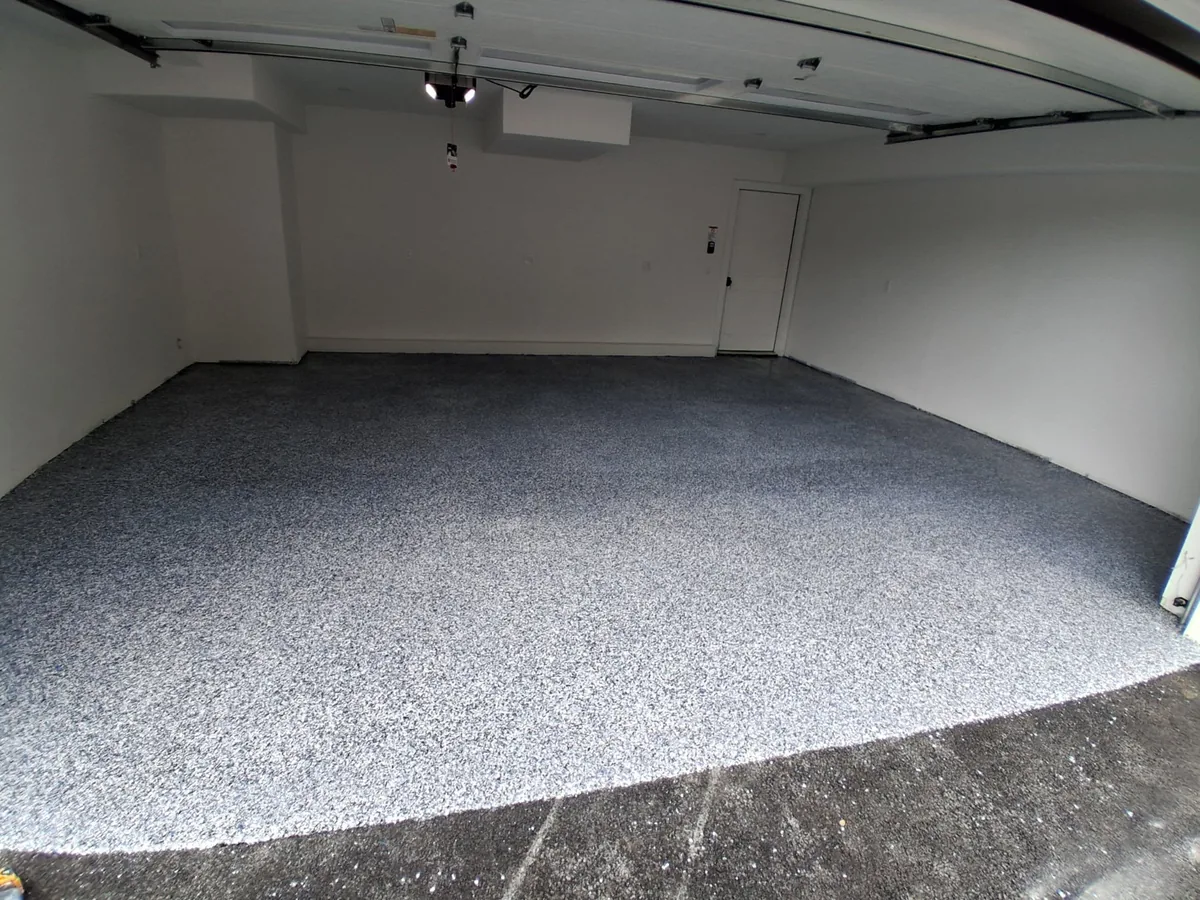
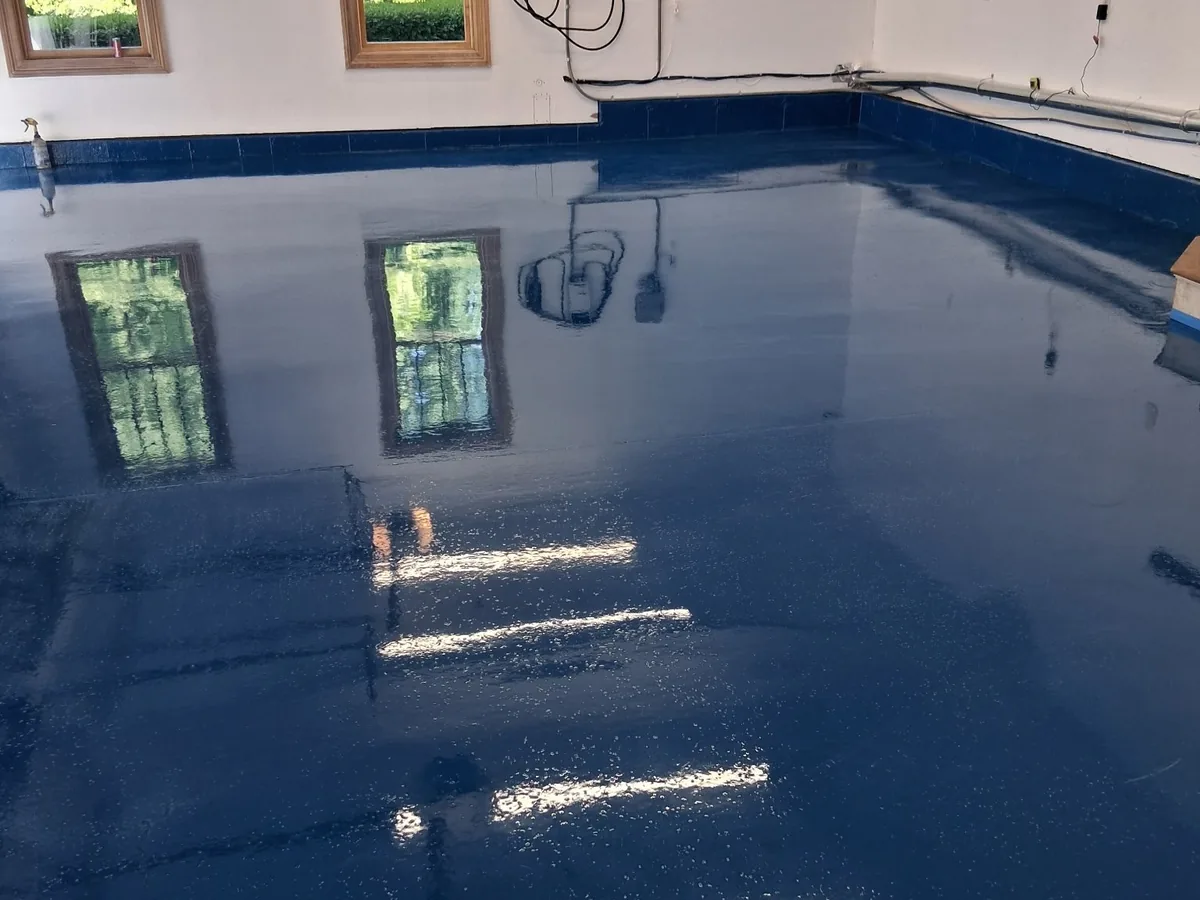
A smooth, dark, glossy surface shows footprints and dust the way your gloss worktop does. Flake hides all of that, which is part of why we put flake in garages.
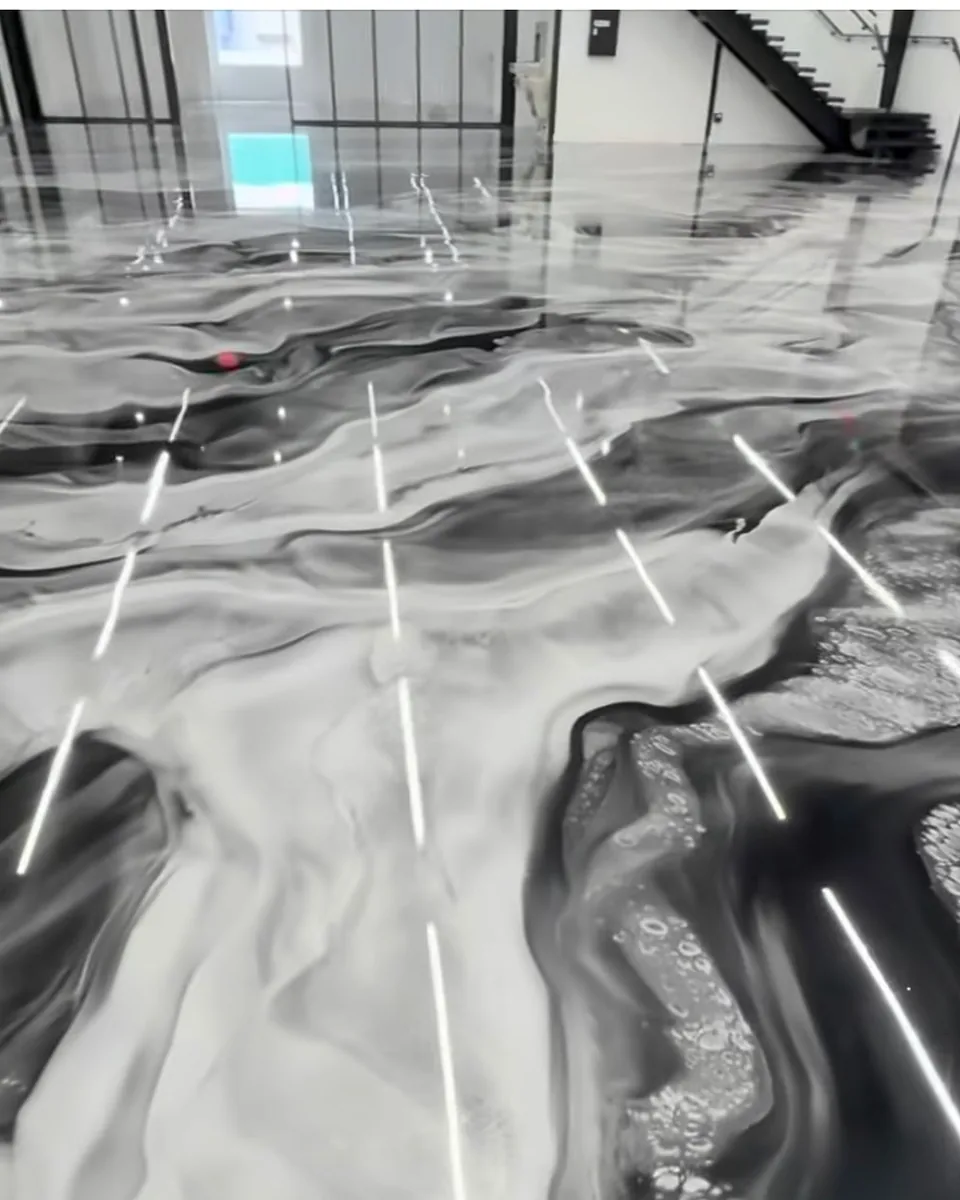
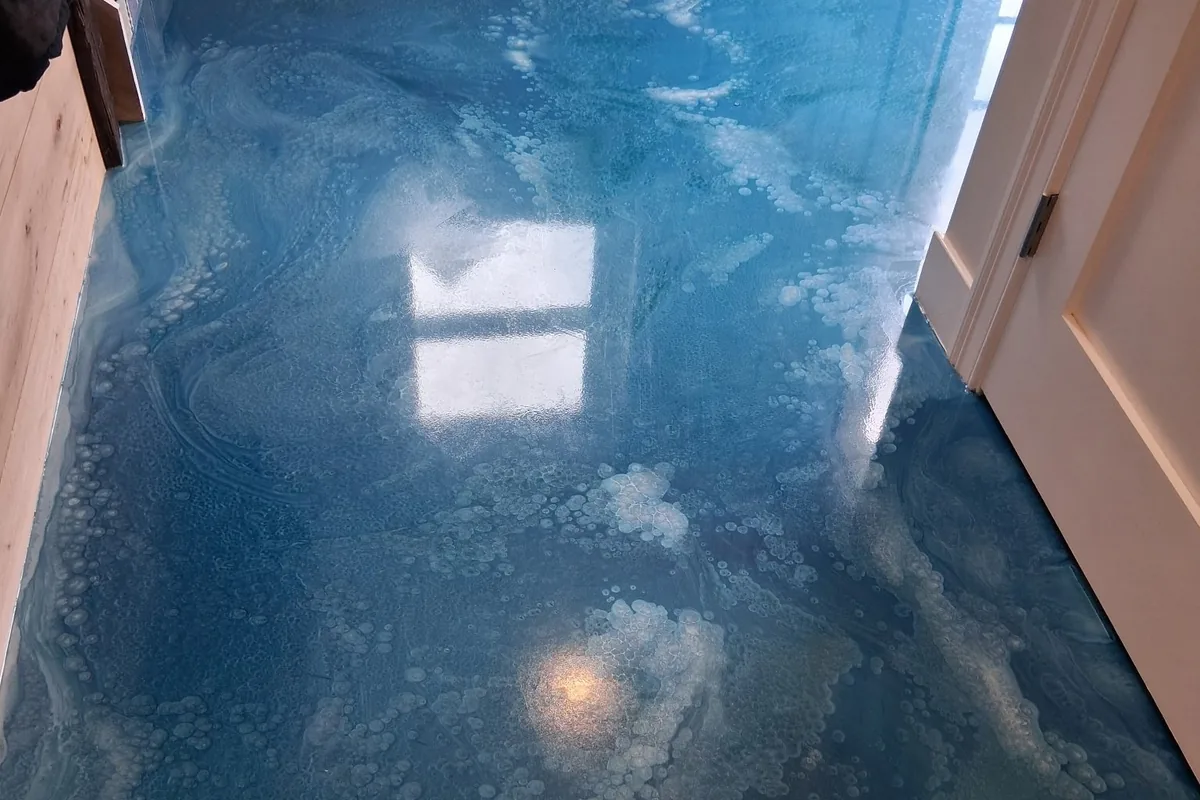
Metallic pigment is worked through clear resin while it is wet, so the pattern moves as it cures. That means the floor cannot be repeated, including by us. It suits showrooms, front-facing garages and basements you want people to notice. It is the system Brad gets asked to photograph.
Free, no obligation, and nothing to sign. We answer the same day, weekends included.
Like poured stone with depth in it. The pigment separates as the resin flows, so you get movement rather than a flat color.

Your pattern comes from how the pigment moves in the wet resin. Temperature, how we work it and how much goes down all change it. Two floors poured the same day from the same tins do not match, and that is why you buy it.
Somewhere it gets looked at. Showroom floors, a garage that is part of the house, a finished basement, a retail space. Under good light it does the most work of any system we install.
A working shop floor you are going to cover in shelving and a lift. The pattern is the reason to buy it, and a floor nobody sees does not need it.
It is the same epoxy body we use on any other system, carrying pigment instead of chips, and we put a clear top coat over it.
We seal the metallic layer under clear. What takes your traffic is the top coat, so when you ask about durability you are really asking what goes on last.
A clear epoxy top coat will amber where the sun lands on it, and on a metallic floor that shifts the whole color. If the room has a glass door or a window wall, the top coat needs to be UV stable. Say so when you get quoted.
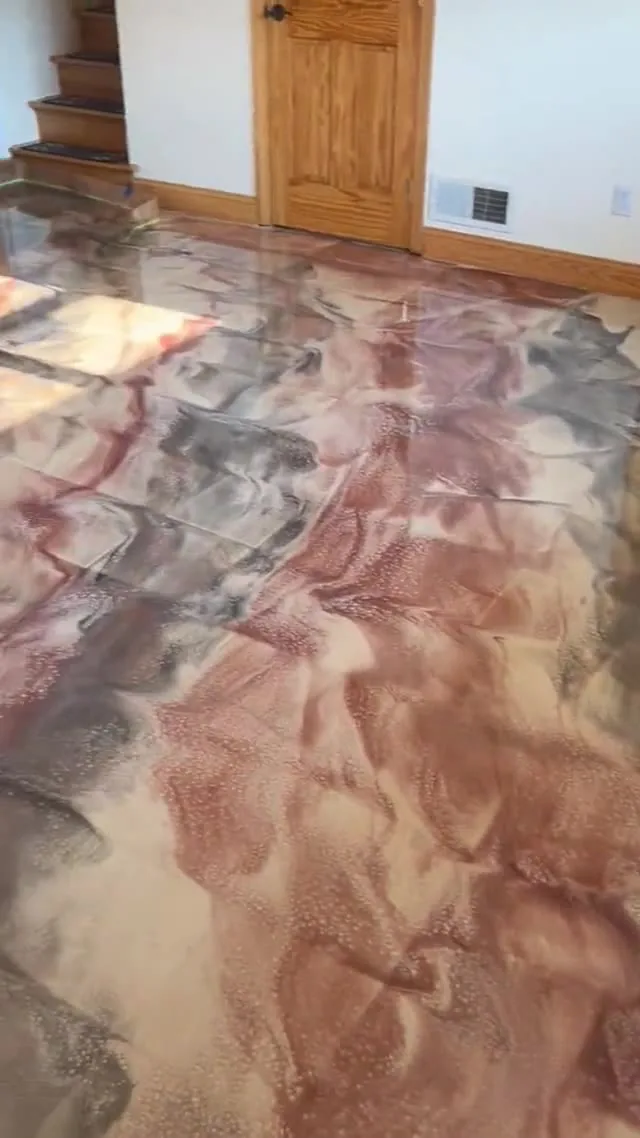
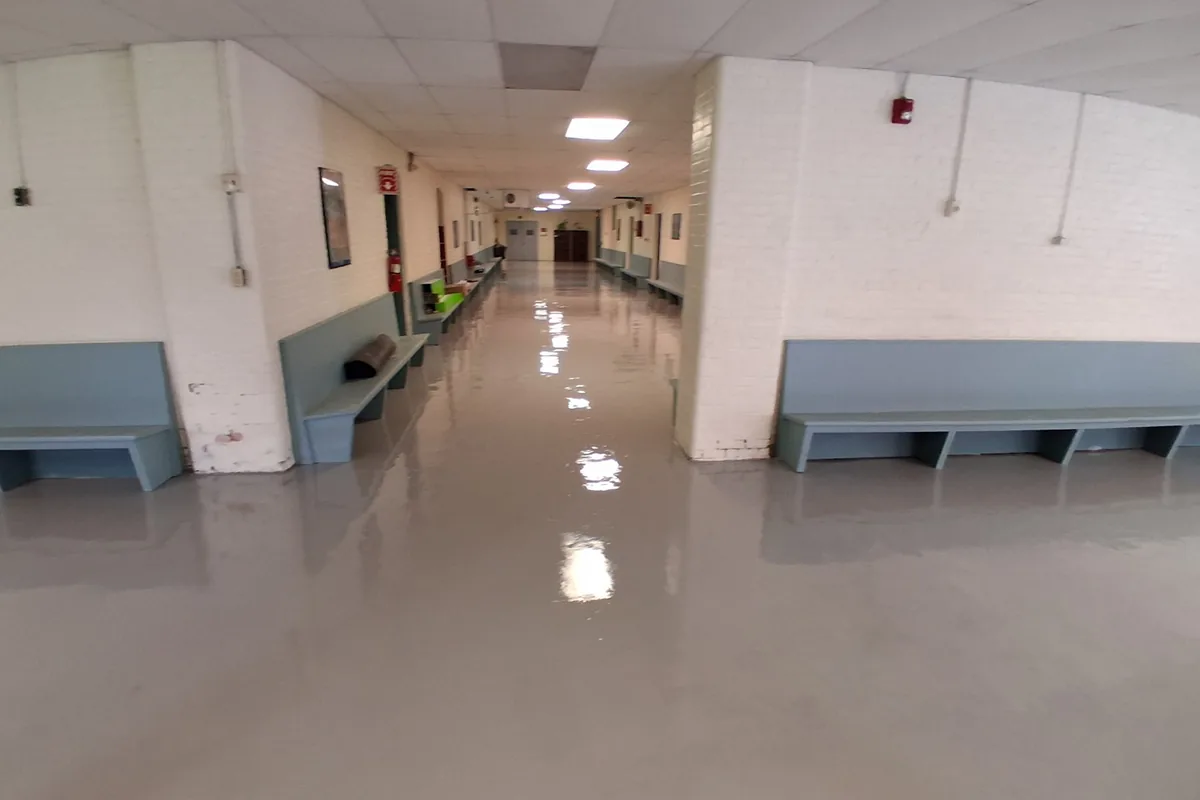
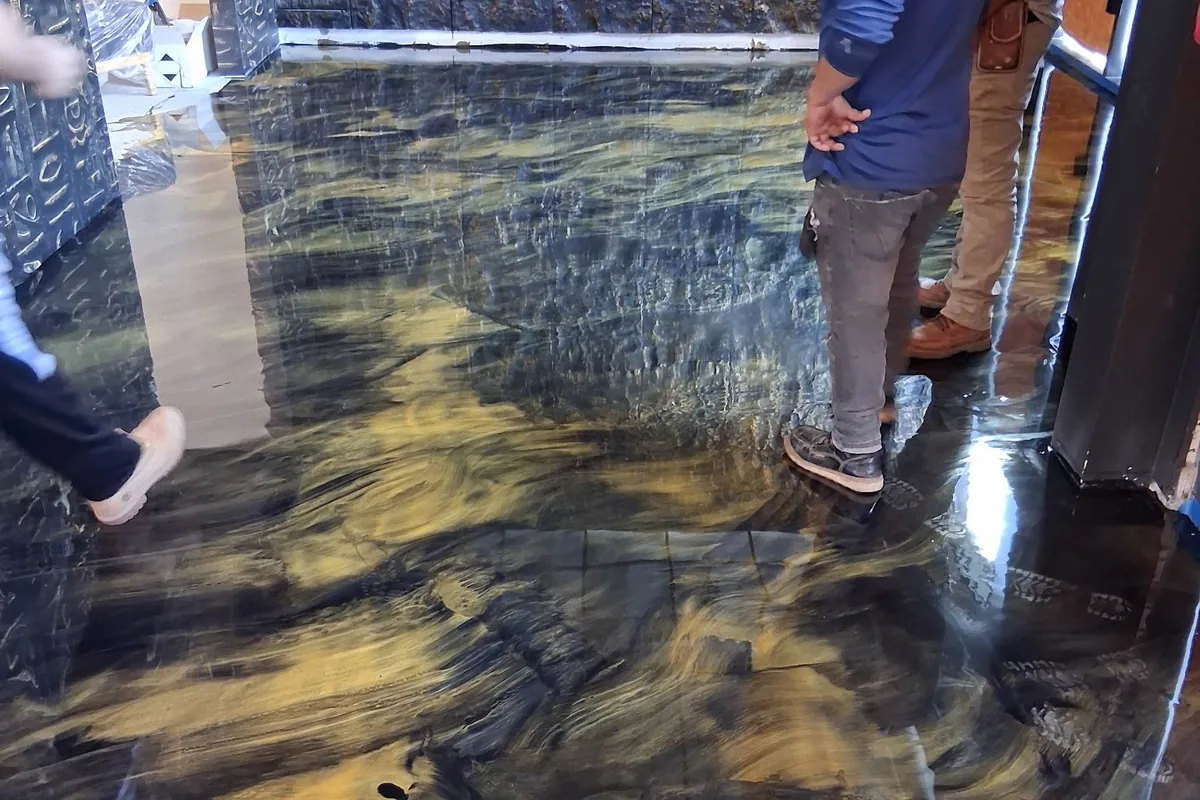
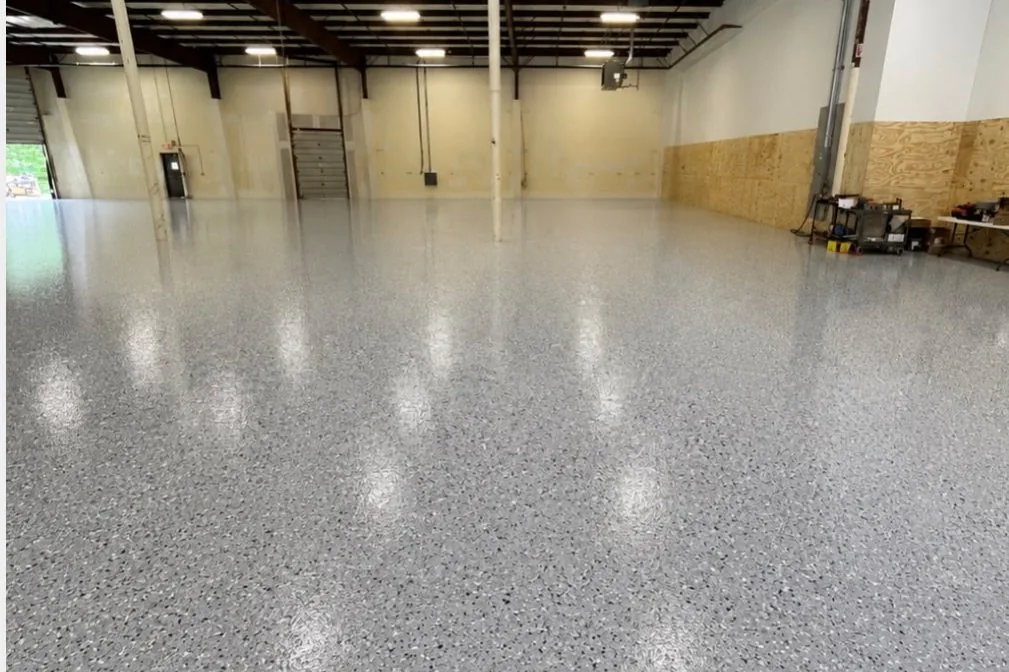
Every floor on this page is one we poured
What makes it different from every other system is that we work it by hand while it is still liquid. That is where your pattern comes from and it is why it costs more.
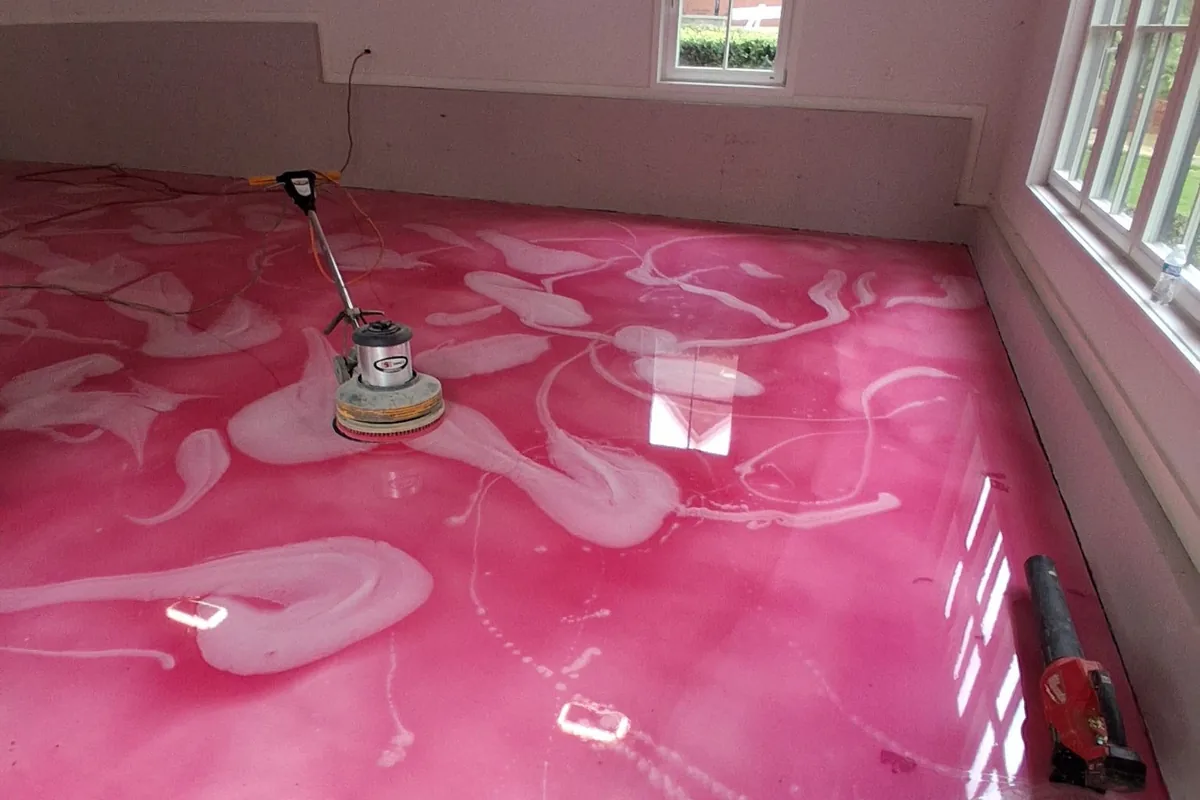
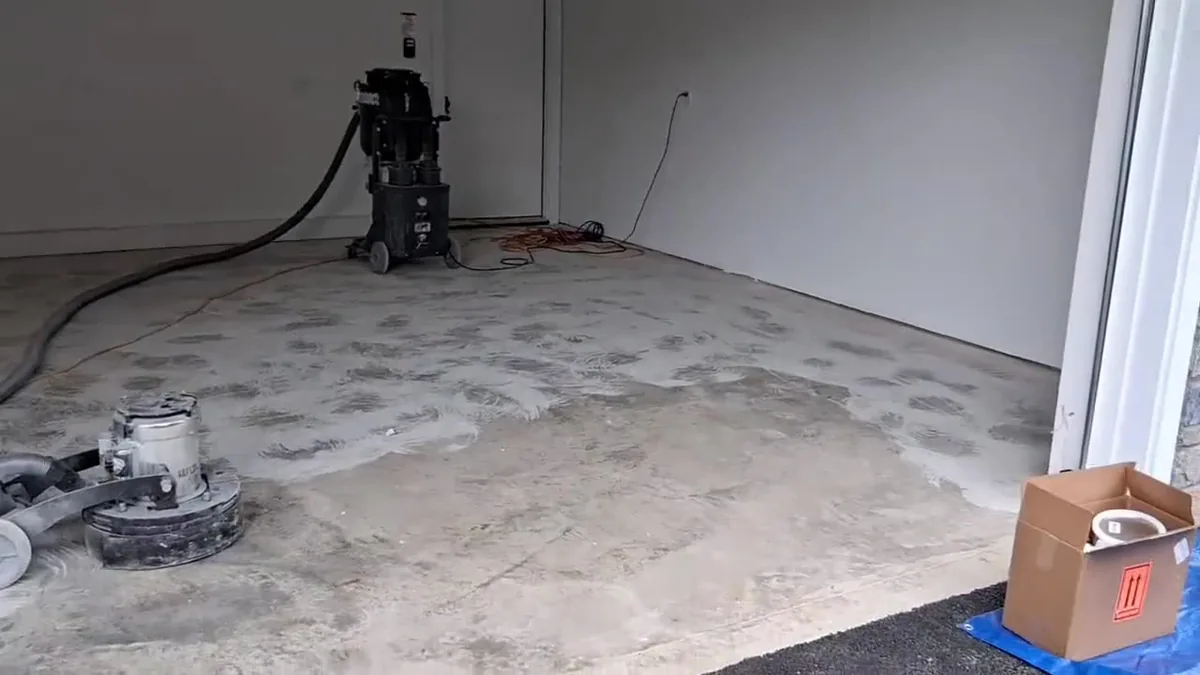
We grind to bare concrete, cut and fill the cracks, patch the pits. A metallic floor over a badly prepared slab fails exactly as any other system does, and the pattern makes the failure more visible rather than less.
Usually black or a deep neutral. This is the color showing through your metallic layer and it changes the finished floor completely, so we choose it with you rather than assuming.
We pour pigment suspended in clear resin and then move it: rolled, brushed, air-blown or dragged. Every technique gives a different pattern, and this step is genuinely craft rather than process.
One or two clear top coats seal your pattern under a wearing surface. The metallic layer itself never takes traffic.
Not marketing. It is a consequence of how the material behaves.
Metallic particles move at a different rate from the resin around them, so they gather and part as your floor levels. That movement is the veining.
A warmer room cures faster and gives tighter patterning. More material gives deeper movement. We cannot control either to the point of repeating your floor.
A floor nobody else has, including anybody who asks us for the same one. If exact repeatability matters, flake or solid color is the honest recommendation.
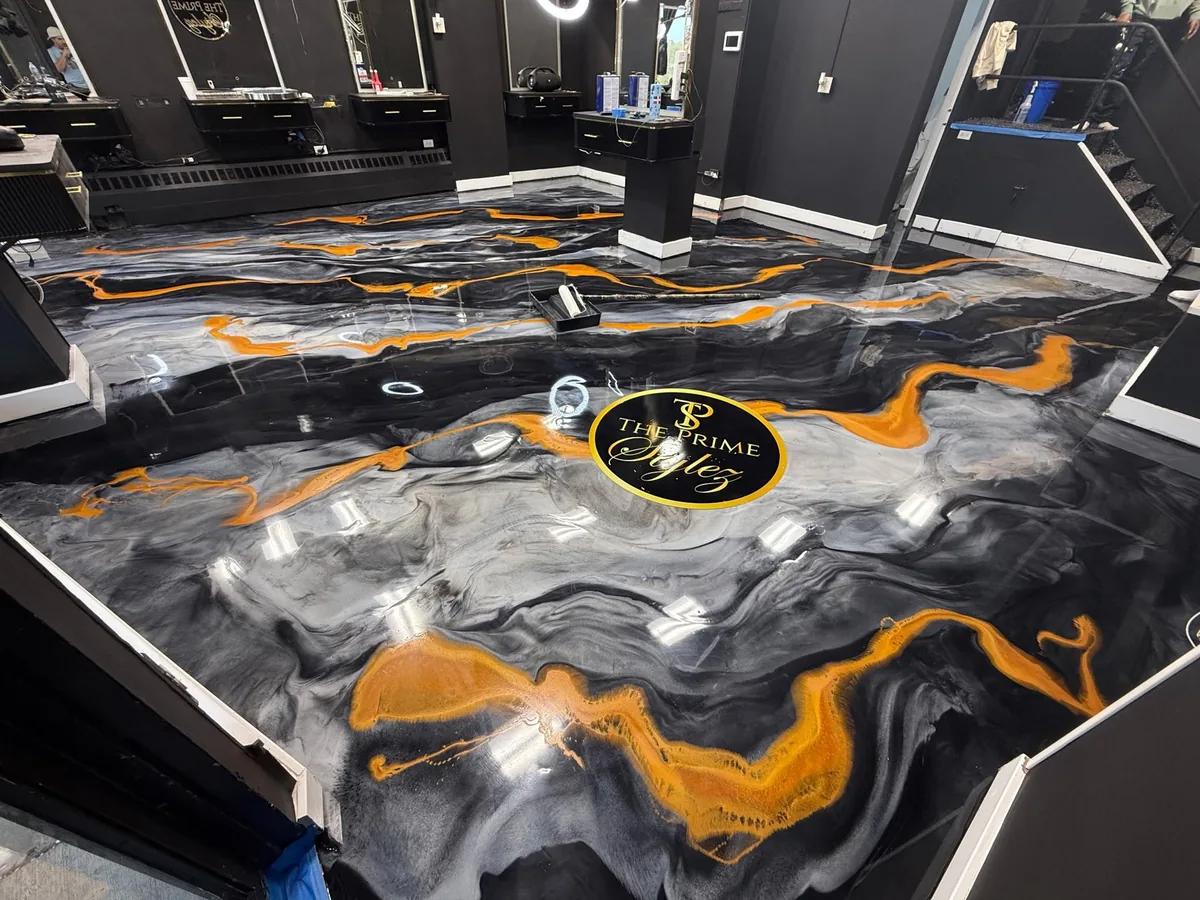
It is the system you photograph, and it is not the right answer everywhere.
Somewhere you look at the floor. A garage that opens into your house gets judged as a room.
Under artificial light the depth reads particularly well, and your basement usually has no competing floor finish.
A floor that makes your customers look down is doing work a wall cannot.
If you are covering it in racking, a lift and a parts washer, the pattern is money you spent on something nobody sees.
A clear epoxy top coat ambers in UV, and on a metallic floor that shifts your whole color rather than just dulling it. Glass doors and window walls mean we use a UV-stable top coat.
4.7 from 15 Google reviews. We publish every one of them on the reviews page, including the one star and what came of it.
great job on my shop Floor thanks again Brad
Floors came out great and the countertops too!
thank you Brad for the wonderful job on my garage floors
Same maintenance as any resin floor, with one thing worth knowing.
A smooth, dark, glossy surface shows footprints and dust the way your gloss worktop does. Flake hides all of that, which is part of why we put flake in garages.
Sweeping matters more than any cleaner. Abrasion dulls the clear coat and the clear coat is what you are looking through.
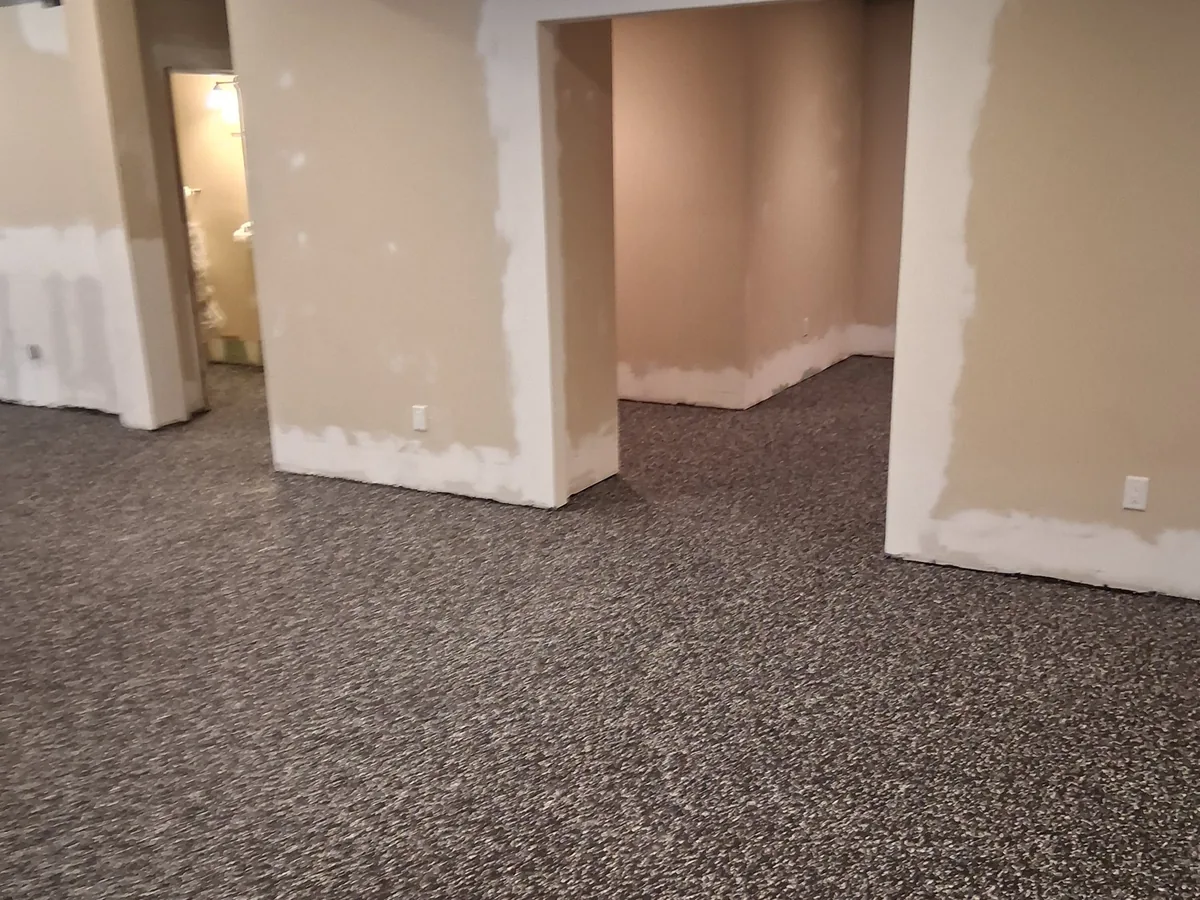
On flake, our repair disappears into the chip pattern. On metallic we have to rework the veining by hand, which is doable and takes more skill.
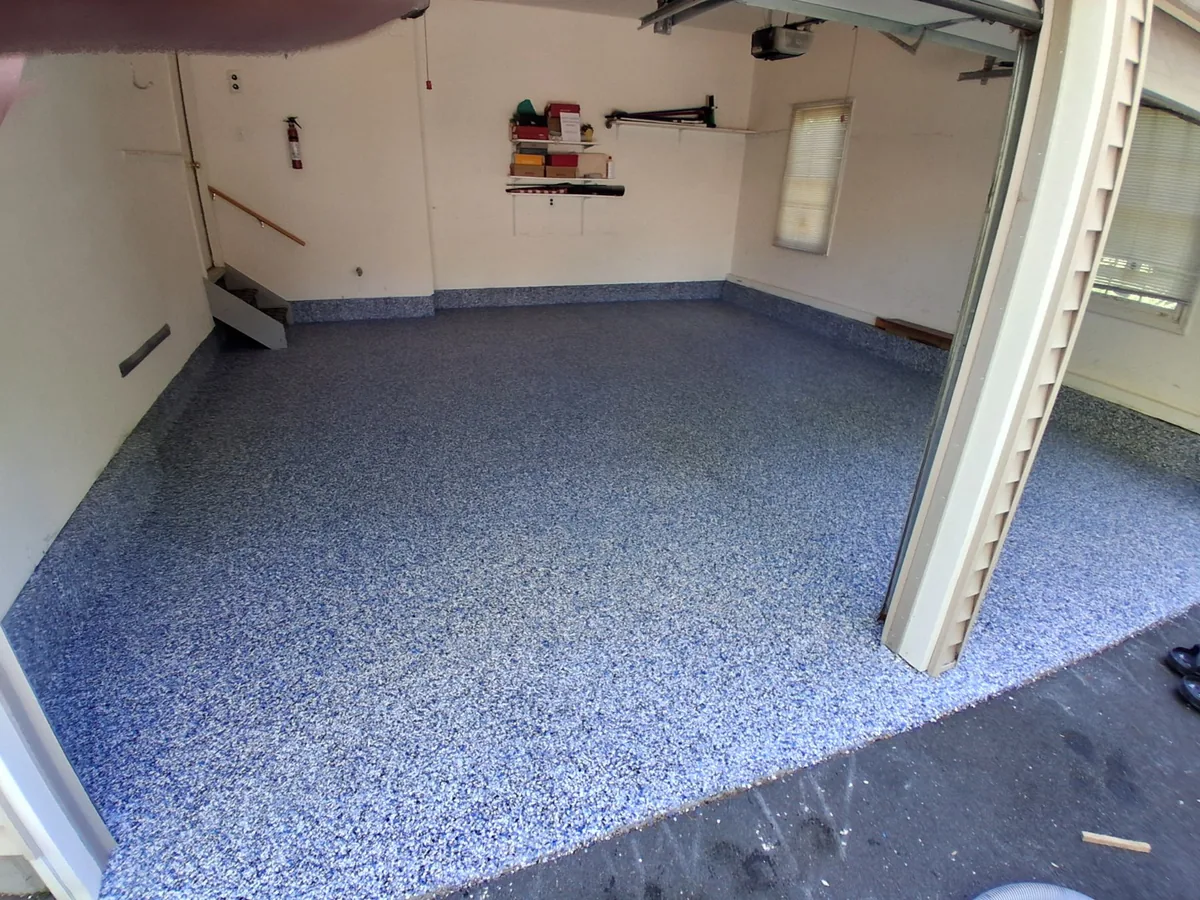
When the clear eventually dulls we prepare and recoat it, and your pattern underneath is untouched.
Two or three pigments over a base, and the combination changes your floor more than any single color does.
Black gives you depth and contrast. A mid gray base gives a softer, more marble-like floor. Choosing your base is not a formality.
More colors give you more complexity and can tip into busy. On a large floor, restraint usually reads better.
Some pigments separate hard and give sharp veining; others blend and give cloud. Ask which behavior you are choosing rather than only which color.
Your metallic floor under a window is a different floor at 8am and 6pm. See a sample in the room it is going in.
Not only a domestic finish.
A floor that makes people look down does work a wall cannot.
Hard wearing, seamless, and unlike anything a competitor will have.
With the caveat that your kitchen behind it needs quartz rather than metallic.
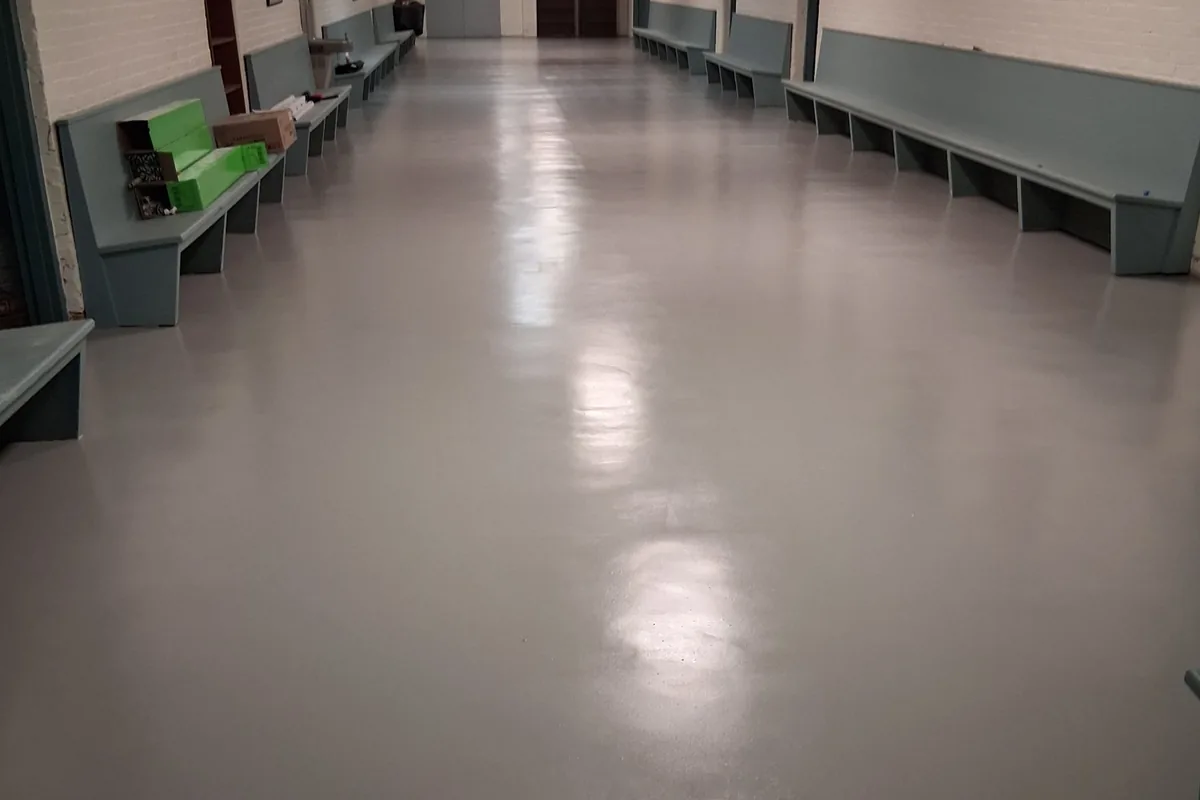
We put down four layers, and each one has its own job. Scroll and we'll take your floor apart so you can see them.
We install six systems, and most floors we put down combine two of them.
Three steps, and Brad does every one of them himself. Most residential floors are finished in a day.
Tell us the room and roughly how big it is. We'll talk you through the range and book a time to come and look, often the same day. Weekends count, and there's nothing to sign.
He checks for cracks, old coating and moisture, then measures up. You choose your flake blend or metallic against your own floor, not a brochure. Your written quote comes back the same day.
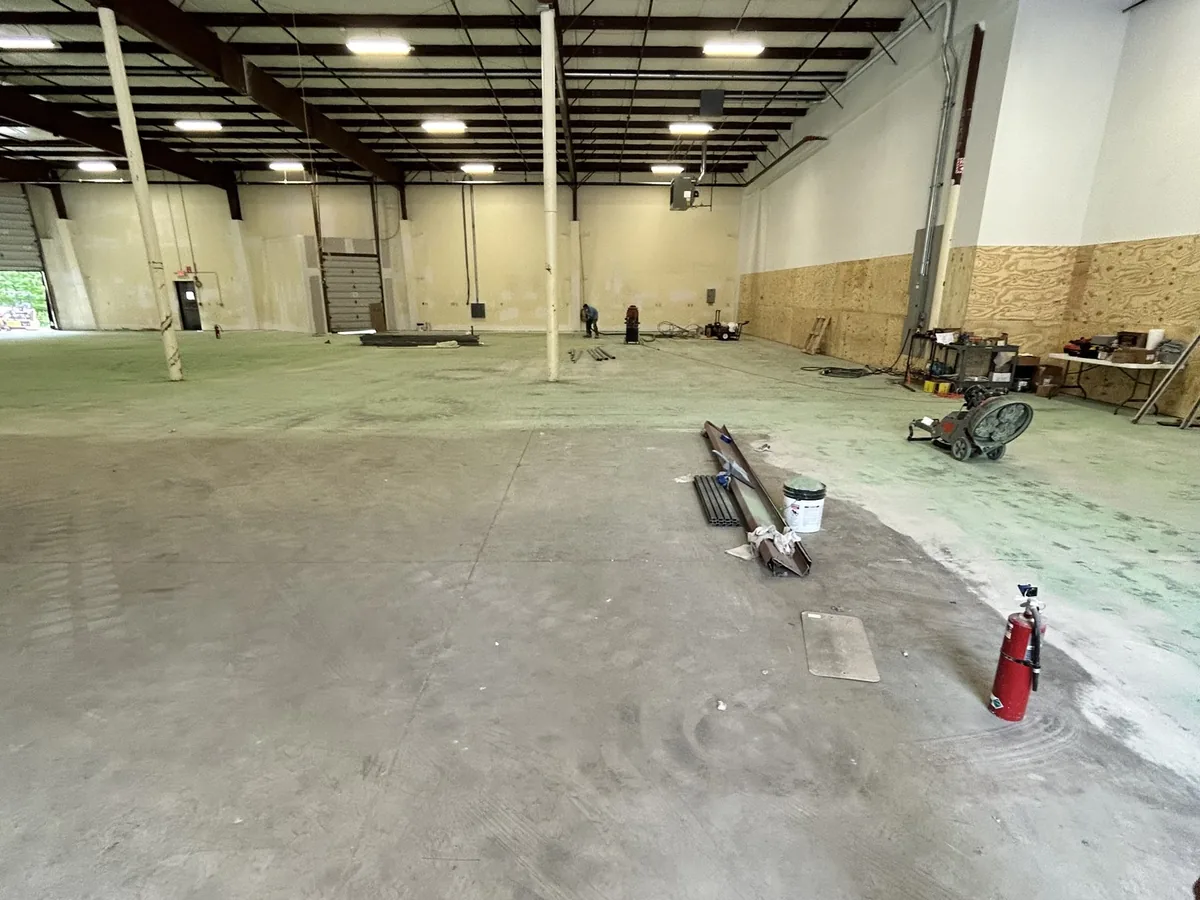
Your slab goes back to bare concrete under a diamond grinder with dust extraction. Then the primer, the body coat with your flake or metallic, and the top coat. You get your walk-on and park-on times with the quote.
Pigment is moved through the resin while it is still wet. That is why it is the one people photograph, and why a sample board only ever tells you half the story.
Get my free quoteClose, not exact. We can match your base colors. We cannot match the pattern, because it forms while the resin is moving.
The top coat scratches like any floor coating does. We repair it, and grit carried in on your shoes and tires causes most of it.
It is smooth by default. If yours is going somewhere that gets wet, ask us for grit in the top coat.
A clear resin layer carrying metallic pigment. We pour it over a solid base coat, work it while wet so the pigment moves and forms your pattern, then seal it under a clear top coat.
The base colors yes, the pattern no. It forms while the resin is moving and it cannot be repeated, including by us.
Yes. Your wear is taken by the clear top coat, which is the same layer that protects a flake floor.
The top coat scratches like any floor coating. Grit carried in on shoes and tires causes most of it, and it can be recoated.
We work it by hand while the resin is moving, so it costs more in time as well as material. Brad prices it when he sees the floor.
Pick your base coat first, because it is half the result. Two pigments read as stone, three as movement, and light changes all of it.
Tell us roughly what you have and we'll come and look at it. The quote is free, there's nothing to sign, and you'll know what your floor costs before you commit to anything.
Get Your Free Quote Call or Text (203) 496-6386