
Every company tells you the other system is obsolete.
Take three quotes and you will hear that epoxy peels, that polyaspartic is four times stronger, and that the other companies sold you yesterday's product. Most of that is a sales position rather than a specification. Both materials go into good floors. Which one suits your room depends on your slab, your temperature and what you park on it. We install both.
Free, no obligation, and nothing to sign. We answer the same day, weekends included.
Where the Argument Actually Comes From
A company that installs one system has to explain why it is the only one worth having. That is a commercial position and it is not the same thing as a technical fact.
Most coating companies carry one system
Buying, storing and training on a single product line is cheaper and simpler, and there is nothing wrong with it. It does mean that when your room would suit the other material, the answer you get is still the one they carry.
So the pitch has to be a comparison
If a company only installs polyaspartic, epoxy has to be the old thing. If a company only installs epoxy, polyaspartic has to be the expensive thing. You are hearing the product range, not the floor.
The claims are usually true and incomplete
Polyaspartic really does cure faster and hold its color better in sunlight. Epoxy really is thicker built and costs less to buy. Both sentences are correct. Neither one on its own tells you what belongs in your garage.
The Differences That Are Real
Four of them matter to you. The rest is marketing.
Cure time, and what you do with your garage
Polyaspartic cures in hours where epoxy wants days. If you need the room back tomorrow that is the whole decision, and it is the main reason we reach for it.
Temperature, which in Connecticut is a season not a detail
Epoxy gets unreliable as your slab cools. Polyaspartic keeps curing lower down the range, which is why a November job is a specification question rather than a yes or no. We cover that properly in the winter post.
Sunlight, if your floor sees any
Clear epoxy ambers under UV. That matters in a room with daylight and does not matter in a basement with none. If your garage door stands open all summer it is worth paying attention to.
What it costs
The cost page sets out what moves the number: the area, the system and the state of the slab. Read that before anybody tells you what a floor costs.
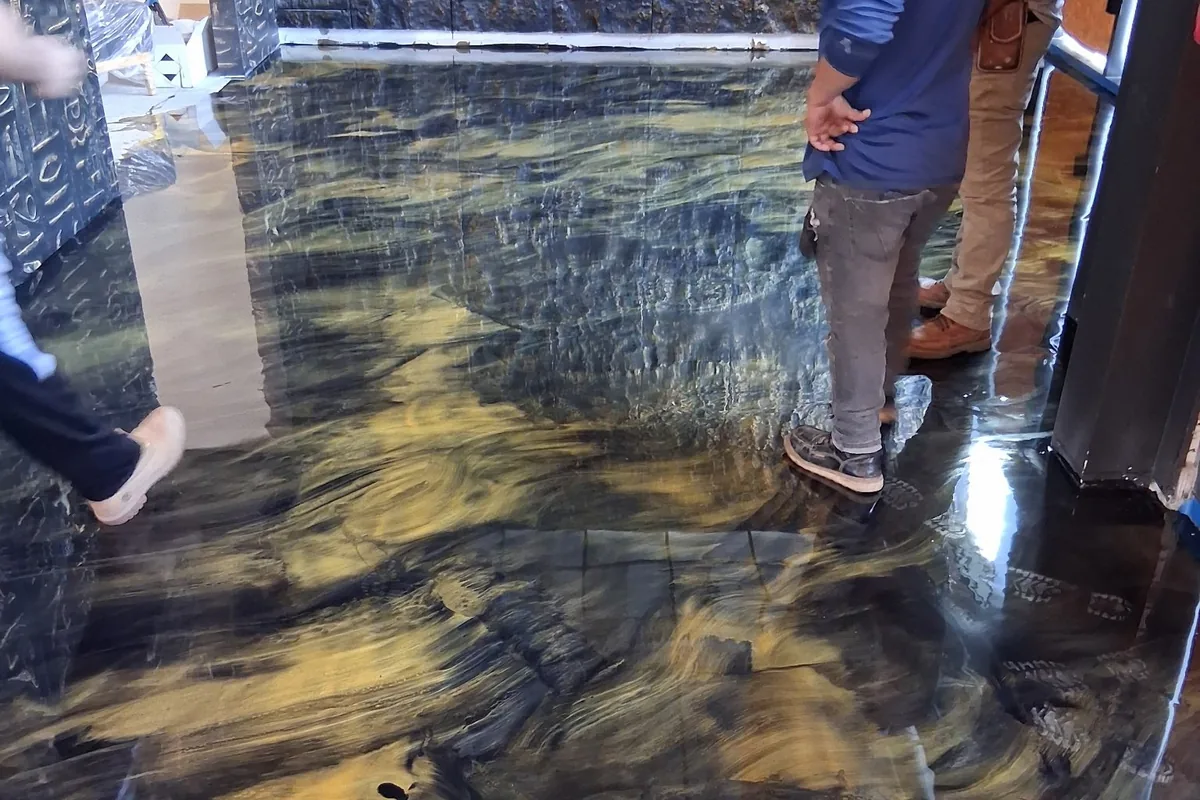
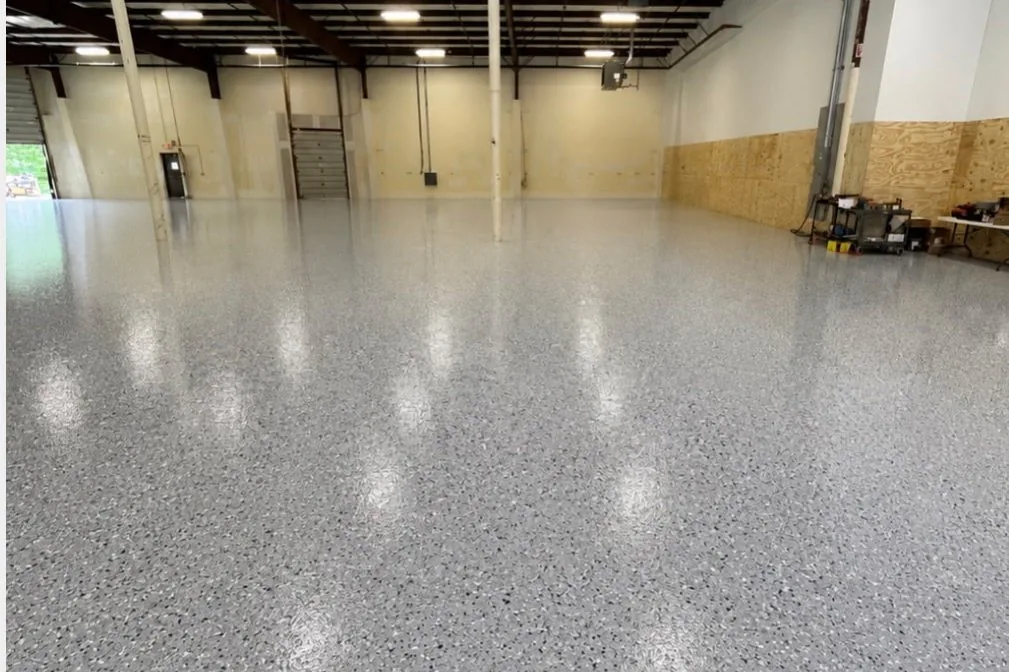
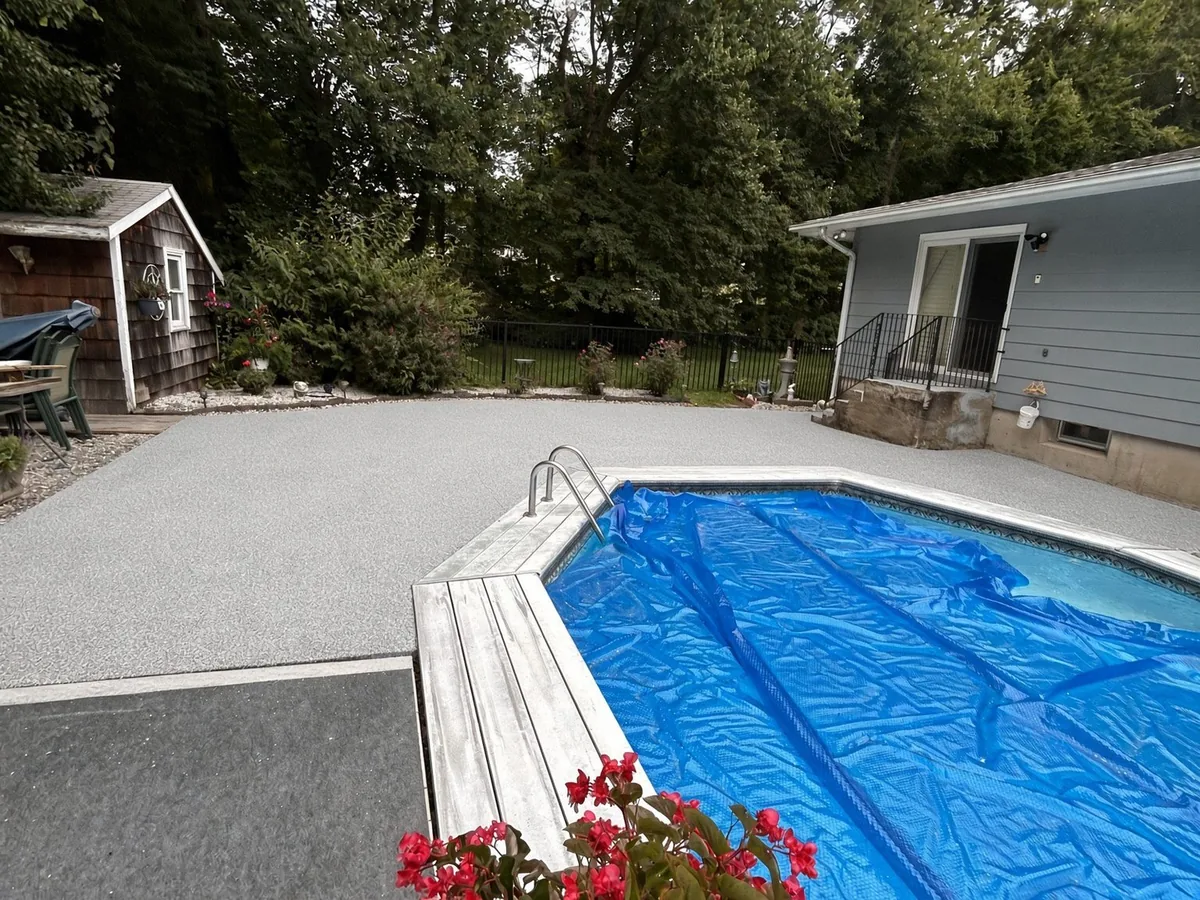
Every floor on this page is one we poured
The Thing Nobody Argues About, Which Is the One That Decides It
Both materials fail the same way over a slab that was not prepared, and preparation is most of what you are paying for.
Preparation is the majority of the job
Grinding, crack repair and profiling take the time and the skill. A premium system over a slab that was not ground is a worse floor than a modest system over one that was.
Moisture beats every product on the market
If your slab is passing moisture up from the ground, the coating lifts. It does not matter which one you bought. Run the plastic sheet test before you take quotes, because it costs you nothing and it changes what any of us should be quoting.
This is why the comparison argument is a distraction
By the time two companies are arguing about resin chemistry, neither of them has told you what is wrong with your concrete. We would rather start there. Ask us that question first and the quotes get easier to read.
How to Read Three Quotes Without a Chemistry Degree
You do not need to settle the argument. You need to find out who looked at your floor. We would rather be judged on that than on which resin we carry.
Ask what they found on your slab
Cracks, pitting, previous coating, moisture. A company that can describe your floor back to you has looked at it. We read yours before we price it, and a company that prices your job from the driveway has not.
Ask what preparation is included, in words
Grinding is not the same as etching, and one line item saying prep is not an answer. This is where the difference between two prices usually lives.
Ask why they chose that system for your room
The answer should mention your slab, your temperature or your light. If the answer is that the other system is obsolete, you have learned what they carry and nothing about your floor.
We install both systems, so we have nothing to run down
Ask us why we picked what we picked for your room. The answer should mention your slab, your temperature or your light.
Get my free quoteQuestions people ask
So is epoxy obsolete or not?
No. It is a mature material that is still specified for good reasons, mostly build thickness and cost. What has changed is that there is now a faster curing, more UV stable option alongside it, and some companies sell that as a replacement rather than an alternative.
Is polyaspartic four times stronger than epoxy?
You will see that number in adverts. Strength is not one measurement, so a single multiple is doing a lot of work without saying which property it refers to. We will tell you what we are measuring when we specify yours.
Which one do you install?
Both, and the flake systems we install most often use a polyaspartic topcoat over an epoxy build. That combination is common and it is a reasonable answer to a lot of garages.
How do I know you are not just selling me the more expensive one?
Ask why we picked what we picked. If the reason does not mention something about your actual room, push back on us the same way you would on anyone else.
What should I do before I call anybody?
Run the moisture test. It takes a day, costs nothing, and it is the single piece of information that changes what every quote you receive should say.
Ready to stop looking at that floor?
Tell us roughly what you have and we'll come and look at it. The quote is free, there's nothing to sign, and you'll know what your floor costs before you commit to anything.
Get Your Free Quote Call or Text (203) 496-6386