
Coating a garage floor through a Connecticut winter.
Usually yes, and we change the system to do it. Epoxy gets unreliable as your slab cools, where polyaspartic keeps curing lower, so a November job is a specification question rather than a no. What actually stops us is a slab sitting below the dew point, and we tell you which you have before you book rather than after.
Free, no obligation, and nothing to sign. We answer the same day, weekends included.
Why Cold Changes the Chemistry Rather Than the Schedule
Resin cures by reaction, and reactions slow when they get cold. That is the whole of it, and it decides what we can put on your floor between November and March.
Epoxy slows, and then stops being predictable
Standard epoxy is specified for a working range, and as your slab drops through it the cure stretches from overnight into something nobody can put a date on. Below that range it does not simply take longer. It stops reaching the hardness it was sold on, and a floor that never fully cures stays soft, marks under a warm tire, and has to come off rather than be repaired.
Polyaspartic keeps working lower
It carries on curing at temperatures where epoxy becomes unreliable. That is why it goes into your unheated garage instead of a note telling you to wait for spring. It is also why the workable season here runs weeks longer at both ends than a straight epoxy contractor's does.
Your slab temperature is the one that counts
Not the air, and not the forecast. Concrete holds cold long after a mild afternoon, so a slab sitting at 45 degrees under a 55 degree garage is the number we work to. We measure yours rather than reading the thermometer on your wall.
The Number That Actually Stops Us
It is not the temperature, it is the gap between your slab and the dew point, and it is the one thing we will not work through.
Why dew point beats temperature
If your slab is colder than the dew point, moisture condenses onto it. A film of water on concrete we are about to coat is a bond failure being built in, and it is invisible while it happens. We want a few degrees of margin, and without it we stop rather than gamble with your floor.
An unheated detached garage is the hard case
It sits at whatever the weather is doing, and in January that is often below anything workable. Sometimes we can bring one up with heat for long enough to coat and hold it through the cure, and sometimes we cannot. Tell us which you have when we quote and we will be straight with you about it.
Attached and heated is usually straightforward
If your garage shares a wall with the house and gets any warmth at all, winter becomes a scheduling conversation rather than a technical one.
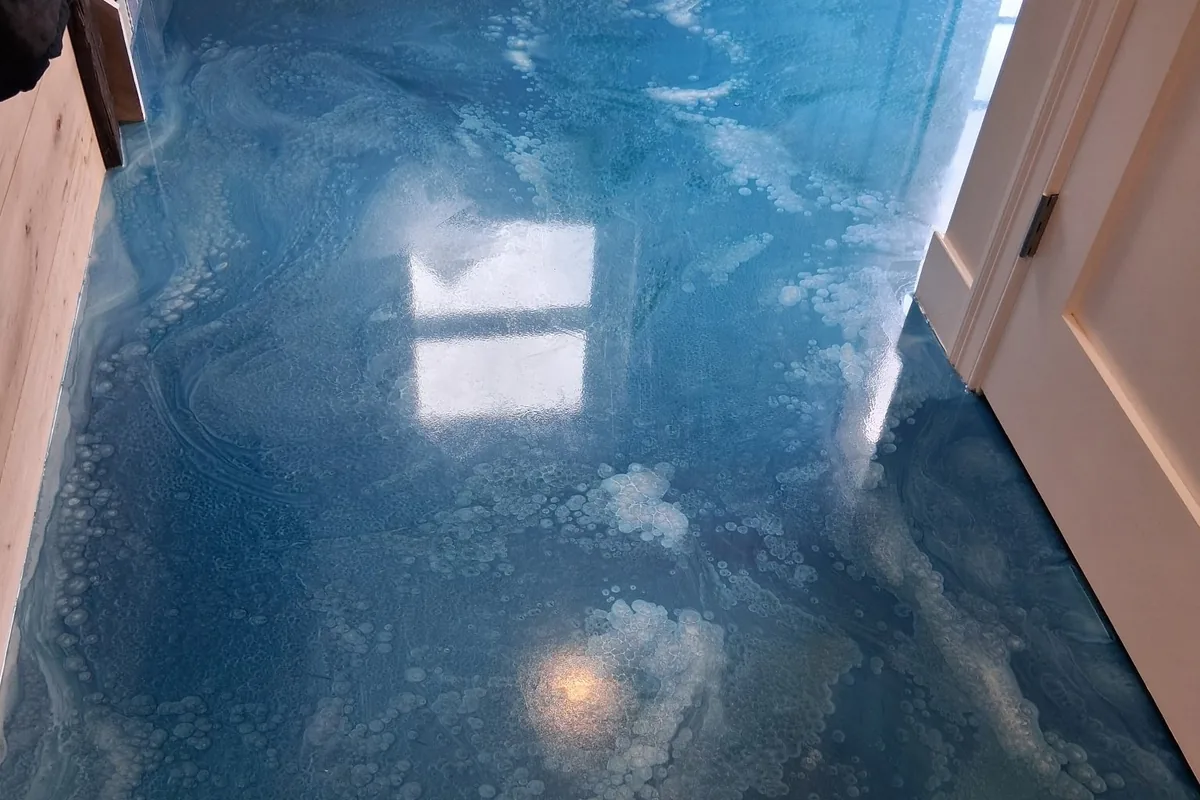
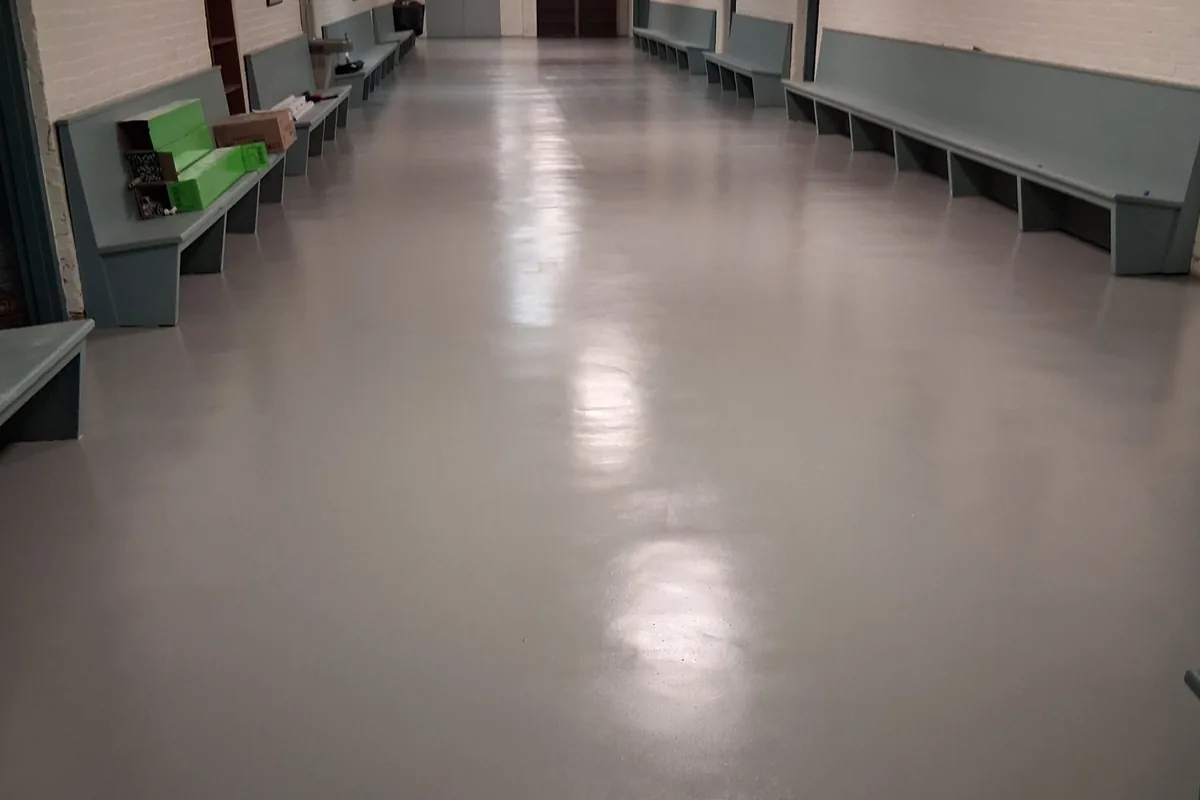
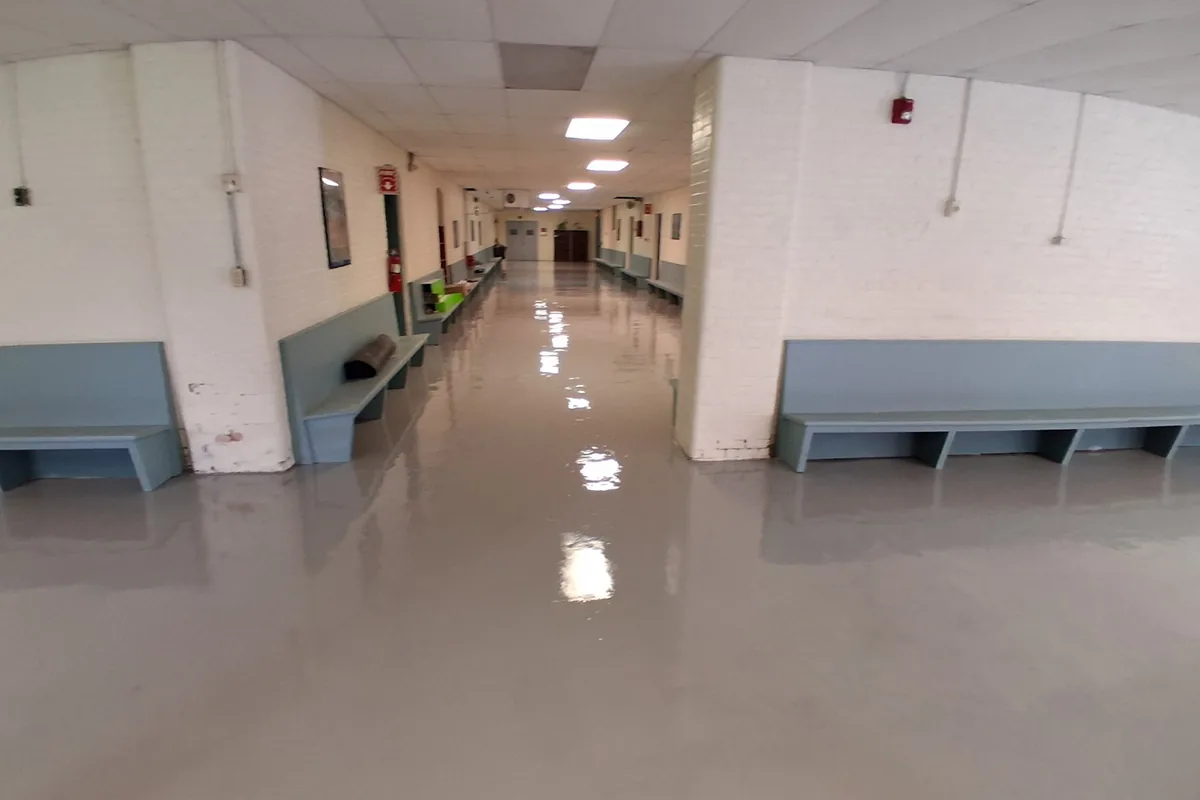
Every floor on this page is one we poured
What Winter Costs You, and What It Saves
There is a real trade in both directions, and it is worth knowing both sides before you decide to wait for spring.
You wait less for a date
Spring and early summer are when everybody books, so the diary is tighter and your wait is longer. Winter work is easier for us to place, which usually means you get the date you asked for rather than the one that was left.
Cure dates stretch further apart
Even with polyaspartic, walk-on and drive-on move apart in the cold. We give you all three dates at the quote, and in winter the gap between them is the thing you plan around.
Your car brings the other problem in
Road salt and meltwater on a curing floor is the winter version of rain on an outdoor coat. Keep the car off for the full cure rather than the short one. That is the part people find hardest in February.
How We Decide, Standing on Your Slab
The decision gets made on your concrete rather than from a forecast, and it takes about twenty minutes.
We read the slab and the dew point together
Both, on the day, in the space. That pair is the difference between a floor that bonds and one that lifts next winter.
We specify to what we find
Cold and dry points at polyaspartic. Cold and damp points at a conversation about heat, or at waiting. Warm and dry, and the full range is open to you.
We say no when it is a no
If your slab will not hold a coating this month, Brad tells you rather than taking the booking. A floor put down in the wrong conditions is ours to redo and yours to live with in the meantime.
A cold slab is a specification question
Not a closed diary. Tell us what your garage is and we will tell you what we can put down in it this month.
Get my free quoteQuestions people ask
Can you coat my garage floor in December?
Often, and we change the system to do it. Polyaspartic keeps curing at temperatures where epoxy becomes unreliable.
Does my garage have to be heated?
Not always. An attached garage with any warmth in it is usually fine. A detached unheated one in midwinter is the case where we either bring heat in or ask you to wait.
Will a winter floor be as good as a summer one?
Yes, if the conditions on the day were right. What matters is your slab temperature and the dew point when we coat, not the month on the calendar.
Is it cheaper in winter?
The rate does not move with the season. What winter gets you is a better choice of dates.
What is dew point and why do you keep mentioning it?
It is the temperature at which moisture condenses out of the air. If your slab is below it, water forms on the concrete we are about to coat, and the coating bonds to that instead.
Ready to stop looking at that floor?
Tell us roughly what you have and we'll come and look at it. The quote is free, there's nothing to sign, and you'll know what your floor costs before you commit to anything.
Get Your Free Quote Call or Text (203) 496-6386