
Sweeping and mopping
Grit is what abrades a top coat and it arrives on your tires and your shoes. Sweeping or blowing your floor out now and then does more for its life than any cleaner. A mop and warm water handles the rest.
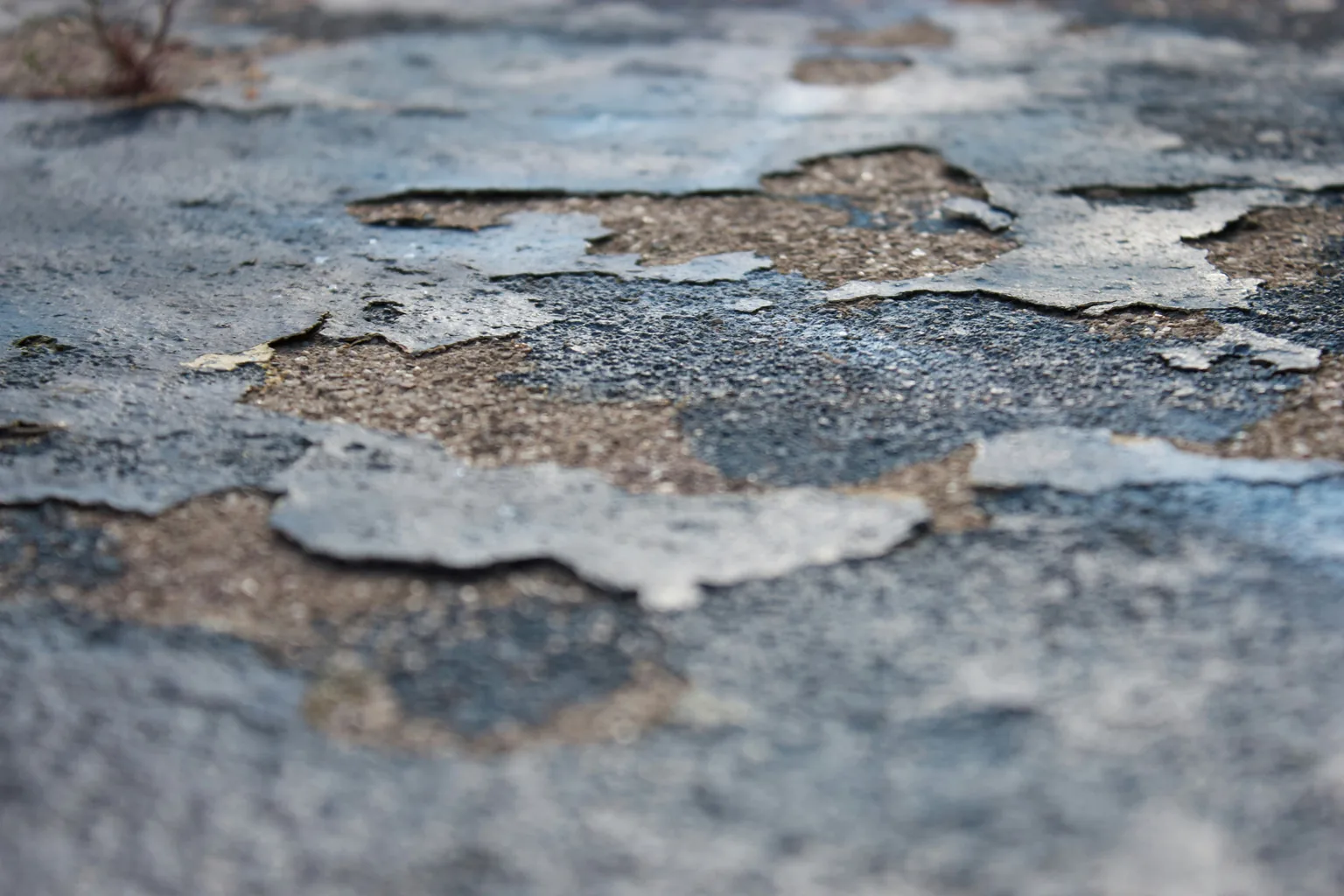
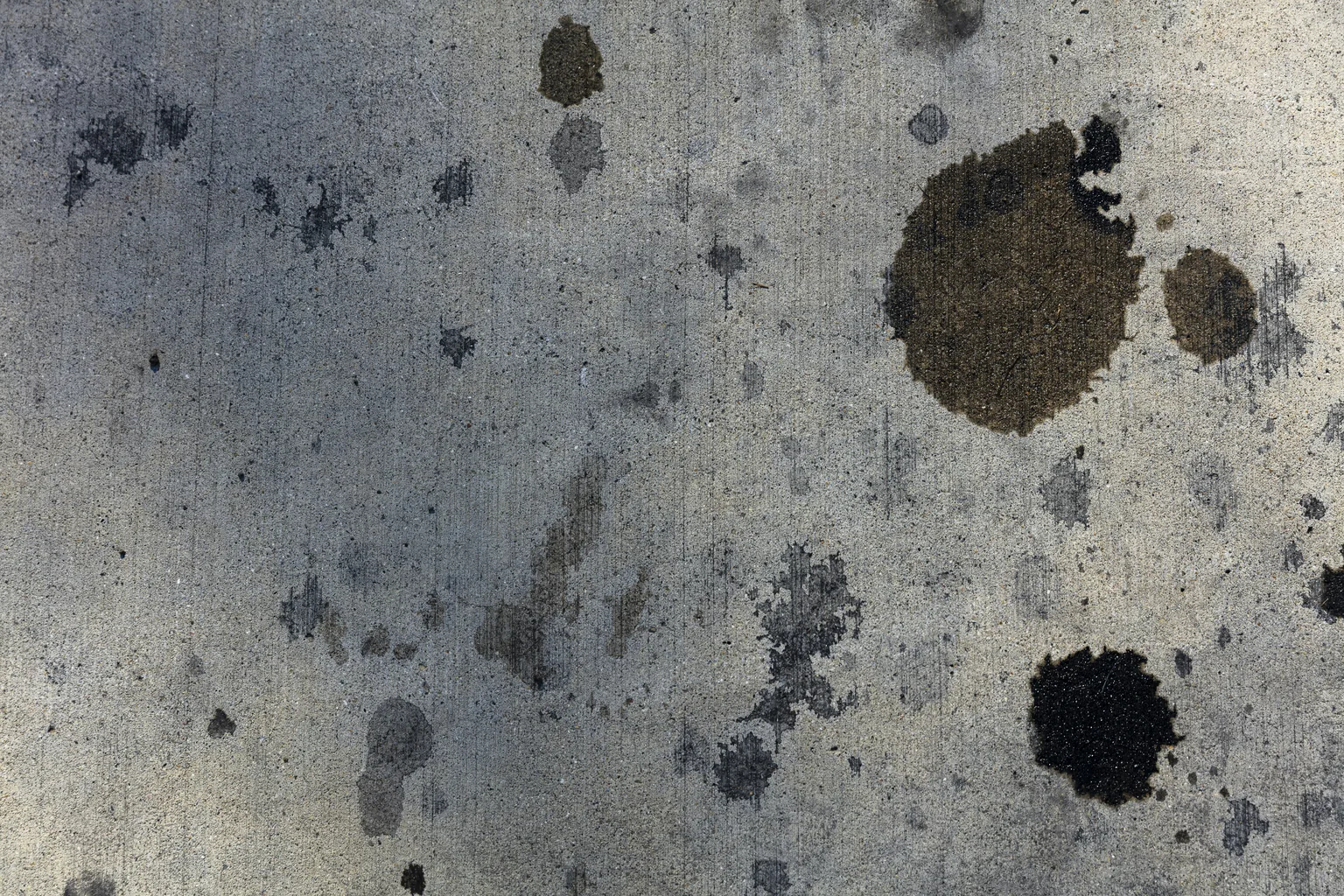
If your garage floor is patched, stained and chalking dust over everything you store, that is the slab telling you it was never sealed. We grind it back to bare concrete and coat it, so you get a floor you can mop, park a hot car on, and stop apologising for.
Free, no obligation, and nothing to sign. We answer the same day, weekends included.
Flake, for most people, most of the time. It fixes the three things that make your garage floor look tired, and it is what we put down more often than everything else combined.
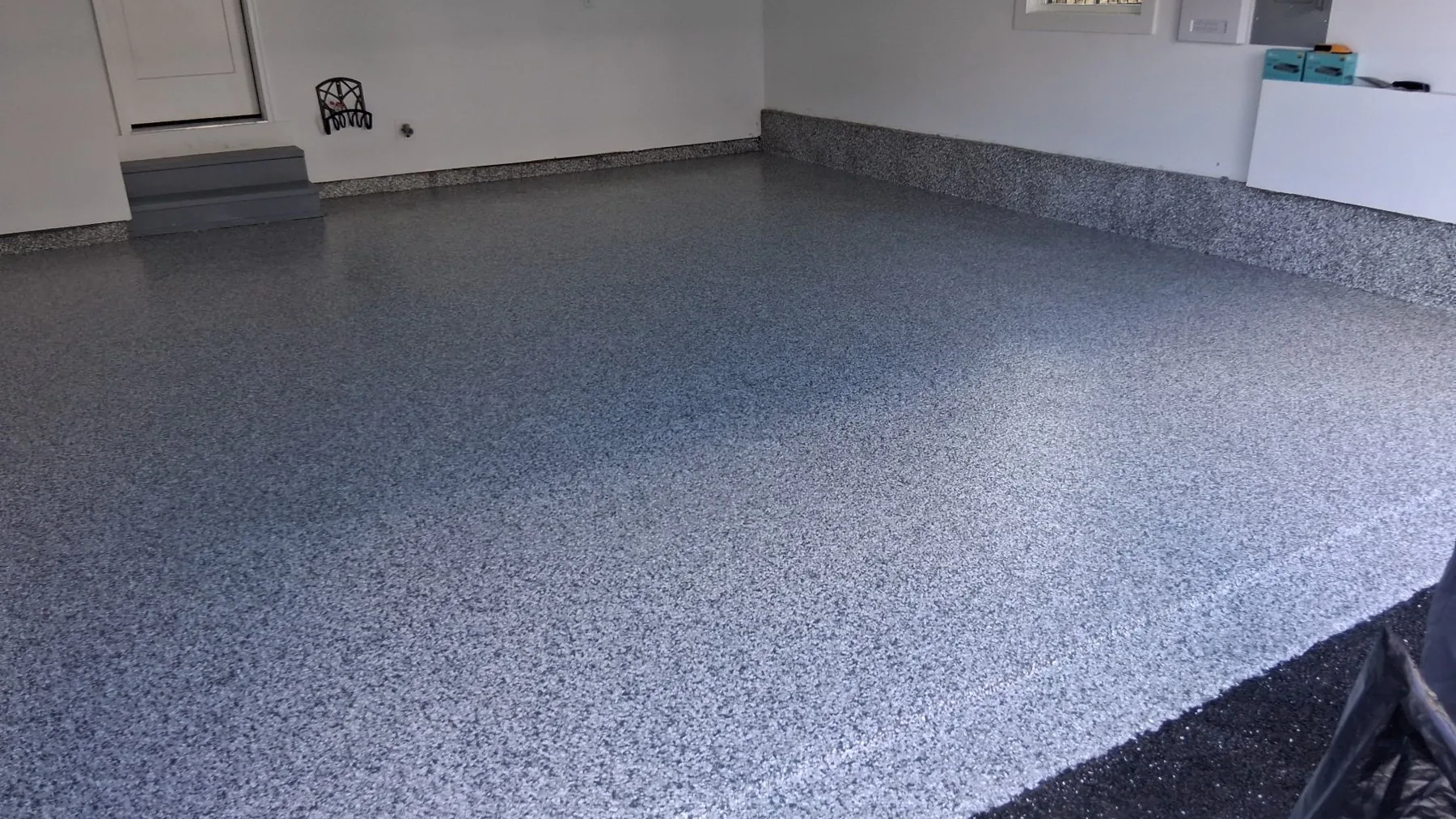
We broadcast chip to full coverage, so you get a new surface over the patches and stains instead of a thin color that shows every one of them.
The chip edges break up the surface, so your floor is not slick when a car brings rain in. If it slopes to a door, we put more grit in the top coat.
Hot tire pickup is what lifts a rolled-on DIY kit. A ground and properly bonded system does not have that failure mode, which is most of what you are paying for.
Longer than a day, and shorter than you are probably fearing. We grind it, we coat it, and then it has to be left alone.
You can walk on a floor well before you can park on it. Putting a car back too early is the single most common way a good floor gets damaged.
Cure times stretch as it gets colder, so a November job is a real scheduling conversation. It is one of the reasons we specify polyaspartic.
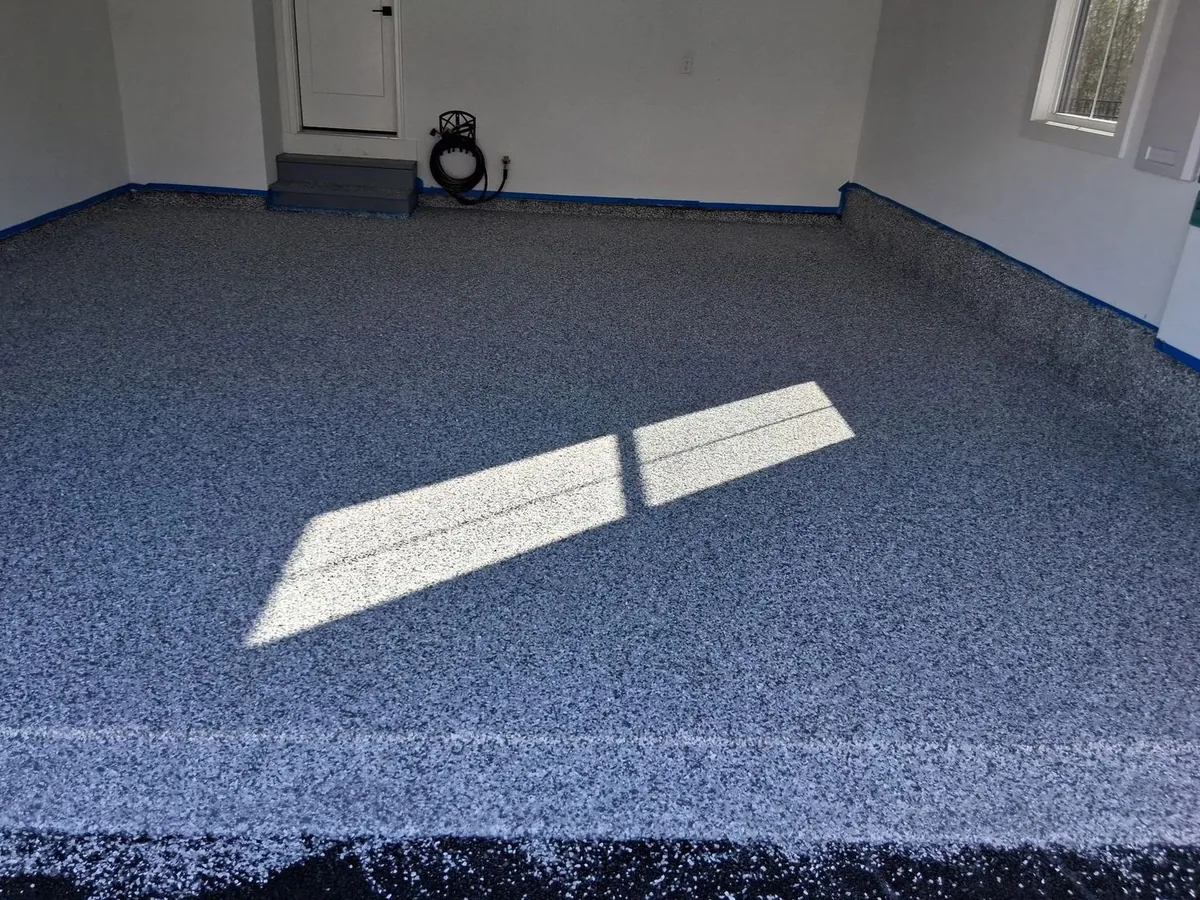
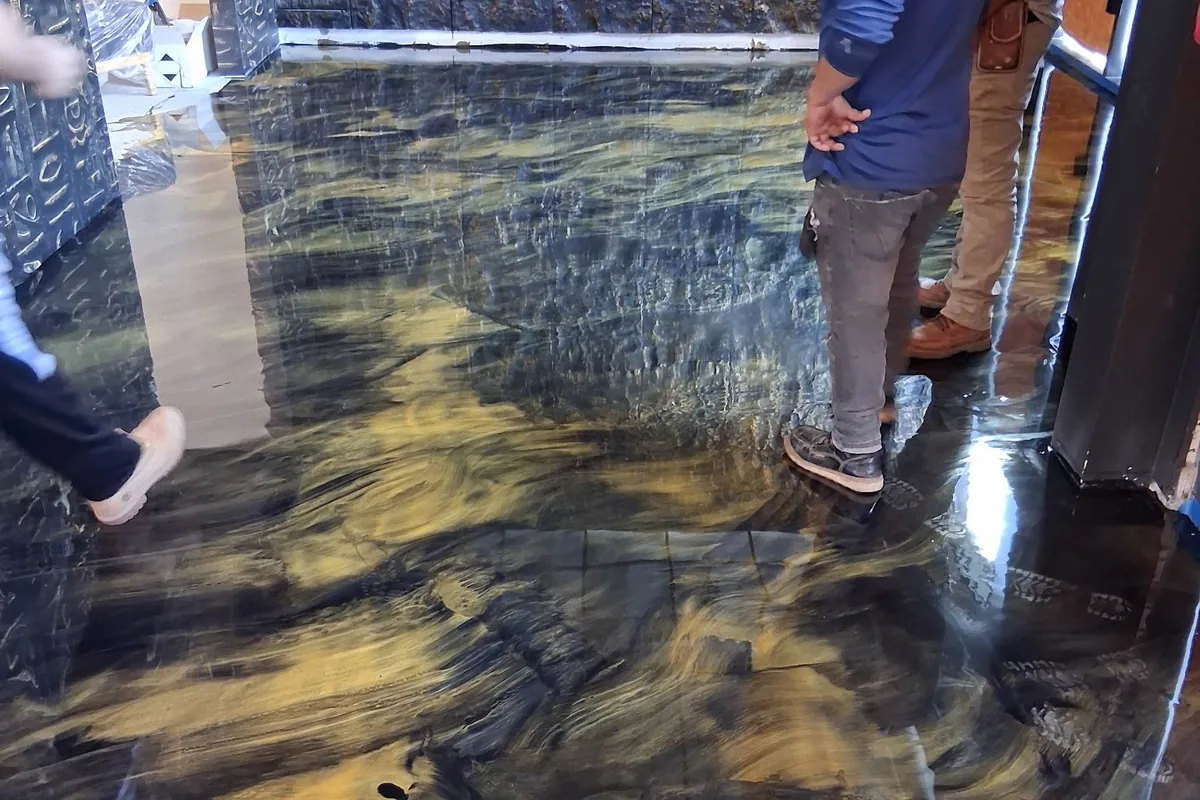
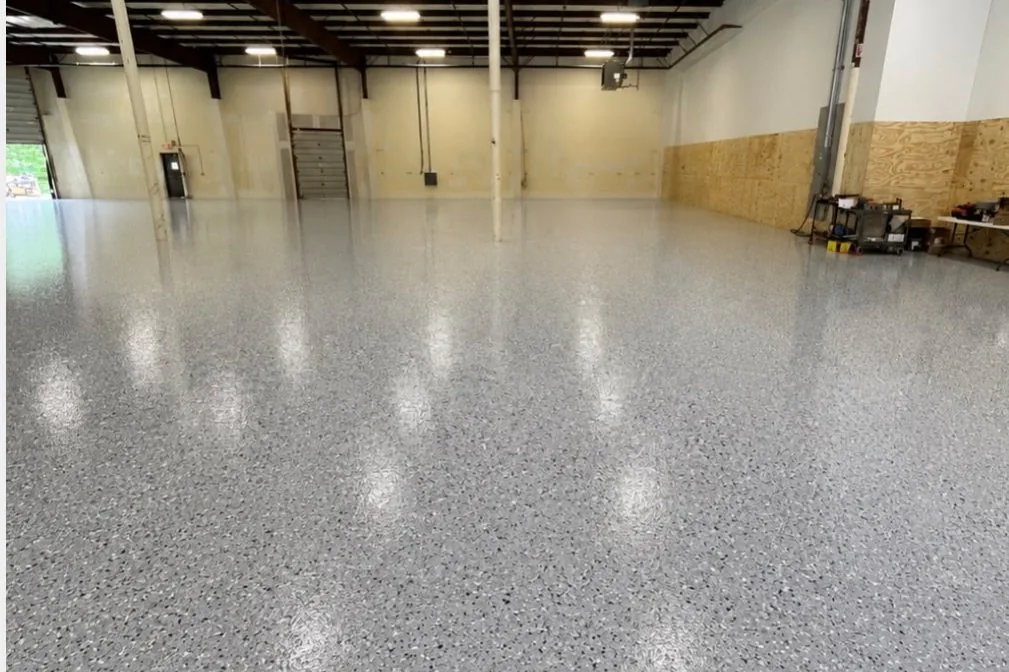
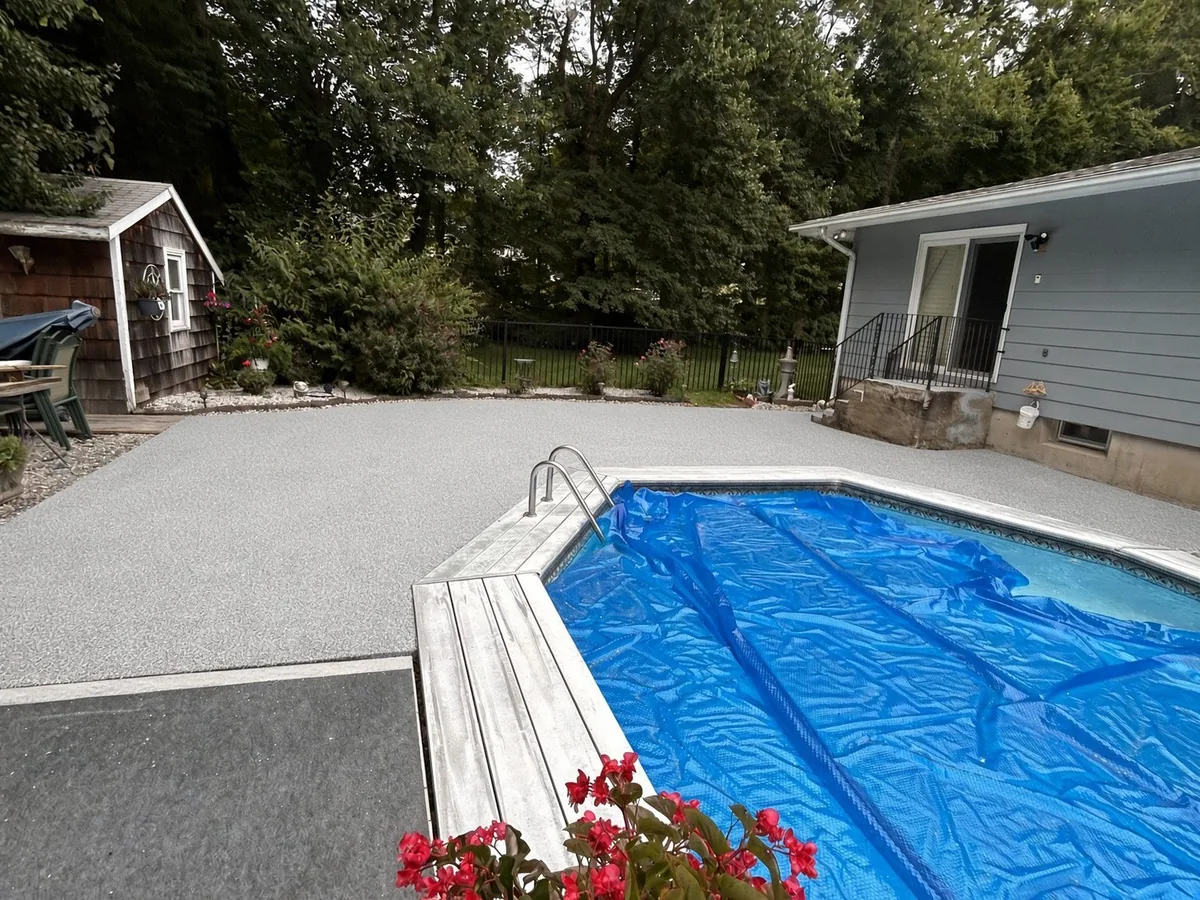
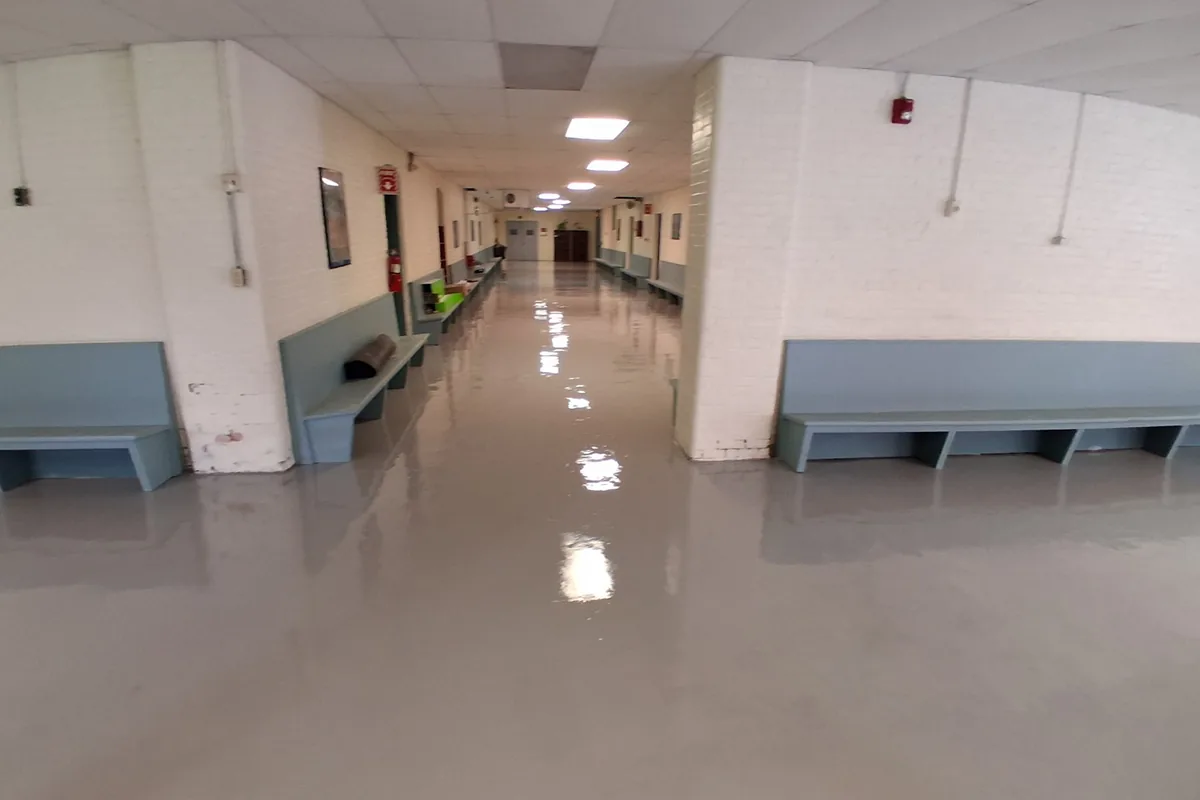
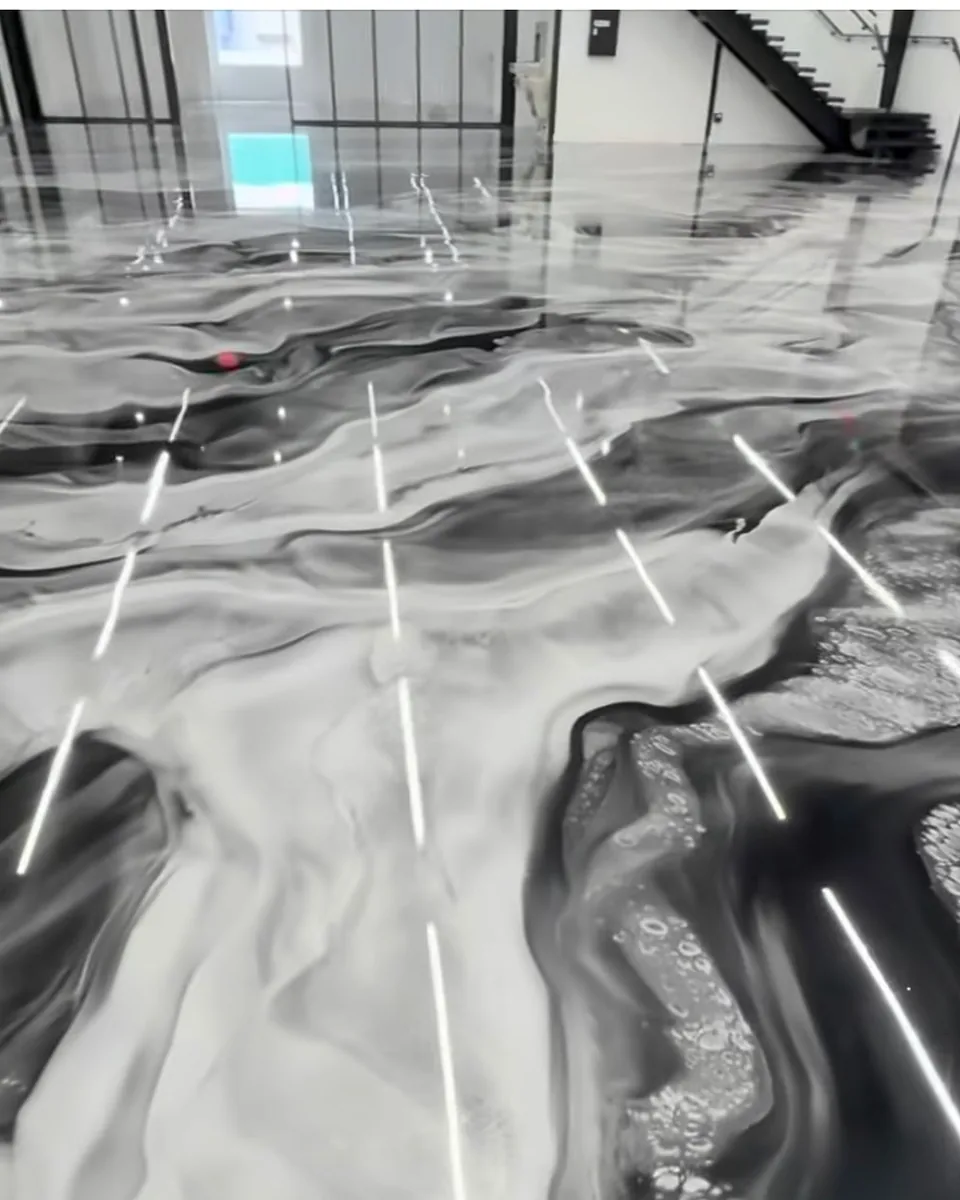
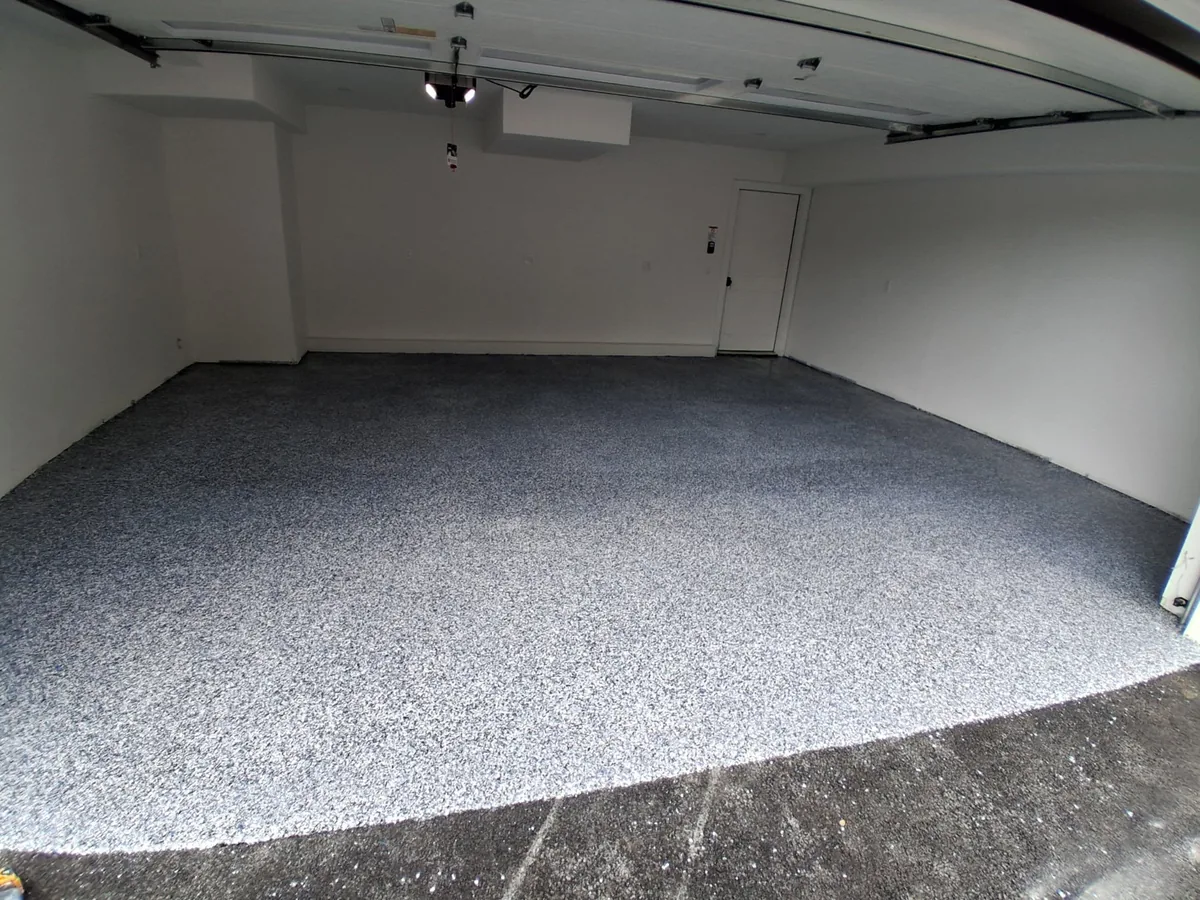
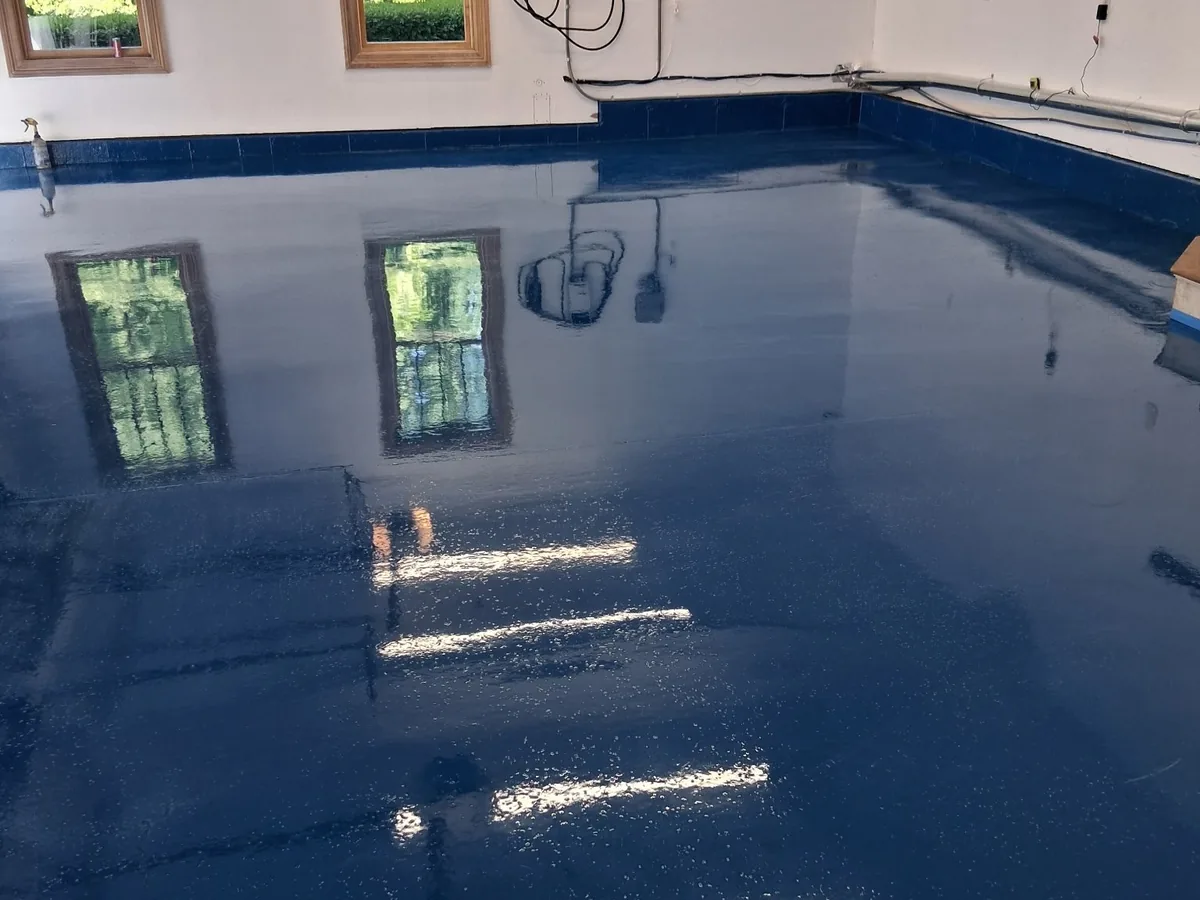
Every floor on this page is one we poured
Most of a typical two-car garage is waiting rather than working. We do not change the order, because every step needs the one before it properly cured.
Everything out, including the shelving and the freezer nobody wants to move. Our grinder has to reach every inch of your slab, and a floor coated around an obstacle keeps a visible line where the obstacle was.
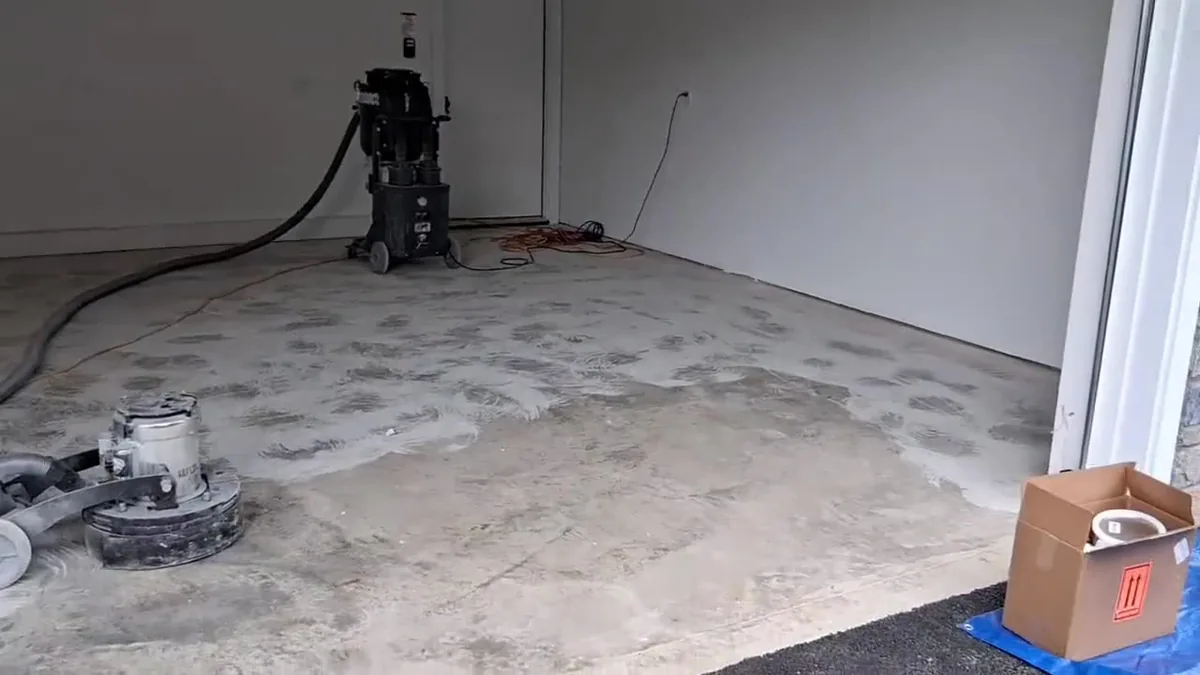
We grind your slab back to bare, open concrete. This is not acid etching and it is not a pressure wash. Grinding opens the pores so the resin has something to key into, and it takes the laitance, old sealer and contamination off with it. Our machine runs a vacuum, so the dust that worries people mostly does not happen.
Cracks get cut out into a V, vacuumed and filled with a structural repair compound, then ground flat. Spalled edges and pits are patched the same way. Expansion joints are a decision: filled flush they disappear, honoured they stay visible and stay able to move. Brad will ask which you want and there is a right answer for your slab.
We lay the pigmented base and throw the flake into it while it is still wet, to refusal, which means until your floor will not take any more. That is what gives you full coverage instead of a scattered look. Once it cures, we scrape and vacuum the excess back off.
We put one or two clear coats over the top, and that is the layer taking your tires, your trolley jack and the socket you drop. If your floor needs more traction than the flake gives it, grit goes into this coat.
Walk-on comes first and drive-on comes noticeably later. Putting a car back early is the single most common way a good new floor is damaged, and Brad gives you both dates for your system and that week's temperature.
Two garages the same size can come out some way apart on price, and it is almost never the coating that separates yours.
A bare, sound slab grinds and coats. If yours has old paint, a failed DIY kit, tile adhesive or a sealer on it, we have to take all of that off first, and removal is slow. This is the biggest single reason two quotes differ.
Every crack we cut and fill is time and material. A slab with one hairline crack and a slab mapped with them are different jobs.
If the slab tests wet it needs a mitigation layer before anything else, and that is a real addition rather than an upsell. It is also the one thing you can check yourself before you take any quotes.
Flake and solid color sit at the same rate. Metallic costs you more because we work it by hand while the resin is still moving.
Doubling your floor does not double your price. Mobilisation, grinding setup and cure time barely change, so the rate falls as the floor gets bigger. Bigger floors cost less per foot.

Very little, and none of it is a product you have to buy from us.
Grit is what abrades a top coat and it arrives on your tires and your shoes. Sweeping or blowing your floor out now and then does more for its life than any cleaner. A mop and warm water handles the rest.
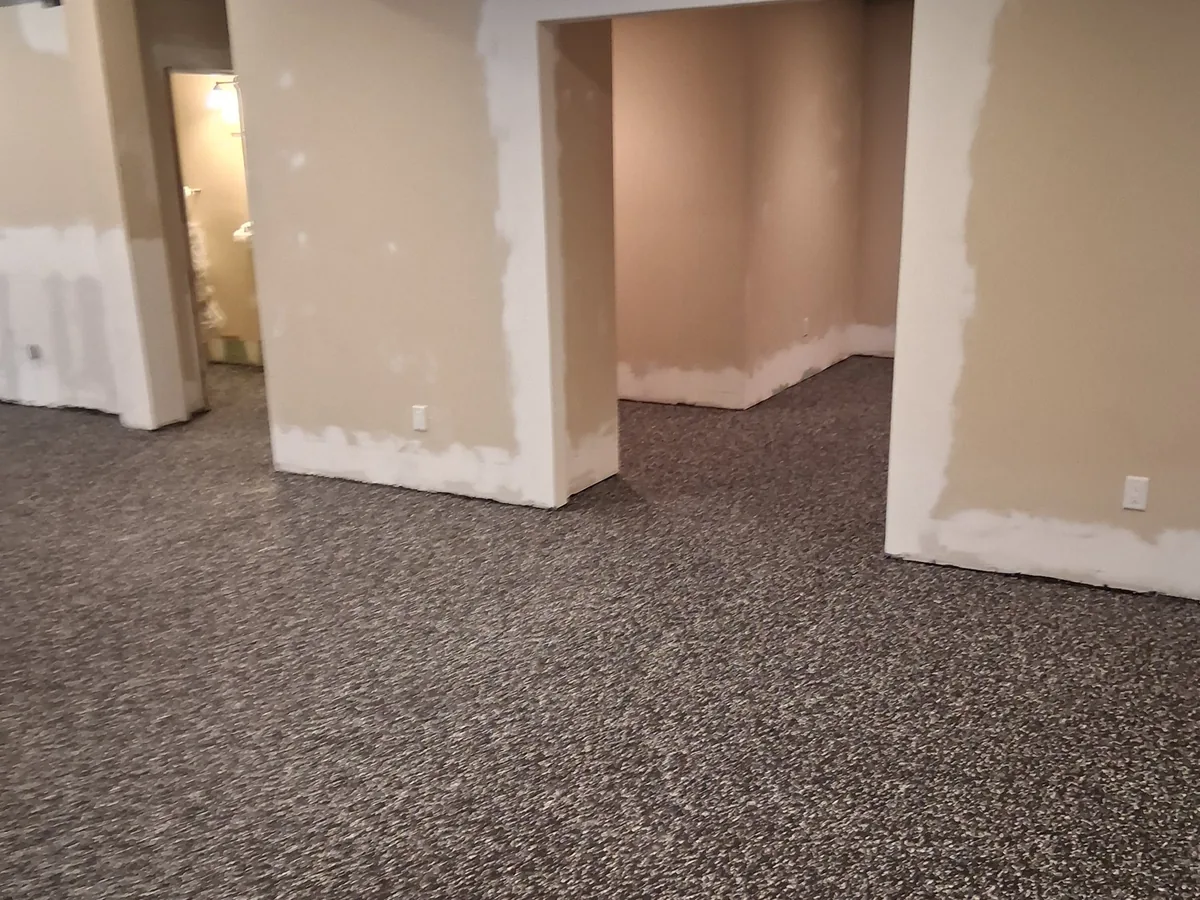
Anything acidic will dull a clear coat over time, and citrus-based degreasers are the usual culprit. Soft soap and water is genuinely enough.
Your car brings road salt in all winter. It will not eat the coating, but salty meltwater left to dry leaves a film that grinds underfoot. Rinsing it off in spring takes you ten minutes.

We can repair a resin floor in place. A gouge or a burn gets cut out, filled and recoated, and on a flake floor the repair effectively disappears, because the chip pattern hides the join.
4.7 from 15 Google reviews. We publish every one of them on the reviews page, including the one star and what came of it.
Great experience thanks again Brad
Great experiwnce with brad thanks for the great floor
great job on my garage floors thanks again
Almost always one of four things, and three of them get decided before the first coat goes down on your floor.
Acid etching and pressure washing do not open your concrete the way our grinding does. A coating bonded to the surface film rather than to the concrete lifts, and it lifts in sheets.
A warm tire parked on a poorly bonded coating softens it and pulls it up when the car moves. You get a patch of missing floor the shape of the tire. It is a bond failure, not a material failure, and it does not happen on a properly prepared floor.
Vapour moving up through your slab pushes the coating off. Nothing applied on top solves it, so we handle it before we coat.
Clear epoxy ambers in UV. If your garage has glass in the door or gets left open all summer, we put a UV-stable top coat on it, or your floor ends up two different colors where the light falls.
We install six systems, and most floors we put down combine two of them.
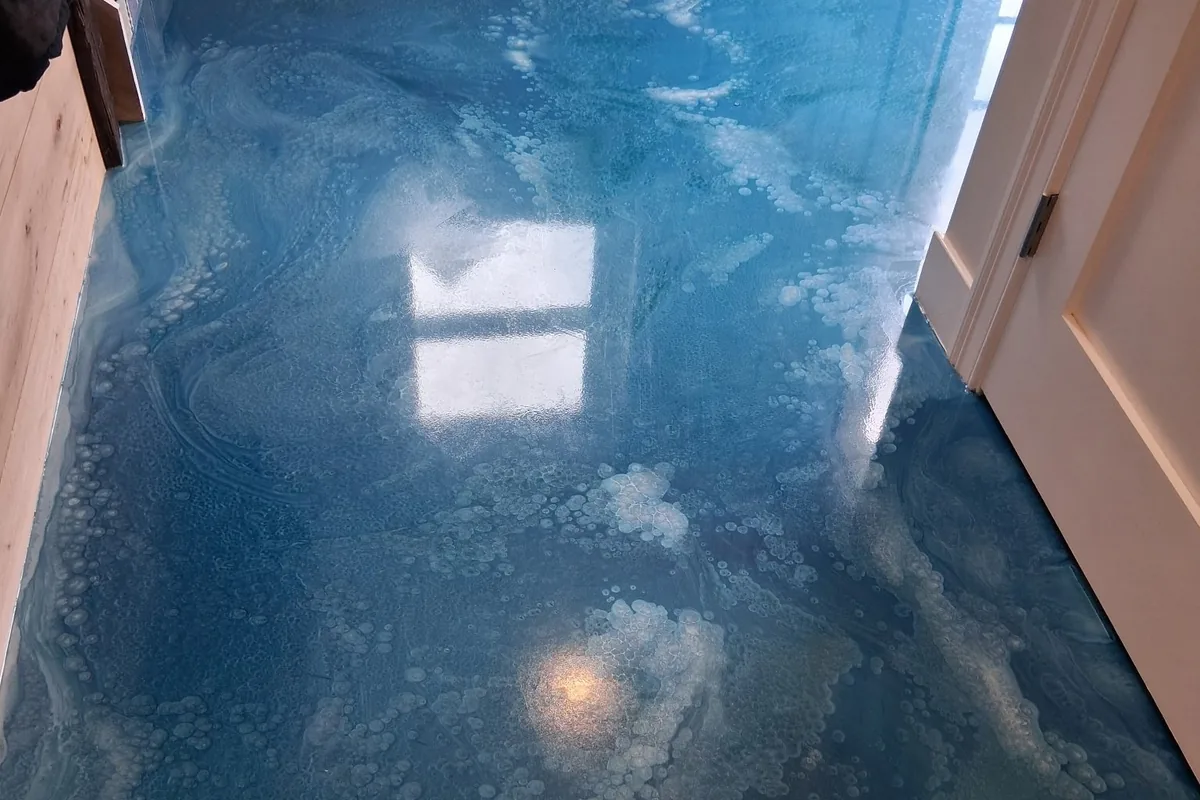
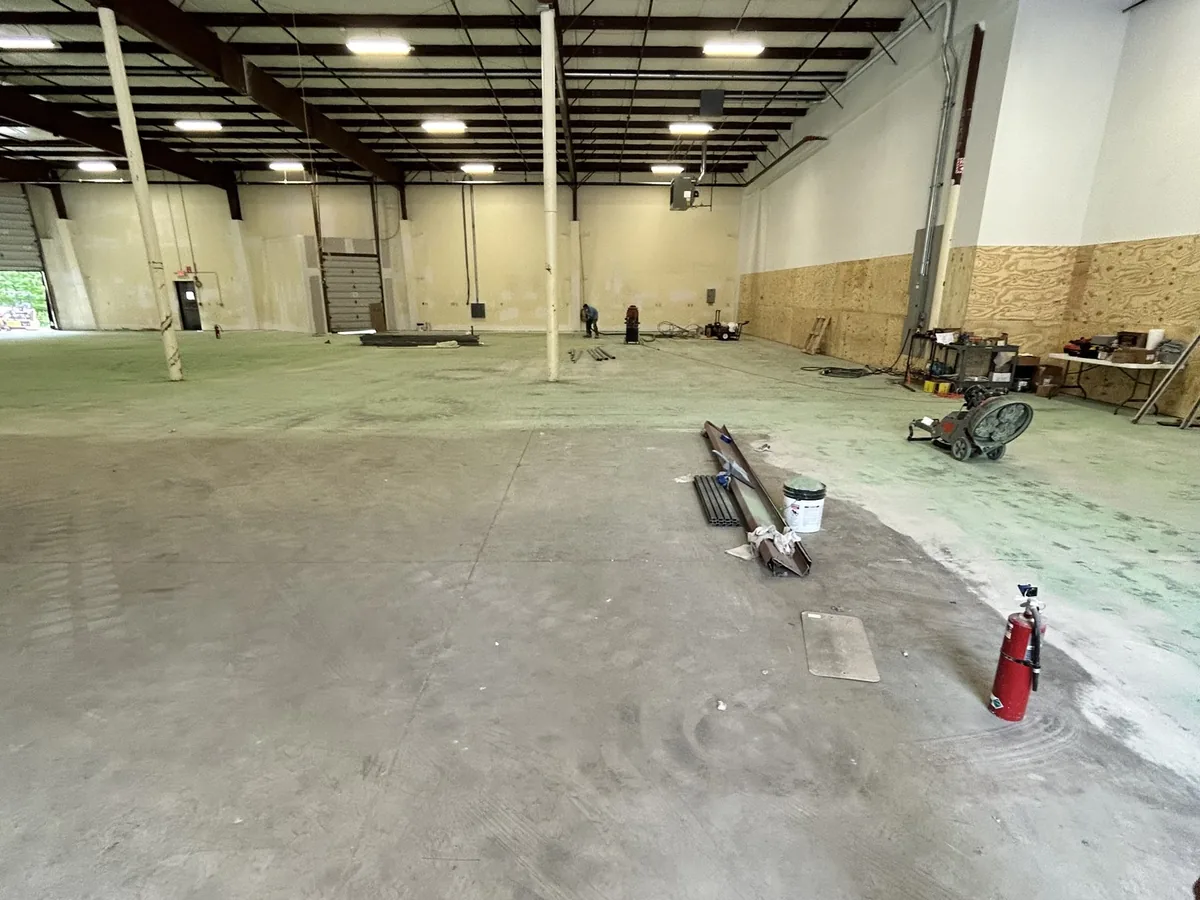
We put down four layers, and each one has its own job. Scroll and we'll take your floor apart so you can see them.
They look alike on day one. Drag the timeline and watch what changes.
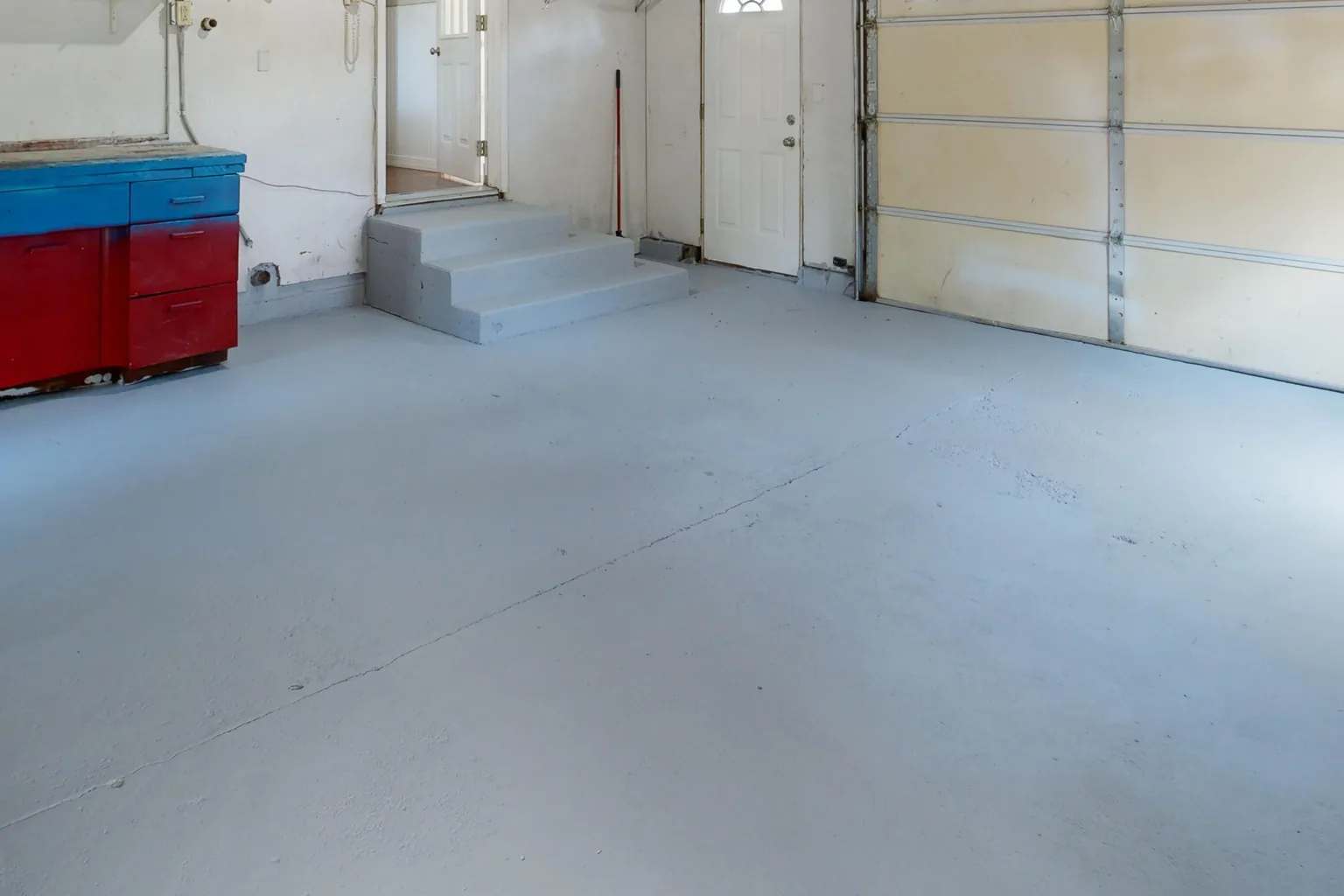
Slide to your size and see what fits it. Brad gives you the exact number when he's seen the slab.
Three steps, and Brad does every one of them himself. Most residential floors are finished in a day.
Tell us the room and roughly how big it is. We'll talk you through the range and book a time to come and look, often the same day. Weekends count, and there's nothing to sign.
He checks for cracks, old coating and moisture, then measures up. You choose your flake blend or metallic against your own floor, not a brochure. Your written quote comes back the same day.
Your slab goes back to bare concrete under a diamond grinder with dust extraction. Then the primer, the body coat with your flake or metallic, and the top coat. You get your walk-on and park-on times with the quote.
A ground slab does not have that failure mode. Ask any contractor how they prepare the concrete and the answer tells you more than the price.
Get my free quoteYes, completely. We have to reach your floor end to end to grind it.
Yes, and tell us before the day rather than have us work around it.
We can coat it, and outdoors means a UV-stable top coat so it does not amber where the sun lands.
Flake has texture built in. Tell Brad if your floor slopes or gets a lot of water and we put more grit in the top coat.
Measure it, length times width, and send that with a photo of the slab. Small floors fall under a flat minimum rather than a rate by the foot, and Brad tells you which yours is.
On a properly ground and bonded slab, many years of your normal use. What wears is the top coat, and we renew a top coat without redoing your floor.
Often, and we change the system. Epoxy gets unreliable as temperatures drop, where polyaspartic keeps working, which here is frequently the difference between your floor happening in November and waiting for spring.
Yes, completely. The floor has to be reachable end to end, and anything left in place leaves a visible outline.
It is a different trade-off. Tiles and mats go down in a day and you can lift them. What we put down is bonded and seamless, with nothing for water or dirt to get underneath.
Filled flush it disappears, honoured it stays visible and stays able to move. Which is right depends on the slab, and Brad will tell you which.
We pick base colors and flake blends to work with them. Bring a sample or a photo when Brad comes out.
Flake has texture built in. If your floor slopes to the door or gets a lot of water, say so and we put more grit into the top coat.
Tell us roughly what you have and we'll come and look at it. The quote is free, there's nothing to sign, and you'll know what your floor costs before you commit to anything.
Get Your Free Quote Call or Text (203) 496-6386