
Grip is the whole specification in a commercial kitchen.
A kitchen floor is wet, greasy and hot for most of a service. We build texture into the surface rather than onto it, because a coating that relies on a topical grip additive wears smooth exactly where people walk.
Free, no obligation, and nothing to sign. We answer the same day, weekends included.
Why a Kitchen Is Different From Every Other Room We Coat
Three things happen on a kitchen floor that do not happen on a garage slab, and each one changes the specification.
It is wet for most of a shift
Water, stock and cleaning chemicals are on the floor continuously. A surface specified dry is the wrong surface.
Hot water goes down it
Wash-down at temperature is what finds a weak bond. Thermal shock is a real failure mode and it is designed for rather than hoped about.
Grease changes what grip means
A textured surface with grease worked into it is smooth. The texture has to be coarse enough to stay proud of what lands on it, and cleanable enough that it does not hold it.
Texture Built In Rather Than Painted On
This is the difference between a floor that is still grippy in year three and one that is not.
Aggregate goes into the coat
We broadcast into the body coat so the grip is part of the floor rather than a layer on top of it. Wear takes the top of the profile and the profile is still there.
A topical additive wears where you walk
Anything sprinkled onto the last coat sits in the film, and the film goes first in the traffic lane. That is the part of the floor you needed it on.
Grip and cleanability pull in opposite directions
Coarser is safer and harder to clean. We pick the profile against your cleaning regime rather than against a chart.
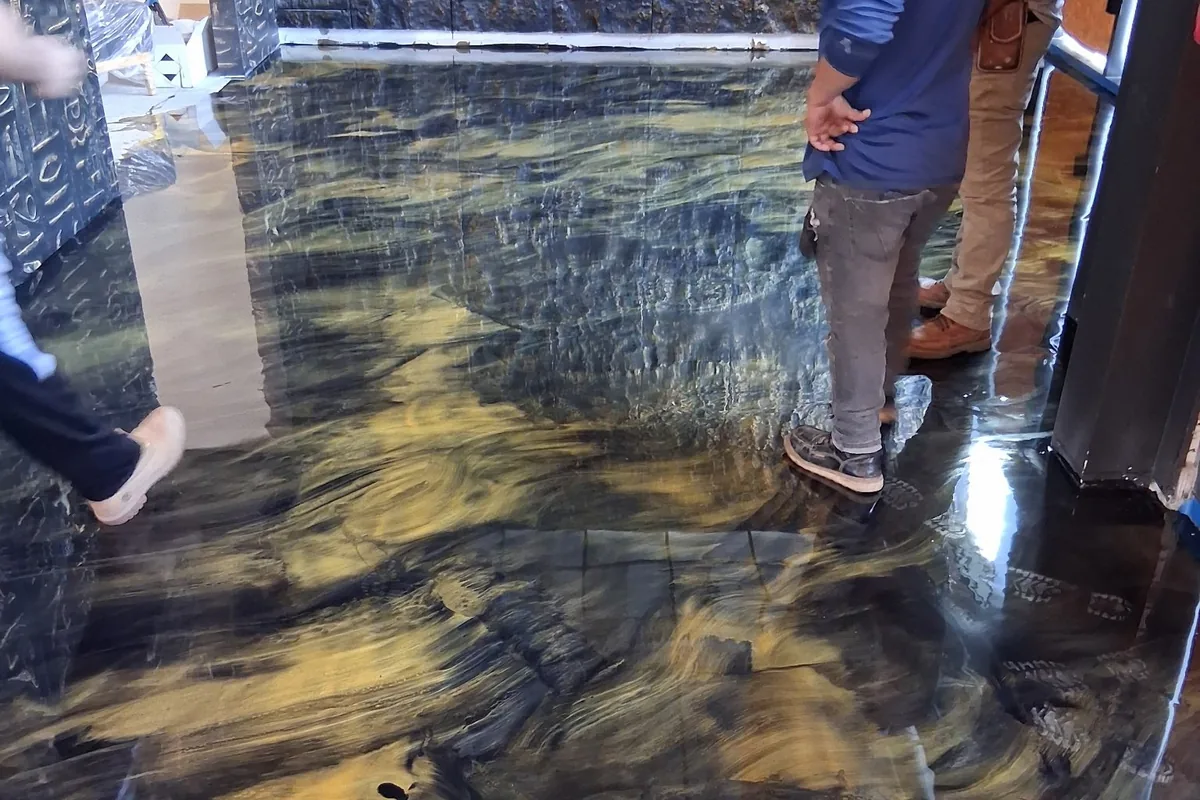
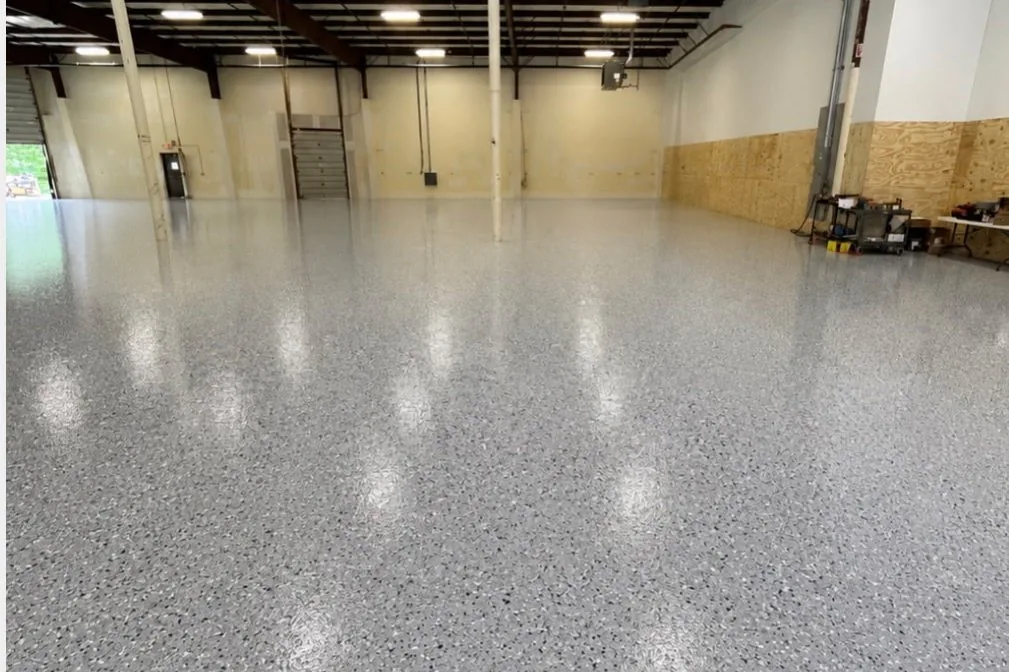
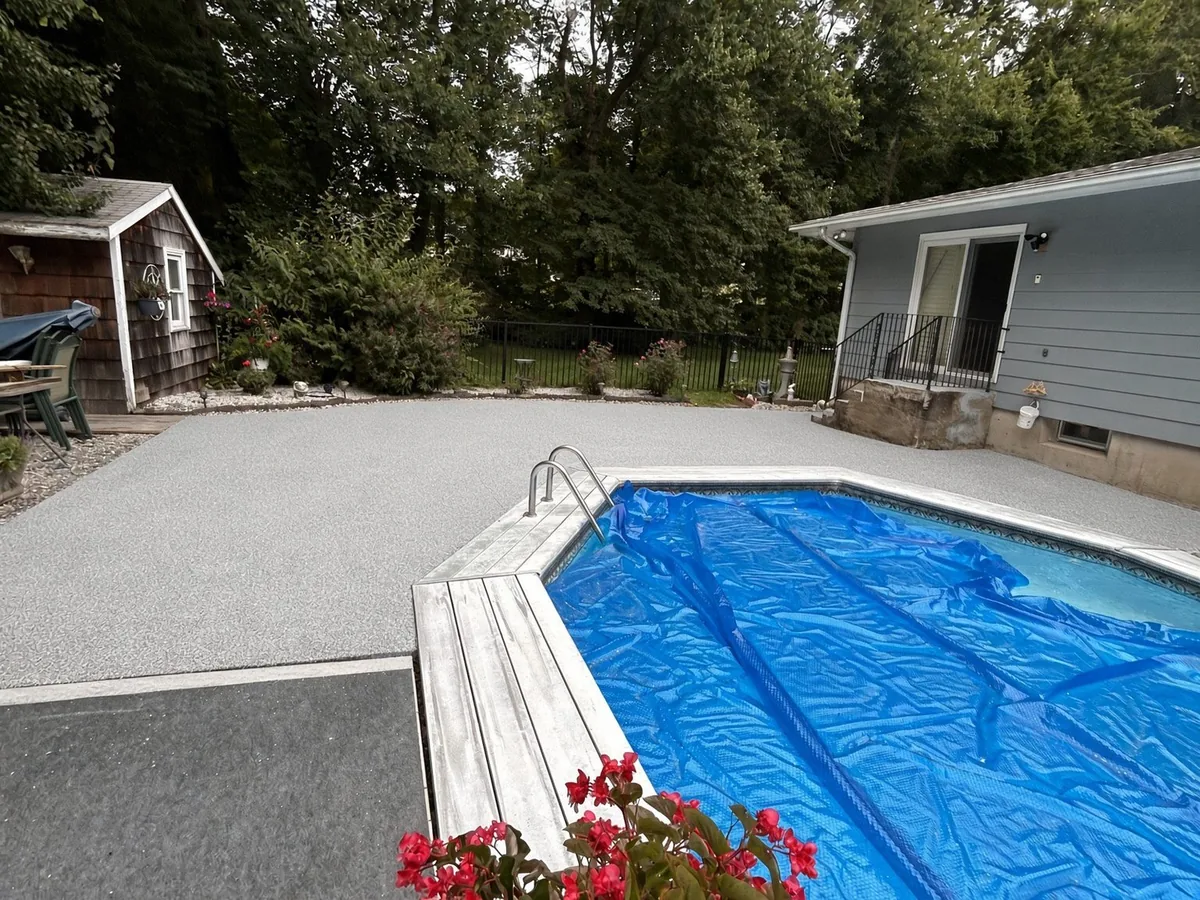
Every floor on this page is one we poured
Falls, Drains and the Bits Around the Edge
Most kitchen floor complaints are not about the middle of the floor.
Water has to reach the drain
If the slab does not fall to the gully, a coating will not make it. We tell you when that is what we are looking at.
Coving at the wall
A coved edge means there is no joint at floor level for water to sit in, which is what a health inspection looks for.
Around the drain itself
The termination at a gully is where a kitchen floor fails first. It gets detailed rather than run up to.
Working Around a Kitchen That Cannot Close
Downtime is the real cost of a commercial floor, not the rate.
Sections rather than the whole room
We can take a kitchen in parts so a service still runs, and it takes longer overall than doing it in one go.
Polyaspartic is what buys the turnaround
It cures in hours where epoxy wants days, which is what makes an overnight or a between-service window possible.
You get the dates at the quote
Walk-on and full-service dates, before you commit, so you can plan the diary around them rather than the other way round.
What the floor needs from you afterwards
A textured floor is cleaned rather than mopped. A deck brush and the right detergent get into the profile; a flat mop rides over it and leaves what you were trying to remove sitting in the texture. We tell you which at handover, because a floor cleaned the wrong way for a year looks like a floor that has failed and is not one.
We specify the profile against your cleaning regime
Coarser is safer and harder to clean. That trade is a conversation we have before we quote rather than a number we pick off a chart.
Get my free quoteQuestions people ask
Will the floor pass a health inspection?
The finish we put down is cleanable, seamless and can be coved at the wall. What an inspector passes is your whole kitchen, and the floor is one part of it.
How slippery is it when it is wet?
That depends on the profile we specify, which is why we ask about your cleaning regime before we quote rather than after.
Can you do it overnight?
Often, with a polyaspartic system and a room we can work in sections. Tell us the window you have and we will tell you whether it fits.
What about the walk-in and under the equipment?
Anything we can get to, we coat. Anything we cannot move gets detailed around and we say so at the quote.
Do you have to take the floor up first?
Almost never. We grind the existing slab back rather than removing it, which is why a kitchen floor is a job measured in days rather than weeks. If there is quarry tile or a failed screed on top, that is a different conversation and we have it before you book rather than on the morning.
Ready to stop looking at that floor?
Tell us roughly what you have and we'll come and look at it. The quote is free, there's nothing to sign, and you'll know what your floor costs before you commit to anything.
Get Your Free Quote Call or Text (203) 496-6386